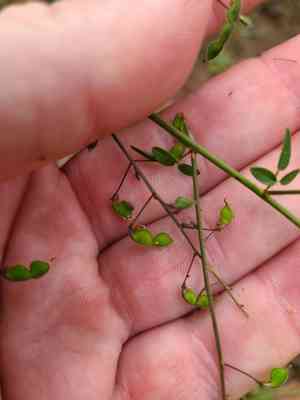
Hairy small-leaf tick-trefoil (Desmodium ciliare)
Also known as: Ciliate Tick-Trefoil
Hairy small-leaf tick-trefoil is a resilient perennial herb characterized by its hairy stems and small, pink to purple flowers. It thrives in grasslands and open woods, where its dense foliage efficiently captures sunlight. The plant's ability to form thick mats allows it to outcompete other vegetation, showcasing its adaptability. Additionally, its nitrogen-fixing root nodules and seed dispersal mechanism further enhance its survival and propagation in these environments.
In This Article
Attributes of Hairy small-leaf tick-trefoil
Lifespan
Perennial
Plant Type
Herb
Plant Height
30-100 cm
Spread
N/A
Leaf Color
Green
Flower Size
0.5-1 cm
Flower Color
Pink to Purple
Images of Hairy small-leaf tick-trefoil
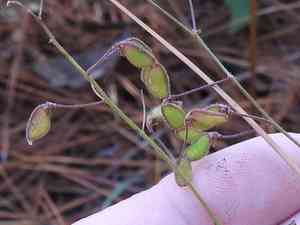
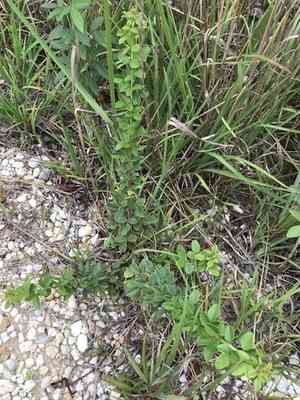
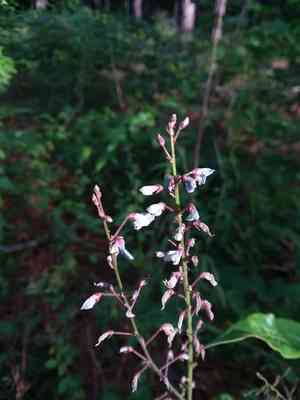
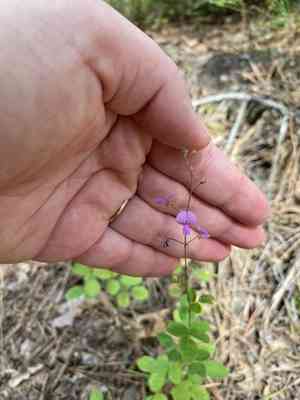
Quickly Identify Hairy small-leaf tick-trefoil
1
To identify Desmodium ciliare, look for trifoliate leaves with ciliated (hairy) margins and small, pea-like pink or purple flowers. The plant often has small bristle-like appendages and can be found on disturbed ground.
Scientific Classification of Hairy small-leaf tick-trefoil
Phylum
Vascular plants
Class
Dicotyledons
Order
Fabales
Family
Legume
Genus
Tick clover
Species
Hairy small-leaf tick-trefoil
Planting and Growing of Hairy small-leaf tick-trefoil
Care Difficulty
Moderate
Watering Schedule
Every 4 days
Sunlight Requirements
Full sun
Sunshine Duration
4-6 hours
Ideal Temperature
68-77℉
Soil Type
Potting Mix, Peat Mix
Soil pH
5.5-7.5
Fertilizer Type
Balanced
Pruning Season
Spring, Summer
Pruning Area
Branches, Leaves
Pruning Frequency
2 times a year
Repotting Season
Spring
Pot Type
Plastic, Ceramic
 How to Water Hairy small-leaf tick-trefoil?
Desmodium ciliare thrives with a moderate watering regime. The principle to follow is to ensure the soil remains evenly moist but not waterlogged. Water the plant until the top inch of soil feels damp to the touch, making sure excess water drains out thoroughly.
What are the symptoms of an underwatered Hairy small-leaf tick-trefoil?
›
What should I do if my Hairy small-leaf tick-trefoil is not getting enough water?
›
What are the symptoms of an overwatered Hairy small-leaf tick-trefoil?
›
How to save an overwatered Hairy small-leaf tick-trefoil?
›
 What Are the Sunlight Requirements for Hairy small-leaf tick-trefoil?
Desmodium ciliare thrives in full to partial sun, meaning it does best with direct sun for at least part of the day. Ideal lighting helps maintain lush foliage and vibrant blooms, supporting vigorous growth and vitality.
What is the best time for sunlight exposure?
›
How can I ensure it gets the right amount of light?
›
What benefits does ideal lighting provide?
›
 What Is the Ideal Temperature Range for Hairy small-leaf tick-trefoil?
Desmodium ciliare thrives best in climates where temperatures range from 68°F to 77°F. This temperature range provides optimal conditions for metabolic processes, photosynthesis, and overall plant health. Maintaining these temperatures ensures robust growth and minimizes stress-related issues.
 What Soil is Best for Hairy small-leaf tick-trefoil?
Desmodium ciliare thrives in well-draining soil that prevents waterlogging, which can lead to root rot. This feature also ensures that the roots stay healthy and can absorb essential nutrients efficiently. This plant benefits from soil that is rich in organic matter, which provides the necessary nutrients for robust growth and vibrant foliage. Adding compost can enhance the soil’s nutrient profile. While Desmodium ciliare prefers well-draining soils, it also requires moderate moisture levels. Consistent watering, without making the soil soggy, is important for sustaining lush growth.
 How to Fertilize Hairy small-leaf tick-trefoil?
Desmodium ciliare thrives with a balanced fertilization approach. Use a general-purpose balanced fertilizer such as a 10-10-10 NPK formula. For liquid fertilizers, dilute to half strength and apply about 100-200 ml per plant. For slow-release fertilizers, sprinkle approximately 20 grams around each plant's base.
 How to Prune Hairy small-leaf tick-trefoil?
Begin by removing any dead or diseased branches. Then, trim back overgrown areas to encourage a bushy, compact form. Focus on cutting just above a leaf node to stimulate new growth. Be careful not to remove more than one-third of the plant at a time to avoid stressing it. After pruning, water Desmodium ciliare thoroughly and apply a balanced fertilizer to aid in recovery and promote robust growth. Keep an eye on the plant for any signs of stress or pests, adjusting care as needed.
More About Pruning Techniques→
 How to Propagate Hairy small-leaf tick-trefoil plant?
1
Use a well-draining seed starting mix and fill the seed tray. Ensure the mix is slightly moist but not soggy to avoid seed rot.
2
Scatter the Desmodium ciliare seeds evenly over the surface of the soil. Lightly press them into the soil without covering them completely to allow light to reach them, which is crucial for germination.
3
Cover the tray with a moisture dome and place it in a warm, well-lit area. Maintain a temperature between 20-25°C (68-77°F) for optimal germination conditions.
 How to Repot Hairy small-leaf tick-trefoil plant?
1
The best time to repot Desmodium ciliare is when you notice roots beginning to circle the pot or growing out of the drainage holes. It is also advisable to repot if growth seems stunted or the soil is increasingly compacted.
2
Select a pot that is one size larger than the current one, with ample drainage holes to prevent waterlogging. A terracotta pot can be beneficial as it allows excess moisture to evaporate, reducing the risk of root rot.
3
Opt for a well-draining sandy soil mix that replicates the plant's natural habitat. This type of soil will help prevent overwatering, allow air circulation to the roots, and maintain good plant health overall.
Learn More About Hairy small-leaf tick-trefoil Diseases
Anthracnose
Bacterial Leaf Spot
Bacterial Wilt
Chemical Injury
Cyst Nematode
Damping-off
Downy Mildew
Drought Stress
Fusarium Wilt
Gray Mold
Leaf Spot
Mosaic
Nutrient Deficiency
Nutrient Toxicity
Powdery Mildew
Root Rot
Root-knot Nematode
Rusts
Sooty Mold
Spider Mites
Temperature Stress
Thrips Damage
White Mold



