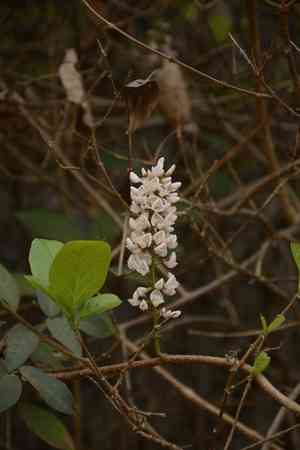
Three-leaf derris (Derris trifoliata)
Also known as: Mangrove Derris, Three-leaved Derris
In Maharashtra, India, Derris trifoliata is locally called "Karanjvel" in Marathi. This large climbing plant is commonly found in the coastal swamps of the Konkan region. It typically grows to a length of 3-5 meters. The leaves are alternate and pinnate, measuring 12-20 cm with five ovate leaflets each 6-10 cm long. The flowers are small, about 1 cm, and appear in axillary racemes that are 8-15 cm long. The flat, pale yellow pods are 3-4 cm in length. The plant's stems contain the rotenoid compound 6aα,12aα-12a-hydroxyelliptone. Additionally, the larvae of the butterfly Hasora hurama feed on Derris trifoliata.
In This Article
Attributes of Three-leaf derris
Lifespan
Perennial
Plant Type
Vine
Plant Height
10 m
Spread
2 to 3 meters
Leaf Color
Green
Flower Size
1 cm
Flower Color
White Pink
Images of Three-leaf derris
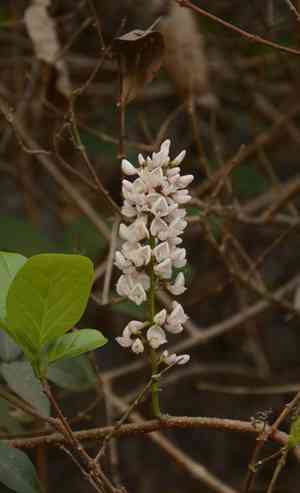
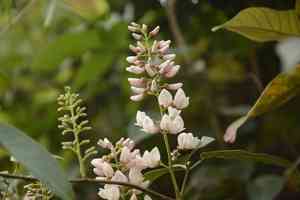
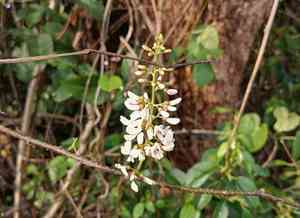
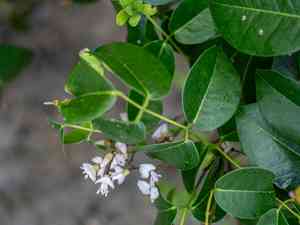
Quickly Identify Three-leaf derris
1
Look for trifoliate leaves, pink to purple flowers, and a woody stem. The plant often occurs in mangrove environments, which can be a key indicator.
Scientific Classification of Three-leaf derris
Phylum
Vascular plants
Class
Dicotyledons
Order
Fabales
Family
Legume
Genus
Derris
Species
Three-leaf derris
Planting and Growing of Three-leaf derris
Care Difficulty
Easy
Watering Schedule
Every 4 days
Sunlight Requirements
Partial sun
Sunshine Duration
6-12 hours
Ideal Temperature
70-85℉
Soil Type
Potting Mix, Peat Mix
Soil pH
6.5-7.5
Fertilizer Type
Balanced
Pruning Season
Spring, Summer
Pruning Area
Branches, Leaves
Pruning Frequency
2 times a year
Repotting Season
Spring
Pot Type
Plastic, Ceramic
 How to Water Three-leaf derris?
Derris trifoliata requires approximately 500 milliliters of water per session. The key is to ensure the soil is evenly moist but not waterlogged. Water until you see a slight excess draining from the bottom of the pot, which indicates that the roots have received enough moisture without being oversaturated.
What are the symptoms of an underwatered Three-leaf derris?
›
What should I do if my Three-leaf derris is not getting enough water?
›
What are the symptoms of an overwatered Three-leaf derris?
›
How to save an overwatered Three-leaf derris?
›
 What Are the Sunlight Requirements for Three-leaf derris?
Partial sun ensures healthy growth, with the plant getting adequate photosynthesis to support flourishing foliage and blooms, while avoiding direct intense light that might cause stress.
How much sunlight does Derris trifoliata need?
›
What solutions help achieve ideal lighting?
›
What is the impact of ideal lighting on plant health?
›
 What Is the Ideal Temperature Range for Three-leaf derris?
What is the ideal temperature range for growing Derris trifoliata? The ideal temperature range for growing Derris trifoliata is between 70°F and 85°F. In this range, the plant experiences optimal growth conditions which support healthy leaf development and vigorous growth. This range mimics the plant's native tropical environment, ensuring it receives the warmth necessary for metabolic processes.
 What Soil is Best for Three-leaf derris?
Derris trifoliata thrives in soil that offers excellent drainage. Poorly drained soil can lead to root rot, so sandy or loamy types are ideal to ensure water doesn't accumulate at the roots over time. Incorporating organic matter such as compost or peat helps maintain moisture and provides the nutrients the plant needs to grow vigorously. This improves soil structure and promotes microbial activity, enhancing nutrient availability. While Derris trifoliata can tolerate less fertile soils, moderate fertility is beneficial for optimal growth. This means fewer interventions for nutrient supplementation, allowing the plant to thrive naturally while maintaining ecological health.
 How to Fertilize Three-leaf derris?
For Derris trifoliata, it's crucial to provide the right amount of fertilizer to ensure healthy growth. Use about 50 grams of granular fertilizer per square meter, evenly spread around the base of the plant. Liquid fertilizers should be diluted to half strength to avoid root burn and applied carefully to the soil.
 How to Prune Three-leaf derris?
Begin by removing any dead, damaged, or diseased branches. Make clean cuts at a 45-degree angle to ensure proper healing. Trim back overgrown branches, focusing on maintaining the plant's natural shape. Remove any crossing branches that may cause damage over time. Prune the tips of younger, healthy branches slightly to encourage bushier growth. This is particularly beneficial in promoting more vibrant foliage.
More About Pruning Techniques→
 How to Propagate Three-leaf derris plant?
1
Start by selecting a well-draining soil mix and fill the seedling trays or pots. Ensure the soil is moist but not waterlogged to create an optimal germination environment.
2
Gather mature seeds from the parent plant and sow them evenly across the seedbed surface. Cover lightly with soil and maintain a consistent moisture level.
3
Choose healthy stems and use sterilized pruning shears to cut sections. Dip the cut end in rooting hormone to enhance root development.
 How to Repot Three-leaf derris plant?
1
Look for signs such as roots growing out of the pot's drainage holes or the plant appearing stunted in growth. These indicators suggest that the plant might be pot-bound and require more space to thrive.
2
Choose a pot that is 1-2 inches larger in diameter than the current one. This size change provides sufficient room for root growth while preventing waterlogging, as overly large pots can retain too much moisture and harm the plant.
3
Opt for a rich, well-draining soil mix, ideally with a combination of peat, compost, and perlite. This mixture provides essential nutrients, supports healthy root development, and ensures proper aeration and drainage.
Toxicity
Ingestion of parts of the plant.
WARNING
The judgment on toxicity and danger is for reference only. We DO NOT GUARANTEE any accuracy of such judgment. Therefore, you SHALL NOT rely on such judgment. It is IMPORTANT TO SEEK PROFESSIONAL ADVICE in advance when necessary.
Learn More About Three-leaf derris Diseases
Anthracnose
Bacterial Leaf Spot
Bacterial Wilt
Crown Gall
Cyst Nematode
Damping-off
Downy Mildew
Drought Stress
Fusarium Wilt
Gray Mold
Leaf Spot
Mosaic
Nutrient Deficiency
Nutrient Toxicity
Powdery Mildew
Root Rot
Root-knot Nematode
Rusts
Sooty Mold
Spider Mites
Temperature Stress
Thrips Damage
White Mold



