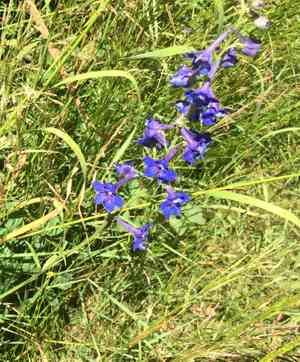
Upland larkspur (Delphinium nuttallii)
Also known as: Nuttall's larkspur
Larkspur, a wildflower known for its tall spikes of striking blue to violet blooms, thrives in well-drained, open areas. Blooming from late spring to early summer, its graceful fern-like leaves enhance its vibrant flowers, making it a key nectar source for pollinators. This charismatic plant is a notable feature of western North American landscapes.
In This Article
Attributes of Upland larkspur
Lifespan
Perennial
Plant Type
Herb
Plant Height
30 cm to 61 cm
Spread
N/A
Leaf Color
Green
Flower Size
2-3 cm (0.8-1.2 inches)
Flower Color
Blue to purple
Images of Upland larkspur
Quickly Identify Upland larkspur
1
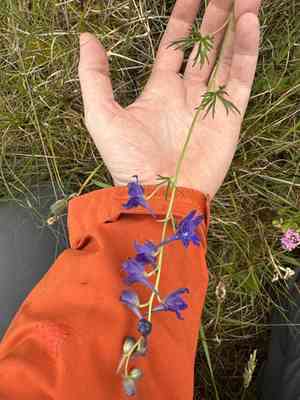
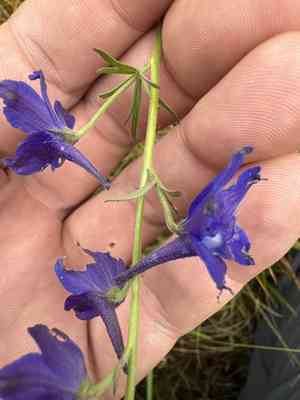
Nuttall\'s larkspur can be recognized by its tall, slender stems that bear several blue to purple trumpet-shaped flowers. The leaves are palmate and deeply lobed. The plant often reaches heights of 20-60 cm (8-24 inches) during its flowering season.
Scientific Classification of Upland larkspur
Phylum
Vascular plants
Class
Dicotyledons
Order
Ranunculales
Family
Buttercup
Genus
Larkspurs
Species
Upland larkspur
Planting and Growing of Upland larkspur
Care Difficulty
Moderate
Watering Schedule
Every 3 days
Sunlight Requirements
Full sun
Sunshine Duration
4-8 hours
Ideal Temperature
60-75℉
Soil Type
Potting Mix, Peat Mix
Soil pH
6.5-7.5
Fertilizer Type
Balanced
Pruning Season
Spring, Summer
Pruning Area
Branches, Leaves
Pruning Frequency
2 times a year
Repotting Season
Spring
Pot Type
Plastic, Ceramic
 How to Water Upland larkspur?
For Delphinium nuttallii, ensure the soil is moist but not waterlogged. Water until it starts to slightly pool on the surface, allowing the soil to absorb 250ml, ensuring even moisture distribution to the root zone but avoid standing water.
What are the symptoms of an underwatered Upland larkspur?
›
What should I do if my Upland larkspur is not getting enough water?
›
What are the symptoms of an overwatered Upland larkspur?
›
How to save an overwatered Upland larkspur?
›
 What Are the Sunlight Requirements for Upland larkspur?
Delphinium nuttallii prefers a blend of full sun to partial sun, ideally around 6-8 hours of daily light. This mix helps improve flowering and structural integrity, yielding a robust plant.
Optimal Sun Duration
›
Solution for Ideal Light
›
Benefits of Optimal Light
›
 What Is the Ideal Temperature Range for Upland larkspur?
The ideal temperature range for growing Delphinium nuttallii is between 60°F to 75°F. These temperatures provide optimal conditions for the plant's photosynthesis and growth processes. Keeping the plant within this range ensures that it has ample energy to thrive, produce vibrant flowers, and maintain healthy foliage.
 What Soil is Best for Upland larkspur?
Delphinium nuttallii thrives in well-draining soil, which prevents waterlogging and root rot. This soil structure helps in maintaining optimal moisture levels, ensuring the plant's roots can breathe and avoid anaerobic conditions that can lead to diseases. The plant requires a nutrient-rich substrate to flourish. Adding organic matter or compost increases nutrient availability, which supports its vibrant growth and enhances flower production, resulting in a more robust plant. The soil should retain enough moisture to support the plant's water needs without becoming soggy. This balance is crucial to ensure that the plant remains hydrated, especially during the growing season, while minimizing the risk of root diseases.
 How to Fertilize Upland larkspur?
Delphinium nuttallii, commonly known as Nuttall's larkspur, requires careful fertilization to maintain its vibrant blooms. Use a balanced liquid fertilizer with a concentration of 10-10-10. Apply approximately 1/4 teaspoon per gallon of water during the growing season. Solid fertilizers should be applied sparingly, approximately 1 ounce per plant, to avoid overwhelming the roots.
 How to Prune Upland larkspur?
To prune Delphinium nuttallii, begin by using clean and sharp pruning shears to remove any spent blooms. Cut the stems back to where you see a new budding node or a healthy leaf pair. This promotes new flower spikes and prevents the plant from diverting energy into seed production. Additionally, thin out any overcrowded areas by cutting stems at the base to improve air circulation and light penetration, which are crucial for reducing disease pressure and enhancing overall plant health.
More About Pruning Techniques→
 How to Propagate Upland larkspur plant?
1
Begin by sowing Delphinium nuttallii seeds shallowly in a seed tray with a light, well-draining soil mix. Cover seeds lightly with soil, ensuring they receive adequate moisture without being waterlogged.
2
Select healthy stems of the Delphinium nuttallii plant and make a clean cut slightly below a node. Remove lower leaves and dip the cut end in rooting hormone to encourage root development.
3
Place the prepared cutting in perlite or a well-draining soil mix. Maintain high humidity by covering with a plastic dome or bag. Keep them away from direct sunlight until roots develop.
 How to Repot Upland larkspur plant?
1
Delphinium nuttallii typically signals its need for repotting when growth becomes stunted, roots start emerging from the drainage holes, or the soil appears compacted. This plant is most receptive to repotting in the spring, when it is beginning its active growing phase. It's crucial to pay attention to these signs as they indicate the plant is ready for a fresh space to thrive.
2
Select a pot that is one size larger than the current pot, ideally with adequate drainage holes. A slightly larger pot will give the roots room to grow without overwhelming them with too much soil that can lead to waterlogging. Pots made from porous materials like terracotta can be beneficial by allowing excess moisture to evaporate, protecting roots from rot.
3
Use a well-draining, loamy mix that supports good air circulation around the roots. A loamy soil is rich in nutrients and promotes healthy growth while preventing root decay by ensuring excess water can easily escape. This type of soil structure is critical in maintaining optimal hydration and nutrient availability.
Toxicity
Ingestion
WARNING
The judgment on toxicity and danger is for reference only. We DO NOT GUARANTEE any accuracy of such judgment. Therefore, you SHALL NOT rely on such judgment. It is IMPORTANT TO SEEK PROFESSIONAL ADVICE in advance when necessary.
Learn More About Upland larkspur Diseases
Anthracnose
Bacterial Leaf Spot
Bacterial Soft Rot
Bacterial Wilt
Black Spot
Chemical Injury
Crown Gall
Cyst Nematode
Damping-off
Downy Mildew
Drought Stress
Fusarium Wilt
Gray Mold
Leaf Curl
Leaf Spot
Mosaic
Nutrient Deficiency
Nutrient Toxicity
Powdery Mildew
Root Rot
Root-knot Nematode
Rusts
Sooty Mold
Spider Mites
Temperature Stress
Thrips Damage
White Mold



