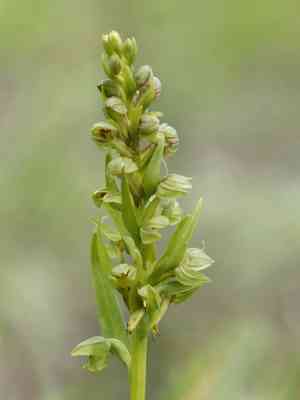
Longbract frog orchid (Dactylorhiza viridis)
Also known as: Long-bract green orchis, Long-bracted orchid
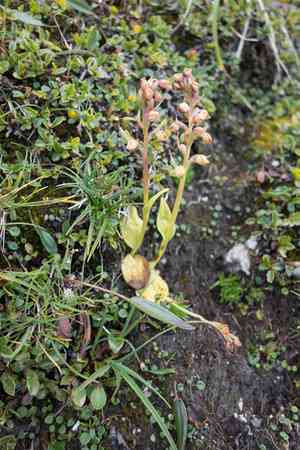
The **longbract frog orchid** is a distinctive orchid species thriving in moist environments such as meadows, prairies, coniferous forests, and bogs. It boasts the widest global distribution among orchids, spanning the entire Northern Hemisphere. Its name, "frog orchid," is derived from its green-colored flowers.
In This Article
Attributes of Longbract frog orchid
Lifespan
Perennial
Plant Type
Herb
Plant Height
5 cm to 25 cm
Spread
10 cm to 50 cm
Leaf Color
Green
Flower Size
1 cm to 1.3 cm
Flower Color
Yellow Green Purple Red Brown
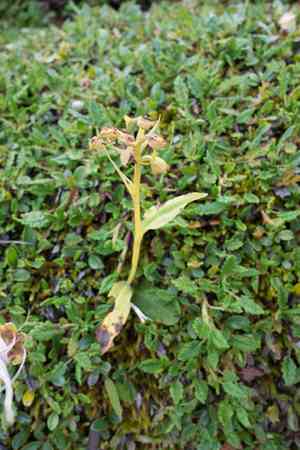
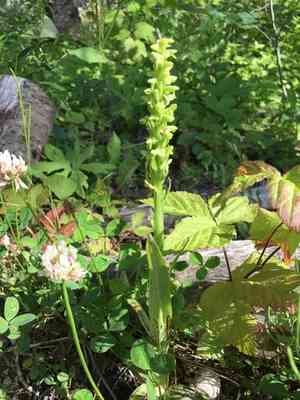
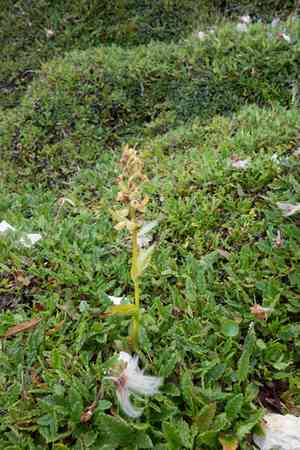
Images of Longbract frog orchid
Quickly Identify Longbract frog orchid
1
The Frog Orchid can be identified by its greenish-brown flowers that resemble frogs, as well as its slender, unspotted leaves. The plant\'s flowers are small, usually about 5-10 mm in diameter.
Scientific Classification of Longbract frog orchid
Phylum
Vascular plants
Class
Monocotyledons
Order
Asparagales
Family
Orchid
Genus
Marsh orchids
Species
Longbract frog orchid
Planting and Growing of Longbract frog orchid
Care Difficulty
Hard
Watering Schedule
Every 3 days
Sunlight Requirements
Partial sun
Sunshine Duration
4-8 hours
Ideal Temperature
60-70℉
Soil Type
Potting Mix, Peat Mix
Soil pH
6.5-7.5
Fertilizer Type
Balanced
Pruning Season
Spring, Summer
Pruning Area
Branches, Leaves
Pruning Frequency
2 times a year
Repotting Season
Spring
Pot Type
Ceramic, Plastic
 How to Water Longbract frog orchid?
When watering Dactylorhiza viridis, aim to deliver approximately 150 milliliters each time. This amount ensures that the soil is adequately moist without becoming waterlogged, which is ideal for a plant that thrives in damp but not overly saturated conditions.
What are the symptoms of an underwatered Longbract frog orchid?
›
What should I do if my Longbract frog orchid is not getting enough water?
›
What are the symptoms of an overwatered Longbract frog orchid?
›
How to save an overwatered Longbract frog orchid?
›
 What Are the Sunlight Requirements for Longbract frog orchid?
For Dactylorhiza viridis, partial sun to full shade is ideal. Balanced lighting promotes healthy growth, vibrant foliage, and prevents stress symptoms such as leaf scorch or stunted development.
More About Sunlight Requirements Techniques→
Understanding Ideal Lighting
›
Optimal Placement
›
Benefits of Ideal Light
›
 What Is the Ideal Temperature Range for Longbract frog orchid?
For optimal growth of Dactylorhiza viridis, the ideal temperature range is between 60°F and 70°F. This range ensures that the plant can photosynthesize efficiently, which is crucial for its overall health and development. Staying within these temperatures minimizes stress and supports robust root development.
 What Soil is Best for Longbract frog orchid?
Dactylorhiza viridis prefers well-drained soil to prevent root rot, ensuring the roots receive adequate oxygen and nutrients, promoting healthy growth. This plant thrives in soil that retains moisture while still draining well, helping it to absorb the necessary water for optimal metabolic functions. Rich organic matter is beneficial for Dactylorhiza viridis as it provides essential nutrients and improves soil structure, promoting robust growth and resilience.
 How to Fertilize Longbract frog orchid?
For Dactylorhiza viridis, use a balanced 10-10-10 NPK fertilizer. If using liquid fertilizer, dilute it to half the recommended strength. For slow-release fertilizer, apply at a rate of 500 grams per square meter. Ensure even distribution to avoid overfertilization in concentrated spots.
 How to Prune Longbract frog orchid?
Start by carefully identifying any leaves or stems that have turned brown or yellow. These can be removed to improve the overall appearance and health of the plant. When pruning, make cuts just above the base of the leaf or stem. This encourages new growth and prevents unsightly stubs that can be prone to disease. After pruning, ensure the plant is well-watered and situated in a location with adequate sunlight. This supports the recovery process and promotes vigorous growth for the coming season.
More About Pruning Techniques→
 How to Propagate Longbract frog orchid plant?
1
Use a well-draining seed mix to ensure the delicate seeds of Dactylorhiza viridis do not rot. Mix fine sphagnum moss with sand to create an optimal growth environment.
2
Scatter the seeds lightly over the prepared seed mix without covering them with soil. They need light for germination, so ensure they remain exposed while keeping the soil moist.
3
Tissue culture involves culturing parts of the plant in a nutrient medium under sterile conditions. This method is complex but can be effective for Dactylorhiza viridis as it ensures disease-free propagules.
 How to Repot Longbract frog orchid plant?
1
Repotting Dactylorhiza viridis should occur when the orchid outgrows its pot, roots start circling, or the potting mix decomposes. These signals indicate that the plant needs more space or better aeration.
2
Select a pot that is slightly larger than the current one but ensures good drainage. Clay pots are ideal as they provide stability and help prevent waterlogging, promoting a healthy root environment.
3
Use a well-draining orchid mix rich in organic matter. This ensures adequate aeration and moisture retention, supporting root health and overall plant vitality.
Learn More About Longbract frog orchid Diseases
Anthracnose
Bacterial Leaf Spot
Bacterial Soft Rot
Bacterial Wilt
Black Spot
Chemical Injury
Crown Gall
Cyst Nematode
Damping-off
Downy Mildew
Drought Stress
Fusarium Wilt
Gray Mold
Leaf Spot
Mosaic
Nutrient Deficiency
Nutrient Toxicity
Powdery Mildew
Root Rot
Root-knot Nematode
Rusts
Sooty Mold
Spider Mites
Temperature Stress
Thrips Damage
White Mold



