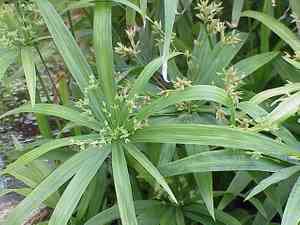
Lean flatsedge(Cyperus setigerus)

Lean flatsedge (Cyperus setigerus)

Also known as: Umbrella Sedge, African Yellow Nutgrass

Lean flatsedge (Cyperus entrerianus) is a perennial sedge characterized by its narrow, grass-like leaves and slender, triangular stems that typically reach heights of 20-70 cm. The plant forms small, clustered spikelets that are reddish-brown in color. One of its notable features is the tuft of green, flat, linear leaves at the base.

Adapted to wet, disturbed soils, lean flatsedge thrives in environments like wetlands, riverbanks, and moist meadows. Its extensive rhizome system allows it to spread efficiently, and its high seed production ensures rapid colonization. The plant is well-suited to areas that experience periodic flooding and soil disruption, making it a resilient species in its preferred habitats.

Attributes of Lean flatsedge

Lifespan
Perennial
Plant Type
Grass
Plant Height
30 cm to 91 cm
Spread
N/A
Leaf Color
Green
Flower Size
0.5-3 cm
Flower Color
Yellowish-green

ForwardPlant - Identify plants with a snap

Identify and diagnose plants, get toxicity alerts, and explore safety guides for all types of fungi.

Try for Free

Images of Lean flatsedge

Lean flatsedge(Cyperus setigerus)

Quickly Identify Lean flatsedge

1
Identifying Cyperus setigerus involves looking for its characteristic grass-like leaves and small spikelets arranged in an umbel form. The stems are usually triangular in cross-section.

Scientific Classification of Lean flatsedge

Phylum
Vascular plants
Class
Monocotyledons
Order
Poales
Family
Sedge
Genus
Nutgrasses
Species
Lean flatsedge

Planting and Growing of Lean flatsedge

Care Difficulty
Easy
Watering Schedule
Every 3 days
Sunlight Requirements
Partial sun
Sunshine Duration
6-10 hours
Ideal Temperature
60-75℉
Soil Type
Potting Mix, Peat Mix
Soil pH
6.5-7.5
Fertilizer Type
Balanced
Pruning Season
Spring, Summer
Pruning Area
Branches, Leaves
Pruning Frequency
Once a year
Repotting Season
Spring
Pot Type
Plastic, Ceramic

water icon How to Water Lean flatsedge?

Cyperus setigerus requires a moderate amount of water that should keep the soil consistently moist but not waterlogged. Water each time with approximately 250 ml, ensuring that the top inch of soil feels damp to the touch. The goal is to simulate the plant's natural environment where periodic rainfall provides sufficient hydration without water pooling excessively at the base.
What are the symptoms of an underwatered Lean flatsedge?
What should I do if my Lean flatsedge is not getting enough water?
What are the symptoms of an overwatered Lean flatsedge?
How to save an overwatered Lean flatsedge?

sunlight icon What Are the Sunlight Requirements for Lean flatsedge?

Sunlight Requirements: Partial sun, Full sun
Duration of light: 6-8 hours daily
Cyperus setigerus prefers partial to full sunlight, thriving ideally in conditions with 6-8 hours of light daily. This supports optimal growth, vibrant foliage, and a healthy root system.
What kind of light is ideal for Cyperus setigerus?
How can Cyperus setigerus obtain this lighting effectively?
What benefits does adequate lighting provide for Cyperus setigerus?

temperature icon What Is the Ideal Temperature Range for Lean flatsedge?

Ideal Temperature: 60 ~ 75℉
For optimal growth, Cyperus setigerus thrives in temperatures ranging between 60°F to 75°F. This range provides a balance of warmth that stimulates robust growth, health, and vitality, allowing the plant to photosynthesize effectively and maintain moisture levels essential for its development.

soil icon What Soil is Best for Lean flatsedge?

Soil type: Loam, Sandy loam
Soil PH: 6.5 ~ 7.5
Cyperus setigerus thrives in well-draining soil, as it helps prevent root rot and allows for adequate oxygenation. Good drainage ensures the roots are healthy and can absorb nutrients efficiently, promoting vigorous growth. Rich soil richens the plant’s development, providing essential nutrients for lush foliage. Ensuring the soil is enriched with organic matter like compost will aid in consistent growth, leading to dense and vibrant foliage. While drainage is crucial, maintaining a certain level of moisture in the soil is equally vital. The right balance prevents dehydration, which can lead to wilting, ensuring that Cyperus setigerus remains lush and green.

fertilize icon How to Fertilize Lean flatsedge?

Fertilizer type: Balanced
For Cyperus setigerus, a balanced application of fertilizer is crucial. Liquid fertilizers should be applied at half-strength to avoid overfeeding. Slow-release fertilizers can be used at a rate of 50 grams per square meter per application.

prune icon How to Prune Lean flatsedge?

Pruning Time: Spring, Summer
Conduct pruning activities during the growing seasons of spring and summer. Focus on removing dead, damaged, or overly lengthy blades to encourage robust growth. Gently lift the blades and trim with a clean cut. Regular checks for any unhealthy browning or wilting are essential for maintenance. Remove such growths promptly. This proactive approach lessens strain on the plant, allowing it to channel nutrients to healthy parts. More About Pruning Techniques

propagate icon How to Propagate Lean flatsedge plant?

Propagate Time: Spring, Early summer
1
Fill a seed tray with quality seed-starting mix, sow the seeds on the surface, and cover them with a fine layer of soil. Maintain moisture by misting and place the tray in a warm, bright location until germination occurs.
2
Choose a mature Cyperus setigerus clump. Carefully dig around the plant to avoid root damage and gently lift the entire clump out of the soil for further division.
3
Using a sharp knife or pruners, divide the clump into smaller sections, ensuring each section has a healthy root system and a few shoots. Replant immediately in suitable containers or directly in the ground.
More About Propagating Techniques

repot icon How to Repot Lean flatsedge plant?

Repotting frequency: Every 1-2 years
1
Cyperus setigerus needs repotting when roots start circling the pot and growth appears stunted. Spring or early summer is ideal as the plant enters its active growing phase, allowing it to recover quickly. Watch for yellowing leaves and poor growth, which signal a need for fresh, nutrient-rich soil.
2
Select a pot that is 2-4 inches larger in diameter than the current one, offering room for root expansion without overwhelming the plant. A pot with drainage holes is crucial to prevent waterlogging and root rot, ensuring healthy growth and aeration. Terracotta pots are recommended for their breathable nature.
3
Opt for a loamy, well-drained soil mix to facilitate proper hydration and air circulation. Adding perlite or sand improves drainage, preventing the soil from becoming too compact. This soil choice supports root health and prevents overwatering, which could otherwise lead to rot.

ForwardPlant - Identify plants with a snap

Find the best spots for them to optimize their health, simply using your phone.

Try for Free

