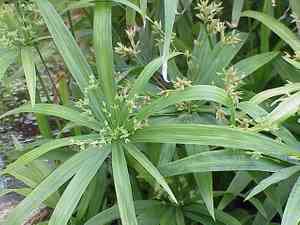
Meyen's flatsedge (Cyperus meyenianus)
Also known as: Meyen's Cyperus
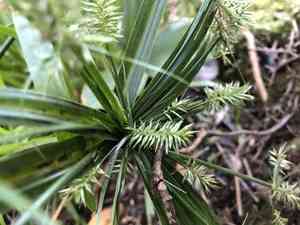
A perennial sedge that fits your description is Meyen's flatsedge. This plant features a cluster of slender green stems emanating from a central point, resembling a grassy tuft. Each stem is topped with a flat, umbrella-like head made up of spikelets with small flowers. It thrives in moist habitats such as waterways and damp grounds, where its fibrous roots help stabilize the soil and reduce erosion.
In This Article
Attributes of Meyen's flatsedge
Lifespan
Perennial
Plant Height
30 to 60 cm
Spread
N/A (typically does not have a crown)
Leaf Color
Green
Flower Size
2 to 4mm (individual spikelets)
Flower Color
Brown
Images of Meyen's flatsedge
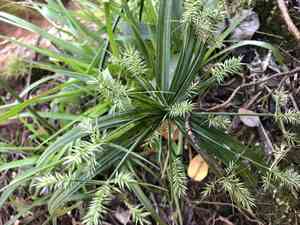
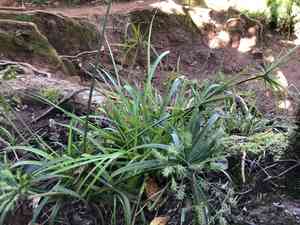
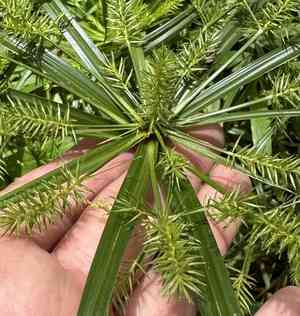
Quickly Identify Meyen's flatsedge
1
Identification can be done by observing its grass-like appearance, creeping rhizomes, and triangular stems. The plant has simple, linear leaves and clusters of small, brownish spikelets.
Scientific Classification of Meyen's flatsedge
Phylum
Vascular plants
Class
Monocotyledons
Order
Poales
Family
Sedge
Genus
Nutgrasses
Species
Meyen's flatsedge
Planting and Growing of Meyen's flatsedge
Care Difficulty
Moderate
Watering Schedule
Every 2 days
Sunlight Requirements
Partial sun
Sunshine Duration
4-8 hours
Ideal Temperature
60-75℉
Soil Type
Potting Mix, Peat Mix
Soil pH
6.5-7.5
Fertilizer Type
Balanced
Pruning Season
Spring, Summer
Pruning Area
Branches, Leaves
Pruning Frequency
2 times a year
Repotting Season
Spring
Pot Type
Plastic, Ceramic
 How to Water Meyen's flatsedge?
For Cyperus meyenianus, the watering amount should ensure the soil is thoroughly moistened but not waterlogged. Generally, about 250 ml per session suffices, ensuring excess water drains out, keeping the plant's root system healthy without causing rot.
What are the symptoms of an underwatered Meyen's flatsedge?
›
What should I do if my Meyen's flatsedge is not getting enough water?
›
What are the symptoms of an overwatered Meyen's flatsedge?
›
How to save an overwatered Meyen's flatsedge?
›
 What Are the Sunlight Requirements for Meyen's flatsedge?
Cyperus meyenianus thrives in partial sun conditions, receiving light for four to six hours per day. Ideal light levels support lush growth, vibrant colors and maintain the plant's overall health.
How to achieve ideal lighting?
›
What are the specific actions to take?
›
What are the benefits of ideal lighting?
›
 What Is the Ideal Temperature Range for Meyen's flatsedge?
For Cyperus meyenianus to thrive, maintaining the ambient temperature between 60°F to 75°F is crucial. This range allows optimal metabolic activities, ensuring healthy foliage development and root growth. Deviating from this range may affect the plant's vigor and overall health.
 What Soil is Best for Meyen's flatsedge?
Cyperus meyenianus thrives in soil that offers good drainage to prevent root rot. Sandy soil is particularly beneficial as it allows excess water to flow freely, ensuring that the roots receive the necessary oxygen to stay healthy and vigorous. For optimal growth, Cyperus meyenianus demands a nutrient-rich soil. Loam, with its balanced mix of sand, silt, and clay, provides the right amount of nutrients to support lush foliage and vigorous growth, fostering a robust plant structure. The plant prefers soil that retains moisture without becoming waterlogged. Sandy loam is ideal as it maintains necessary moisture levels, ensuring that the plant receives adequate hydration between waterings while promoting healthy root development.
 How to Fertilize Meyen's flatsedge?
For Cyperus meyenianus, when using liquid fertilizer, apply at a concentration of half the recommended dose to avoid over-fertilization. For slow-release fertilizers, follow the manufacturer's guidelines, typically a few granules evenly spread across the soil. The plant prefers a balanced 10-10-10 NPK formulation.
 How to Prune Meyen's flatsedge?
Focus on removing browned or damaged stems and leaves first. Cut them at their base to encourage new, healthy growth. Also trim any stems that are longer than desired to maintain the plant's shape. Avoid excessive pruning, as removing more than one-third of the plant at once can stress it. Instead, aim for gradual pruning over several sessions to promote sustained health and vitality.
More About Pruning Techniques→
 How to Propagate Meyen's flatsedge plant?
1
Begin by watering the parent plant thoroughly a day before you plan to divide it. This step ensures that the plant is well-hydrated, making it easier to work with and increasing the chances of successful propagation.
2
Carefully remove the Cyperus meyenianus from its pot or from the ground. Shake off excess soil to expose the roots. Handle the plant gently to prevent unnecessary stress or damage.
3
Using a sharp knife or spade, cut the root ball into sections. Ensure each section has an adequate amount of roots and shoots. This division should be done carefully to avoid damaging the roots, which are vital for plant regrowth.
 How to Repot Meyen's flatsedge plant?
1
Cyperus meyenianus typically needs repotting when you notice roots emerging from the pot's drainage holes or the plant's growth appearing stunted. A healthy plant should ideally be repotted every 2-3 years. Early spring, right as the growing season starts, is an ideal time as it gives the plant a chance to settle into its new pot during the active growing phase, promoting robust growth.
2
When selecting a new pot for Cyperus meyenianus, opt for one that is just one size larger than the current pot. This ensures adequate space for root expansion without overwhelming the plant. The pot should have good drainage to prevent waterlogging, which is essential for avoiding root rot. Materials like terracotta or ceramic are particularly beneficial as they allow excess moisture to evaporate, aiding in maintaining ideal soil conditions.
3
Choosing the right soil is crucial. A well-draining sandy mix is ideal for Cyperus meyenianus. This type of soil prevents water retention which can lead to root rot, yet enough moisture retention to support the plant. The addition of organic matter can enhance soil fertility, promoting vigorous growth. Such soil replicates the plant's natural habitat conditions, ensuring its health and vibrancy.
Learn More About Meyen's flatsedge Diseases
Anthracnose
Bacterial Leaf Spot
Bacterial Soft Rot
Chemical Injury
Damping-off
Downy Mildew
Drought Stress
Fusarium Wilt
Gray Mold
Leaf Spot
Mosaic
Nutrient Deficiency
Nutrient Toxicity
Powdery Mildew
Root Rot
Root-knot Nematode
Rusts
Sooty Mold
Spider Mites
Temperature Stress
Thrips Damage
White Mold



