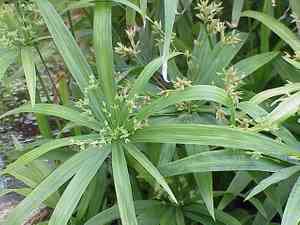
Baldwin's flat sedge (Cyperus croceus)
Also known as: Golden Sedge
Baldwin's flat sedge stands out with its sleek, upright stems and clusters of narrow, grass-like leaves. Ideal for subtropical, freshwater environments, it features eye-catching, golden-brown flower spikes. The plant's flattened, angular spikelets and triangular stems add to its distinctive look. Although well-adapted to wet areas, it can also become invasive in some regions.
In This Article
Attributes of Baldwin's flat sedge
Lifespan
Perennial
Plant Type
Grass
Plant Height
30 cm to 91 cm
Spread
25-30 cm (10-12 inches)
Leaf Color
Yellowish-green to golden
Flower Size
0.5-2 cm (0.2-0.8 inches)
Flower Color
Brown or green
Images of Baldwin's flat sedge
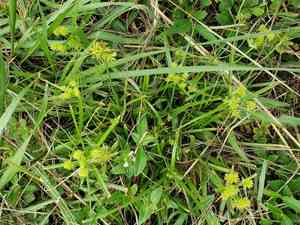
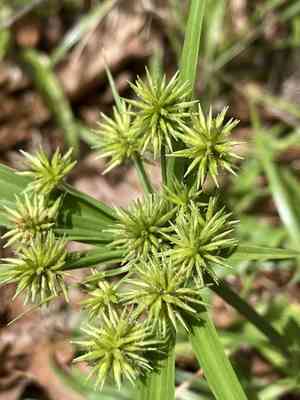
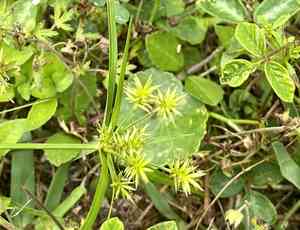
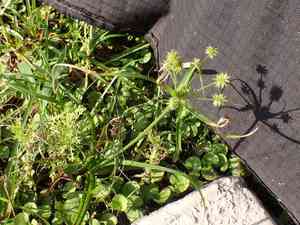
Quickly Identify Baldwin's flat sedge
1
To identify Cyperus croceus, look for narrow, grass-like leaves that are yellowish-green to golden in color. The plant typically forms dense clumps, and its stems are triangular in cross-section with small, inconspicuous flowers.
Scientific Classification of Baldwin's flat sedge
Phylum
Vascular plants
Class
Monocotyledons
Order
Poales
Family
Sedge
Genus
Nutgrasses
Species
Baldwin's flat sedge
Planting and Growing of Baldwin's flat sedge
Care Difficulty
Easy
Watering Schedule
Every 4 days
Sunlight Requirements
Partial sun
Sunshine Duration
6-12 hours
Ideal Temperature
65-77℉
Soil Type
Potting Mix, Peat Mix
Soil pH
6.5-7.5
Fertilizer Type
Balanced
Pruning Season
Spring, Summer
Pruning Area
Branches, Leaves
Pruning Frequency
2 times a year
Repotting Season
Spring
Pot Type
Plastic, Ceramic
 How to Water Baldwin's flat sedge?
For Cyperus croceus, it's crucial to provide enough water to keep the soil consistently moist without causing waterlogging. Aim for approximately 250 ml of water each time you water, ensuring that the soil is damp down to about an inch. This amount helps to replicate the moist environments in which the plant naturally thrives.
What are the symptoms of an underwatered Baldwin's flat sedge?
›
What should I do if my Baldwin's flat sedge is not getting enough water?
›
What are the symptoms of an overwatered Baldwin's flat sedge?
›
How to save an overwatered Baldwin's flat sedge?
›
 What Are the Sunlight Requirements for Baldwin's flat sedge?
Partial sun exposure is ideal for Cyperus croceus, which means about 4-6 hours of indirect sunlight daily. This balanced lighting bolsters healthy growth, vibrant leaves, and natural resistance to environmental stress elements.
What is the optimal positioning for Cyperus croceus?
›
How can I adjust lighting if my plant's health is below par?
›
What benefits does proper lighting provide to Cyperus croceus?
›
 What Is the Ideal Temperature Range for Baldwin's flat sedge?
Cyperus croceus thrives in warm climates with temperatures ranging from 65°F to 77°F. In these conditions, the plant grows robustly, displaying healthy, vibrant foliage. These temperatures mimic its natural habitat, promoting vigorous root development and optimal photosynthesis.
 What Soil is Best for Baldwin's flat sedge?
Cyperus croceus thrives in soils that retain adequate moisture without becoming waterlogged. This property helps the plant to absorb essential nutrients effectively and supports its lush growth. The plant prefers soil that is rich in organic matter. This ensures a steady supply of essential minerals and nutrients that contribute to the overall health and vigor of Cyperus croceus. Good drainage is crucial to prevent root rot. Soil that allows water to drain away quickly enhances the plant's ability to maintain healthy roots and vigorous growth.
 How to Fertilize Baldwin's flat sedge?
When fertilizing Cyperus croceus, use a balanced, water-soluble fertilizer mixed at half strength to avoid overwhelming the plant. Precisely measure around 1 teaspoon per gallon of water when using liquid fertilizer. For solid fertilizers, use a quarter cup per plant, applied evenly across the soil surface to promote consistent nutritional availability without harming the roots.
 How to Prune Baldwin's flat sedge?
Start by inspecting the plant for any yellowing or dead leaves and stems. Use sharp pruning shears to cut them at a 45-degree angle close to the base. This prevents decay and diverts energy to healthy areas. Cyperus croceus can become unwieldy. For aesthetic pruning, trim the stem tips to maintain a desirable shape and size, ensuring even light exposure and air circulation through the plant. If the plant is dense, prune in layers by cutting stems at different heights. This technique allows for better sunlight penetration and promotes uniform growth across the plant.
 How to Propagate Baldwin's flat sedge plant?
1
Start by filling a seed tray with a well-draining soil mix. Place the Cyperus croceus seeds on the surface and lightly cover them with a thin layer of soil. Keep the tray in a warm, well-lit location and water gently to maintain moisture levels, facilitating germination.
2
When using division propagation, remove the plant from its pot and gently separate it into smaller sections, ensuring each section has roots attached. Use a sharp knife or spade if necessary, and replant each division into suitable soil immediately to prevent drying out.
3
Plant the divisions in well-prepared soil at the same depth they were originally growing. Water them thoroughly, and place them in a location that receives adequate sunlight, ensuring they establish well in their new environment.
 How to Repot Baldwin's flat sedge plant?
1
Look for signs that your Cyperus croceus needs repotting, such as roots emerging from the drainage holes or the plant becoming root-bound. Ideally, perform repotting in spring or summer when the plant is in an active growth phase, as it will recover better from the disturbance.
2
Select a pot that is one size larger than the current one, ensuring there’s adequate space for root expansion. A pot with good drainage holes is essential to prevent water from accumulating, which can cause root rot. A slightly heavier pot may provide stability for the tall, grassy stems of Cyperus croceus.
3
Opt for a well-draining potting mix, ideally with added sand or perlite to enhance aeration. This type of soil allows excess water to flow out easily, preventing the soggy conditions that can lead to root diseases. A mix enriched with organic matter supports healthy plant growth.
Learn More About Baldwin's flat sedge Diseases
Anthracnose
Bacterial Leaf Spot
Bacterial Soft Rot
Bacterial Wilt
Chemical Injury
Damping-off
Downy Mildew
Drought Stress
Fusarium Wilt
Gray Mold
Leaf Spot
Mosaic
Nutrient Deficiency
Nutrient Toxicity
Powdery Mildew
Root Rot
Root-knot Nematode
Rusts
Sooty Mold
Spider Mites
Temperature Stress
Thrips Damage
White Mold



