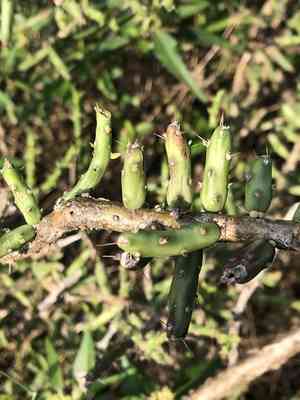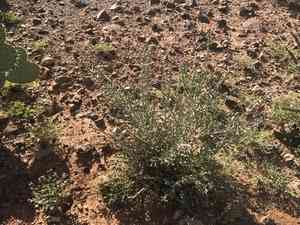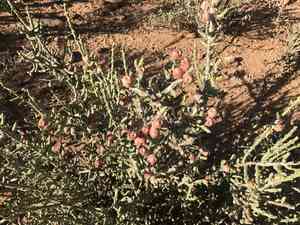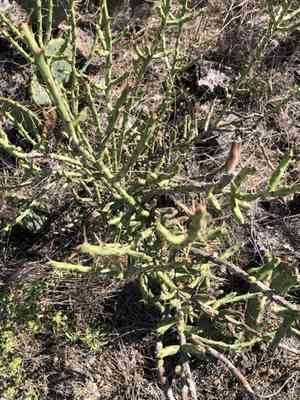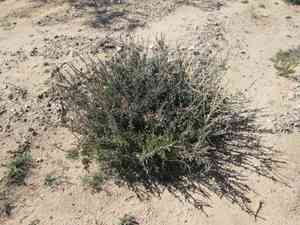
Desert christmas cactus(Cylindropuntia leptocaulis)

Desert christmas cactus (Cylindropuntia leptocaulis)

Also known as: Christmas cactus, Christmas cholla

The Desert Christmas Cactus (Cylindropuntia leptocaulis) is a shrubby cactus native to the southwestern U.S. and northern Mexico, typically growing between 30 and 183 cm in height. Some of its key features include:

1. **Appearance**: Slender, pencil-like stems with sharp spines.
2. **Flowers**: Small, yellow-green flowers that bloom from late spring to early summer, opening in the late afternoon and closing the next morning.
3. **Fruits**: Bright red, berry-like fruits that mature in late fall and winter, often around the Christmas season.

**Uses**:
1. **Ornamental Plant**: Ideal for xeriscaping due to its drought resistance.
2. **Wildlife Habitat**: Provides nesting sites for small animals and birds.
3. **Traditional Practices**: Indigenous tribes crushed the fruits for their intoxicating effects.

This cactus is well-suited for arid environments and adds ecological and ornamental value to desert landscapes.

Attributes of Desert christmas cactus

Lifespan
Perennial
Plant Type
Shrub, Succulent
Plant Height
50 cm to 1.8 m
Spread
Approximately 1 to 2 meters (3 to 6 feet)
Leaf Color
Green Blue
Flower Size
1.02 cm to 1.5 cm
Flower Color
Yellow Green

ForwardPlant - Identify plants with a snap

Identify and diagnose plants, get toxicity alerts, and explore safety guides for all types of fungi.

Try for Free

Images of Desert christmas cactus

Desert christmas cactus(Cylindropuntia leptocaulis)

Quickly Identify Desert christmas cactus

1
Identification of Cylindropuntia leptocaulis can be done by observing its thin, cylindrical stems that are somewhat pencil-like in diameter. It has prominent spines and produces small, red berries. The flowers are small, greenish to yellow in color.

Scientific Classification of Desert christmas cactus

Phylum
Vascular plants
Class
Dicotyledons
Order
Caryophyllales
Family
Cactuses
Genus
Chollas
Species
Desert christmas cactus

Planting and Growing of Desert christmas cactus

Care Difficulty
Easy
Watering Schedule
Every 2 days
Sunlight Requirements
Full sun
Sunshine Duration
6-10 hours
Ideal Temperature
70-85℉
Soil Type
Potting Mix, Peat Mix
Soil pH
6.5-8
Fertilizer Type
Balanced
Pruning Season
Spring, Summer
Pruning Area
Branches, Leaves
Pruning Frequency
2 times a year
Repotting Season
Spring
Pot Type
Plastic, Ceramic

water icon How to Water Desert christmas cactus?

For Cylindropuntia leptocaulis, it's crucial to water deeply yet infrequently. When you water, ensure the soil is thoroughly moist but not waterlogged. Stick to around 50 milliliters, allowing the soil to dry out completely between sessions to mimic its native arid conditions, ensuring roots don't rot.
What are the symptoms of an underwatered Desert christmas cactus?
What should I do if my Desert christmas cactus is not getting enough water?
What are the symptoms of an overwatered Desert christmas cactus?
How to save an overwatered Desert christmas cactus?

sunlight icon What Are the Sunlight Requirements for Desert christmas cactus?

Sunlight Requirements: Full sun
Duration of light: 10-12 hours
Cylindropuntia leptocaulis thrives in full sun, benefiting from intense, direct light exposure like its desert environment. Adequate sunlight promotes strong, vibrant growth and abundant blooming.
What is the best location for Cylindropuntia leptocaulis?
What if I don't have access to prolonged direct sunlight?
Why is sufficient sunlight crucial for this plant?
More About Sunlight Requirements Techniques

temperature icon What Is the Ideal Temperature Range for Desert christmas cactus?

Ideal Temperature: 70 ~ 85℉
Cylindropuntia leptocaulis thrives best in a temperature range of 70°F to 85°F. This range provides the optimal condition for growth, ensuring that the plant can photosynthesize efficiently and maintain its metabolic processes. Within this temperature band, the plant is least stressed and can allocate its energy to robust growth and reproduction.

soil icon What Soil is Best for Desert christmas cactus?

Soil type: Sandy soil, Loam, Calcareous soil
Soil PH: 6.5 ~ 8
Cylindropuntia leptocaulis thrives in well-draining soil to prevent waterlogging, which can lead to root rot. This requirement is crucial as it allows for proper air circulation and nutrient uptake, ensuring healthy growth and resilience against diseases. Cylindropuntia leptocaulis prefers soils with low organic matter and fertility. This requirement reflects the plant's natural adaptation to nutrient-poor environments, reducing the need for frequent fertilization and making it a low-maintenance plant. The plant benefits from soil that retains some moisture but doesn't remain soggy. This balance helps supply the plant with necessary hydration while preventing conditions that promote fungal growth.

fertilize icon How to Fertilize Desert christmas cactus?

Fertilizer type: Balanced
Cylindropuntia leptocaulis, commonly known as pencil cholla, requires minimal fertilization due to its adaptability to low-nutrient desert environments. A weak liquid fertilizer diluted to half of the recommended strength is sufficient. Typically, 10-20 ml of liquid fertilizer mixed into 1 liter of water is effective.

prune icon How to Prune Desert christmas cactus?

Pruning Time: Spring, Summer, Autumn
It's important to use sharp and sturdy pruning shears when working with Cylindropuntia leptocaulis. A sharp blade ensures a clean cut, reducing the potential for tearing or damaging the plant's stems. Start by removing any dead or damaged segments. These parts can attract pests and harbor diseases, so focusing on them first ensures the remaining plant parts stay healthy. After removing damaged segments, step back and view the overall shape of the plant. Trim any parts that disrupt the plant's natural form or grow inwards, which can lead to overcrowding.

propagate icon How to Propagate Desert christmas cactus plant?

Propagate Time: Spring,Early summer
1
Choose healthy segments from the mother plant, ideally from branches that are at least a year old. Avoid any sections that show signs of disease or damage, as these can hinder successful propagation.
2
For cuttings, allow the cut end to callus over for a few days to prevent rot. For seeds, scarify them gently to promote germination, which might be naturally hindered by the seed's tough outer coating.
3
Plant cuttings in prepared pots with cactus mix and water sparingly. Seeds should be sown on the surface of the mix and covered lightly. Maintain a warm, moderately humid environment for optimal growth.
More About Propagating Techniques

repot icon How to Repot Desert christmas cactus plant?

Repotting frequency: Every couple of years
1
For Cylindropuntia leptocaulis, repotting is necessary when the roots begin to outgrow the pot, or the soil becomes too compacted and loses its draining properties. Spring and summer are ideal times, as the plant is actively growing and can quickly recover from being disturbed. Look for roots growing out of the drainage holes or a slowed growth pace as clear signs that repotting is needed.
2
Choose a pot that is one size larger than the current one for your Cylindropuntia leptocaulis. A terracotta pot is a great choice as it allows air exchange and moisture wicking, preventing root rot. Ensure that the pot has drainage holes to provide necessary aeration and drainage, crucial for succulents' health.
3
Opt for a well-draining mix, such as a commercial cactus mix amended with coarse sand or perlite. This soil type ensures proper drainage, preventing water retention that could lead to root rot. The gritty texture mimics the plant's natural habitat, ensuring its roots get the perfect balance of moisture and aeration.
More About Repotting Techniques

ForwardPlant - Identify plants with a snap

Find the best spots for them to optimize their health, simply using your phone.

Try for Free

Toxicity

Ingestion, Skin contact

Identify toxic plants for your safety

Learn which plants are harmful to you and your pets, and make informed choices for a safer home!

Try for Free
WARNING
The judgment on toxicity and danger is for reference only. We DO NOT GUARANTEE any accuracy of such judgment. Therefore, you SHALL NOT rely on such judgment. It is IMPORTANT TO SEEK PROFESSIONAL ADVICE in advance when necessary.