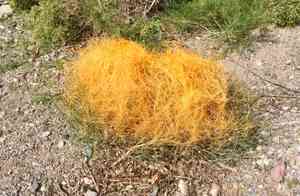
Desert dodder (Cuscuta denticulata)
Also known as: Small-toothed dodder, Desert dodder
The desert dodder (Cuscuta spp.) is a parasitic plant characterized by its slender, thread-like stems that wrap around and infiltrate host plants to draw nutrients and water. Its small, toothed flowers are specifically adapted for a parasitic lifestyle, relying entirely on other plants for survival. Due to its lack of chlorophyll, the desert dodder exhibits a yellow to orange coloration. It can prosper in different ecosystems by parasitizing a wide range of plant species.
In This Article
Attributes of Desert dodder
Lifespan
Annual
Plant Type
Vine
Plant Height
Usually does not grow in height, as it twines around host plants
Spread
Does not have a crown; spreads as a network of vines
Leaf Color
Lacks traditional leaves; has scales instead
Flower Size
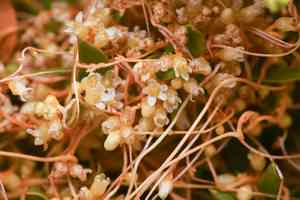
Approximately 0.1 to 0.2 inches (2.5 to 5 mm)
Flower Color
White or pinkish
Images of Desert dodder
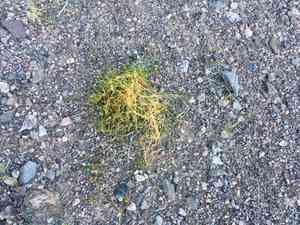
Quickly Identify Desert dodder
1
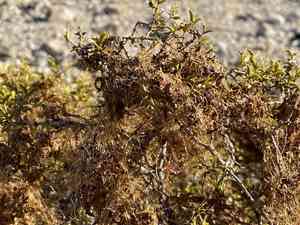
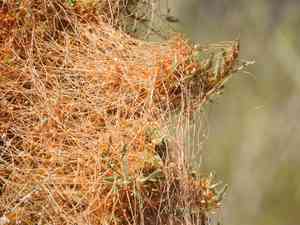
Look for thin, yellowish-orange vines that twine around host plants. The presence of small, tooth-like structures along the vines is a distinctive feature for identifying Cuscuta denticulata.
Scientific Classification of Desert dodder
Phylum
Vascular plants
Class
Dicotyledons
Order
Solanales
Family
Morning-glory
Genus
Dodder
Species
Desert dodder
Planting and Growing of Desert dodder
Care Difficulty
Hard
Watering Schedule
Every day
Sunlight Requirements
Full sun
Sunshine Duration
4-8 hours
Ideal Temperature
59-77℉
Soil Type
Potting Mix, Peat Mix
Soil pH
6.5-7.5
Fertilizer Type
Balanced
Pruning Season
Spring, Summer
Pruning Area
Branches, Leaves
Pruning Frequency
2 times a year
Repotting Season
Spring
Pot Type
Terracotta, Plastic
 How to Water Desert dodder?
Cuscuta denticulata, commonly known as desert dodder, requires minimal watering given its parasitic nature. When watering, ensure the soil is barely moist, mimicking its origin in arid environments. It's crucial to avoid over-saturating, as this plant is more accustomed to dry conditions.
What are the symptoms of an underwatered Desert dodder?
›
What should I do if my Desert dodder is not getting enough water?
›
What are the symptoms of an overwatered Desert dodder?
›
How to save an overwatered Desert dodder?
›
 What Are the Sunlight Requirements for Desert dodder?
Cuscuta denticulata thrives in full sun environments, where ample light ensures vigorous growth and energy for effective parasitism and longer lifespan.
How does Cuscuta denticulata best absorb sunlight?
›
What strategies enhance light absorption for Cuscuta denticulata?
›
What benefits arise from optimal light exposure for Cuscuta denticulata?
›
 What Is the Ideal Temperature Range for Desert dodder?
Cuscuta denticulata thrives best within a temperature range of 59°F to 77°F. This range provides optimal conditions for its growth and photosynthetic activity. Maintaining these temperatures helps in achieving the most vigorous growth and developmental phase for the plant, ensuring its health and vibrancy.
 What Soil is Best for Desert dodder?
Cuscuta denticulata thrives in well-drained soils, which prevent waterlogging and root rot. Providing such a soil helps ensure robust growth and reduces the risk of disease. Surprisingly, this plant doesn't require nutrient-rich soils. Growing it in less fertile conditions can actually reduce competition from other plants and weeds, thus supporting its parasitic lifestyle. Rich organic matter can be detrimental as it supports host plant competition. Keeping the soil moderately organic-free favors Cuscuta denticulata's unique growth strategy.
 How to Fertilize Desert dodder?
Cuscuta denticulata, known for its parasitic lifestyle, typically requires very minimal fertilization. When fertilizing, ensure to use diluted liquid fertilizers or sparingly apply slow-release fertilizers. Too much fertilization can overwhelm the plant's parasitic nature, leading to detrimental effects.
 How to Prune Desert dodder?
Always utilize sharp and clean tools when pruning Cuscuta denticulata. Dull tools can cause jagged cuts that are more susceptible to infection and disease, while sharp tools ensure clean cuts that promote healthy regrowth. Remove any diseased or damaged sections first to prevent the spread of infection. Look for discolored, wilted, or otherwise unhealthy stems or leaves, and prune them away promptly. Pruning is not just about growth control—it's also a chance to shape and direct your plant's development. Gently trim back overgrown sections to foster a more appealing and healthier plant structure. Consider the plant's natural growth habit while shaping.
More About Pruning Techniques→
 How to Propagate Desert dodder plant?
1
Distribute the seeds evenly on the surface of a moistened soil mix in seed trays. Cover lightly with a thin layer of soil or sand to ensure they are not exposed directly to air.
2
Keep the soil moist but not waterlogged by misting regularly. Use a transparent cover or plastic wrap to retain humidity, but ensure there is adequate ventilation to avoid fungal growth.
3
Place the seed trays in a well-lit area with indirect sunlight. The ideal temperature for germination is around 20-25°C. If needed, a heat mat can be used to maintain consistent warmth.
 How to Repot Desert dodder plant?
1
Repotting should occur when the plant becomes root-bound, which is evident when you notice roots poking through the drainage holes or growth stagnating. This typically happens once every couple of years. Repotting in spring or summer aligns with Cuscuta denticulata’s active growth phase, providing it time to adapt.
2
Select a pot slightly larger than the current one with ample drainage holes. The new container should accommodate the roots without excessive space to prevent water retention, which can lead to root rot. A clay pot is preferable as it allows for better air exchange and moisture control.
3
Opt for a well-draining soil mix tailored for succulents or cacti. This type of soil prevents waterlogged roots and mimics the plant's native environment. Incorporating materials like sand or perlite will aid in improving drainage capacity, keeping the roots healthy.



