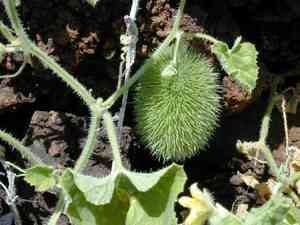
Teasel gourd(Cucumis dipsaceus)

Teasel gourd (Cucumis dipsaceus)

Also known as: Wild spiny gourd, Teasel cucumber, Arabian cucumber

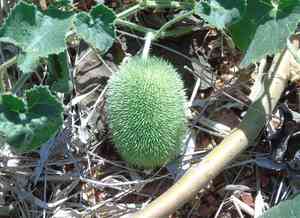
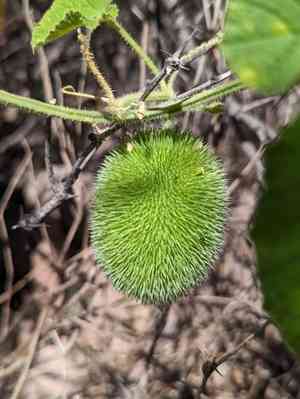
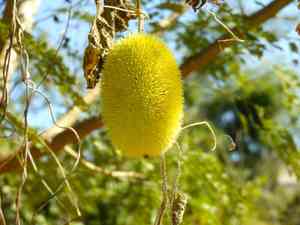
Cucumis dipsaceus, commonly known as Arabian cucumber or hedgehog cucumber, is an annual climbing herb found in tropical and arid regions, particularly native to eastern Africa, including Sudan, southern Egypt, and Ethiopia. The fruits, covered in hair and turning from green to yellow as they mature, have earned the nickname "hedgehog cucumber." Traditionally, the young shoots and leaves are cooked with groundnut paste or occasionally with coconut milk. Besides its culinary uses, the fruit is valued for its medicinal properties as an analgesic. Though primarily collected from the wild, the plant has also been domesticated. It has become invasive in parts of the Americas, including Hawaii and some U.S. states, with no effective control methods documented.

Attributes of Teasel gourd

Lifespan
Annual
Plant Type
Herb, Vine
Plant Height
2 m
Spread
45 cm
Leaf Color
Green
Flower Size
2 cm to 2.5 cm
Flower Color
Yellow

ForwardPlant - Identify plants with a snap

Identify and diagnose plants, get toxicity alerts, and explore safety guides for all types of fungi.

Try for Free

Images of Teasel gourd

Teasel gourd(Cucumis dipsaceus)

Quickly Identify Teasel gourd

1
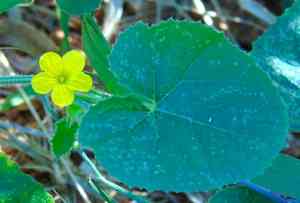
Heart-shaped trilobed leaves with toothed margins and fine hairs
2
Distinct oblong fruit covered in protective hairs, changing from green to yellow
3
Quadrangular climbing stems up to 6 feet (183 cm) long, covered in fine hairs
4
Yellow monoecious flowers with male blooms measuring 1/2 to 3/4 inch (1.3 to 1.9 cm)
5
Male flowers possess three stamens, while female flowers have three-lobed stigmas

Scientific Classification of Teasel gourd

Phylum
Vascular plants
Class
Dicotyledons
Order
Cucurbitales
Family
Gourd
Genus
Melon
Species
Teasel gourd

Planting and Growing of Teasel gourd

Care Difficulty
Easy
Watering Schedule
Every 3 days
Sunlight Requirements
Full sun
Sunshine Duration
4-8 hours
Ideal Temperature
68-86℉
Soil Type
Potting Mix, Peat Mix
Soil pH
6.5-7.5
Fertilizer Type
Balanced
Pruning Season
Spring, Summer
Pruning Area
Branches, Leaves
Pruning Frequency
2 times a year
Repotting Season
Spring
Pot Type
Terracotta, Plastic

water icon How to Water Teasel gourd?

Cucumis dipsaceus requires moderate watering to thrive. Ensure the soil is evenly moist but not waterlogged. Watering 500 ml per session is ideal, ensuring the water penetrates the root zone adequately without leaving the soil soggy.
What are the symptoms of an underwatered Teasel gourd?
What should I do if my Teasel gourd is not getting enough water?
What are the symptoms of an overwatered Teasel gourd?
How to save an overwatered Teasel gourd?

sunlight icon What Are the Sunlight Requirements for Teasel gourd?

Sunlight Requirements: Full sun, Partial sun
Duration of light: 6 to 8 hours
Ideally, Cucumis dipsaceus prospers in full to partial sun. Sufficient light fosters lush foliage, strong stems, and prolific flowering. Consistency in light provision helps maintain stable growth and enhances the plant's ornamental appeal.
What is the ideal amount of sunlight?
How can you provide this ideal sunlight?
What benefits does ideal sunlight offer?
More About Sunlight Requirements Techniques

temperature icon What Is the Ideal Temperature Range for Teasel gourd?

Ideal Temperature: 68 ~ 86℉
Cucumis dipsaceus thrives best in temperatures ranging from 68°F to 86°F. These conditions mimic its native habitat, allowing for optimal photosynthesis and growth, resulting in a healthy and robust plant.

soil icon What Soil is Best for Teasel gourd?

Soil type: Loam, Sandy loam
Soil PH: 6.5 ~ 7.5
Cucumis dipsaceus thrives in soil that has excellent drainage properties, which prevents waterlogging and promotes healthy root growth. Well-draining soil offers a balance of moisture and air, crucial for this plant's growth. A fertile soil rich in organic matter benefits Cucumis dipsaceus by providing essential nutrients. Adding compost or well-rotted manure can enhance soil fertility, leading to a more robust plant with healthy foliage and higher yields. Maintaining moderate moisture levels in the soil is key for Cucumis dipsaceus. Consistent moisture ensures that the plant does not undergo stress due to drought, promoting continuous growth and preventing wilting.

fertilize icon How to Fertilize Teasel gourd?

Fertilizer type: Balanced
For Cucumis dipsaceus, ensure that you use a balanced liquid fertilizer at a concentration of one-quarter strength. Avoid over-fertilizing as it can burn the roots. Each application should involve roughly 200 ml of the diluted solution per plant, which is sufficient to promote healthy growth without overwhelming the plant's nutrient absorption capabilities.

prune icon How to Prune Teasel gourd?

Pruning Time: Spring, Summer
Use clean, sharp shears to cut back overgrown or damaged stems. Focus on removing dead or diseased branches to prevent spread. Cut at an angle just above a healthy node to encourage new growth. Perform major cuts during the growing seasons of spring and summer. More About Pruning Techniques

propagate icon How to Propagate Teasel gourd plant?

Propagate Time: Spring, Early summer
1
Prepare well-draining soil mixed with organic compost to provide essential nutrients for the seeds. Ensure the soil is moist but not waterlogged to prevent rot and encourage healthy seedling growth.
2
Sow the seeds about 1/2 inch deep and cover them lightly with soil. Space them adequately to allow room for growth and reduce competition for resources such as light and water.
3
Water the sowed seeds gently but thoroughly, ensuring the soil remains consistently moist. Be careful to avoid over-watering as this can lead to fungal diseases or seed rot.
More About Propagating Techniques

repot icon How to Repot Teasel gourd plant?

Repotting frequency: Every 2-3 years
1
Look for signs like roots emerging from drainage holes or soil drying out rapidly. These indicate that Cucumis dipsaceus needs more space for roots to grow. Spring is the ideal time as the plant enters a growth phase, ensuring resilience during the transplant.
2
Choose a pot that is only slightly larger than the current one, with good drainage. The right size prevents water from pooling, reducing root rot risk. Terracotta pots are excellent as they facilitate moisture evaporation and control soil moisture levels effectively.
3
Opt for a well-draining cactus mix with added perlite or sand. This combination mimics natural growth conditions, ensuring excess water does not linger. Good drainage aerates roots and prevents fungal issues, promoting healthy growth post-repotting.

ForwardPlant - Identify plants with a snap

Find the best spots for them to optimize their health, simply using your phone.

Try for Free