Indian rattlebox(Crotalaria assamica)

Indian rattlebox (Crotalaria assamica)

Also known as: Assam Sunn Hemp

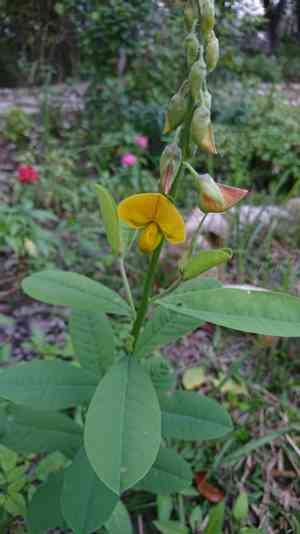
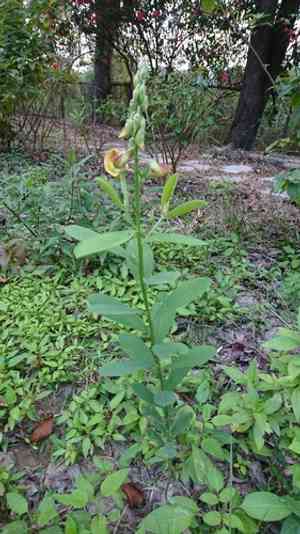
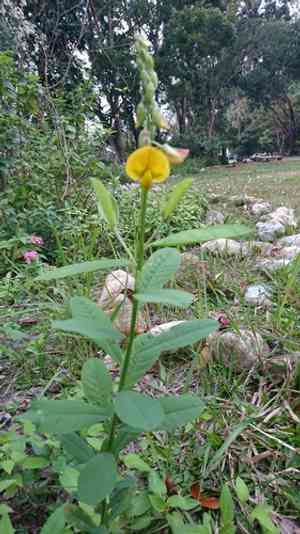
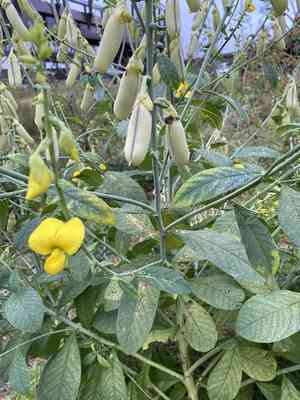
Indian rattlebox (Crotalaria pallida) is a leguminous plant primarily found in tropical regions, such as Assam. It is easily identified by its bright yellow, pea-like flowers and trifoliate leaves with three oblong leaflets. One of its distinctive features is the seed pods that make a rattling sound when dry.

Preferred growing conditions for Indian rattlebox include:
- **Climate**: Best suited to tropical and subtropical climates.
- **Soil**: Prefers well-drained, sandy or loamy soils.
- **Sunlight**: Requires full sun for optimal growth.
- **Water**: Needs moderate watering; it is drought-tolerant once established.
- **pH**: Grows well in slightly acidic to neutral soils.

Indian rattlebox is valued for its ability to improve soil fertility through nitrogen fixation.

Attributes of Indian rattlebox

Lifespan
Perennial
Plant Type
Shrub
Plant Height
1.0 to 1.5 meters
Spread
Variable, depending on growth conditions
Leaf Color
Green
Flower Size
1.0 to 1.5 cm
Flower Color
Bright Yellow

ForwardPlant - Identify plants with a snap

Identify and diagnose plants, get toxicity alerts, and explore safety guides for all types of fungi.

Try for Free

Images of Indian rattlebox

Indian rattlebox(Crotalaria assamica)

Quickly Identify Indian rattlebox

1
Crotalaria assamica can be identified by its bright yellow flowers, elongated leaves, and the distinctive inflated seed pods that create a rattling sound when shaken.

Scientific Classification of Indian rattlebox

Phylum
Vascular plants
Class
Dicotyledons
Order
Fabales
Family
Legume
Genus
longbeak rattlebox
Species
Indian rattlebox

Planting and Growing of Indian rattlebox

Care Difficulty
Moderate
Watering Schedule
Every 2 days
Sunlight Requirements
Partial sun
Sunshine Duration
6-8 hours
Ideal Temperature
65-80℉
Soil Type
Potting Mix, Peat Mix
Soil pH
6.5-7.5
Fertilizer Type
Balanced
Pruning Season
Spring, Summer
Pruning Area
Branches, Leaves
Pruning Frequency
2 times a year
Repotting Season
Spring
Pot Type
Plastic, Ceramic

water icon How to Water Indian rattlebox?

Crotalaria assamica requires moderate watering, about 500 milliliters each time. Make sure the soil is evenly moist but not waterlogged. Allow the top inch of soil to dry out between waterings, ensuring proper drainage to prevent root rot.
What are the symptoms of an underwatered Indian rattlebox?
What should I do if my Indian rattlebox is not getting enough water?
What are the symptoms of an overwatered Indian rattlebox?
How to save an overwatered Indian rattlebox?

sunlight icon What Are the Sunlight Requirements for Indian rattlebox?

Sunlight Requirements: Partial sun
Duration of light: 4-6 hours of sunlight
Crotalaria assamica flourishes with partial sunlight, ideally 4 to 6 hours of direct sun daily. This range supports robust growth, vibrant blossoms, and ensures healthy, lush foliage.
How much direct sunlight is ideal?
What should I do if I can't provide enough natural light?
Why is maintaining ideal lighting conditions important?

temperature icon What Is the Ideal Temperature Range for Indian rattlebox?

Ideal Temperature: 65 ~ 80℉
The ideal temperature range for growing Crotalaria assamica is between 65°F and 80°F. This range ensures optimal growth and flowering by maintaining metabolic and physiological processes effectively.

soil icon What Soil is Best for Indian rattlebox?

Soil type: Loam, Sandy loam
Soil PH: 6.5 ~ 7.5
Crotalaria assamica thrives in well-draining soil, which prevents root rot and ensures optimal growth. Well-draining soils allow air to reach the roots, which is essential for nutrient absorption and overall plant health. This plant prefers nutrient-rich soils that provide ample organic matter to support its growth. Nutrients like nitrogen, phosphorus, and potassium are crucial for developing strong stems and vibrant foliage, enhancing the plant's natural beauty. While drainage is essential, the soil should also retain enough moisture to support the plant during dry spells. Achieving this balance prevents dehydration and encourages consistent growth, leading to a lush, green display.

fertilize icon How to Fertilize Indian rattlebox?

Fertilizer type: Balanced
For Crotalaria assamica, it is crucial to apply fertilizers judiciously. When using liquid fertilizers, dilute them to half of the recommended strength on the packaging. For slow-release fertilizers, use about 50 grams per plant to ensure sustained nutrient availability.

prune icon How to Prune Indian rattlebox?

Pruning Time: Spring, Summer
Prune Crotalaria assamica during spring or early summer when the plant is actively growing. Use clean, sharp pruning shears to make precise cuts. This is crucial to avoid damaging the plant and to ensure cleaner cuts that heal faster. Begin by removing any dead, diseased, or damaged branches to prevent the spread of infections. Then, focus on shaping the plant by trimming back any excessively long or unruly branches to promote a more compact and aesthetically pleasing form. Make cuts just above a node (the point where leaves attach to the stem) to stimulate new growth and flowering. By doing so, you enable the plant to channel energy into producing more blooms, enhancing its visual appeal and floral output.

propagate icon How to Propagate Indian rattlebox plant?

Propagate Time: Early spring, Late spring, Early summer
1
Start by soaking the seeds in warm water for about 24 hours. This helps to soften the seed coat, promoting quicker germination once planted in the seed tray.
2
Select a healthy branch and make a clean cut below a node using sterilized pruning shears. Ensure the cuttings are approximately 4-6 inches long.
3
Plant the seeds or cuttings into the soil mix in the seed tray or pot. Cover lightly with soil and water gently to keep the soil moist but not waterlogged.

repot icon How to Repot Indian rattlebox plant?

Repotting frequency: Every 1-2 years
1
Crotalaria assamica should be repotted when its root system starts to outgrow the current pot or when the potting mix becomes depleted of nutrients. Key signs include roots appearing at the drainage holes or a generally cramped appearance. It's best to repot during the growing seasons of spring or early summer when the plant can recover more quickly.
2
Select a pot that is about 2 inches larger in diameter than the current one. This provides the plant with enough room to grow without overwhelming it with too much soil that may retain excess moisture. A pot with drainage holes is vital to prevent waterlogging, which can lead to root rot.
3
Opt for a well-draining sandy loam mix that replicates the native habitat of Crotalaria assamica. This type of soil keeps excess moisture away from the roots, preventing rot and ensuring that the plant gets the oxygen it needs. Incorporating some organic matter can help provide essential nutrients as well.

ForwardPlant - Identify plants with a snap

Find the best spots for them to optimize their health, simply using your phone.

Try for Free

Toxicity

ingestion

Identify toxic plants for your safety

Learn which plants are harmful to you and your pets, and make informed choices for a safer home!

Try for Free
WARNING
The judgment on toxicity and danger is for reference only. We DO NOT GUARANTEE any accuracy of such judgment. Therefore, you SHALL NOT rely on such judgment. It is IMPORTANT TO SEEK PROFESSIONAL ADVICE in advance when necessary.