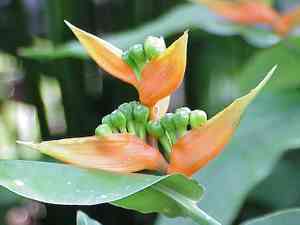
Spiral ginger (Costus pulverulentus)
Also known as: Stepladder ginger
The plant you're describing seems to be "Spiral Ginger." This tropical plant showcases a spiral pattern of large, green, and fuzzy leaves. It features eye-catching red or yellow cylindrical flowers that grow from cone-shaped bracts, drawing in pollinators like hummingbirds. Preferring moist, shaded areas, Spiral Ginger grows vigorously and often forms thick clusters, making the most of the limited light in understory habitats.
In This Article
Attributes of Spiral ginger
Lifespan
Perennial
Plant Type
Herb
Plant Height
1.5-2 meters
Spread
Not typically measured due to stem structure
Leaf Color
Green, often with a slight metallic sheen
Flower Size
3-4 cm
Flower Color
Red with yellow throat
Images of Spiral ginger
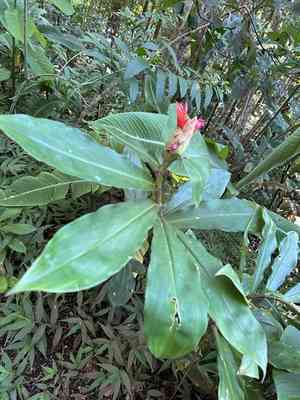
Quickly Identify Spiral ginger
1
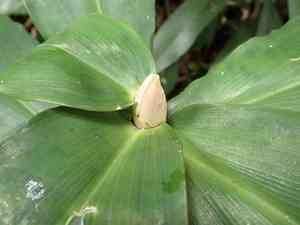
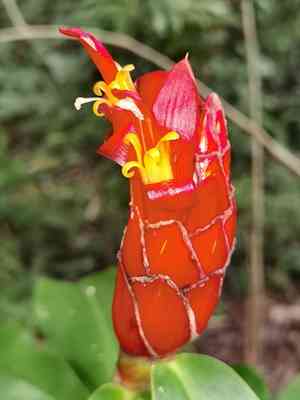
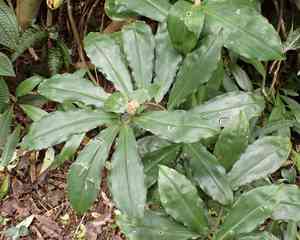
Look for its characteristic spirally arranged leaves and red tubular flowers with a bright yellow throat. The stems are often covered with fine hairs.
Scientific Classification of Spiral ginger
Phylum
Vascular plants
Class
Monocotyledons
Order
Zingiberales
Family
Costus
Genus
Costus
Species
Spiral ginger
Planting and Growing of Spiral ginger
Care Difficulty
Moderate
Watering Schedule
Every 3 days
Sunlight Requirements
Partial sun
Sunshine Duration
4-8 hours
Ideal Temperature
70-85℉
Soil Type
Potting Mix, Peat Mix
Soil pH
6.5-7.5
Fertilizer Type
Balanced
Pruning Season
Spring, Summer
Pruning Area
Branches, Leaves
Pruning Frequency
2 times a year
Repotting Season
Spring
Pot Type
Plastic, Ceramic
 How to Water Spiral ginger?
Costus pulverulentus prefers evenly moist soil, meaning it should be kept consistently damp but not waterlogged. The key is to water only until the top inch of soil feels slightly moist. This typically requires around 250ml of water per session, depending on your pot size.
What are the symptoms of an underwatered Spiral ginger?
›
What should I do if my Spiral ginger is not getting enough water?
›
What are the symptoms of an overwatered Spiral ginger?
›
How to save an overwatered Spiral ginger?
›
 What Are the Sunlight Requirements for Spiral ginger?
Partial sun conditions with 4 to 6 hours of light a day are ideal. A balanced lighting schedule ensures vibrant growth and helps maintain the plant's overall health.
How much sun does it need?
›
What solutions help achieve ideal lighting?
›
What benefits come from the ideal lighting?
›
 What Is the Ideal Temperature Range for Spiral ginger?
The ideal temperature range for cultivating Costus pulverulentus is between 70°F and 85°F. These conditions emulate the plant's natural habitat in tropical regions, promoting healthy growth and blooming. In this range, Costus pulverulentus can maximize its photosynthetic efficiency, leading to vibrant foliage and robust health.
 What Soil is Best for Spiral ginger?
Costus pulverulentus thrives in well-drained soil to prevent root rot. Ensuring proper drainage allows roots to access oxygen and essential nutrients, improving plant health and growth. The plant benefits from nutrient-rich soil, providing it with vital minerals for robust growth. Fertile soil enhances the plant's vigor, leading to lush foliage and better flowering. Maintaining consistent moisture levels in the soil supports the plant's tropical origin, preventing wilting and enhancing overall resilience. Adequate moisture ensures continuous nutrient uptake.
 How to Fertilize Spiral ginger?
For Costus pulverulentus, apply liquid fertilizer at a rate of half to a quarter of the recommended strength on the label. This plant prefers a balanced fertilizer rich in nitrogen, phosphorus, and potassium. Use about 1/4 teaspoon per gallon of water to ensure not to burn the roots.
 How to Prune Spiral ginger?
Begin by identifying the older and weaker stems. These are usually less vibrant and may have fewer leaves. Focus on trimming these first to encourage more robust growth. Ensure your pruning shears or scissors are sharp and clean. This will make clean cuts and avoid unnecessary damage to the plant tissue, which can help prevent disease. When pruning, aim to open up the plant structure. This allows better air circulation, reduces humidity around the leaves, and mitigates the risk of fungal diseases. Occasionally pinch off the young tips of the plant. This practice encourages the plant to become bushier and denser, adding to its ornamental appeal.
More About Pruning Techniques→
 How to Propagate Spiral ginger plant?
1
Choose mature, non-flowering stems from the parent plant, approximately 4-6 inches in length. Ensure each cutting has at least two nodes for optimal root development.
2
Use a well-draining potting mix composed of equal parts perlite and peat moss. This substrate offers the necessary balance of moisture retention and aeration for new cuttings.
3
Dip the cut end of each cutting in rooting hormone, and place it in the prepared potting mix. Keep the soil consistently moist and maintain a warm, humid environment to encourage rooting.
 How to Repot Spiral ginger plant?
1
Repotting Costus pulverulentus should be done when you notice signs like roots growing out of the drainage holes or the plant becoming root-bound. Also, if the soil dries out too quickly, it's a good signal that repotting is needed. Doing this in spring or summer optimizes growth.
2
Choose a pot 2 inches wider than the current one. Ensure it has ample drainage holes to prevent waterlogging, which can cause root rot. Using a slightly larger pot allows roots to spread, promoting healthier growth and preventing root-bound conditions.
3
Opt for a well-draining, loamy soil mix, perfect for Costus pulverulentus. This mix offers balanced moisture retention, essential to prevent the roots from becoming waterlogged while still providing sufficient nutrients to thrive.
Learn More About Spiral ginger Diseases
Anthracnose
Bacterial Leaf Spot
Bacterial Soft Rot
Bacterial Wilt
Chemical Injury
Damping-off
Downy Mildew
Drought Stress
Fusarium Wilt
Gray Mold
Leaf Curl
Leaf Spot
Mosaic
Nutrient Deficiency
Nutrient Toxicity
Powdery Mildew
Root Rot
Root-knot Nematode
Rusts
Sooty Mold
Spider Mites
Temperature Stress
Thrips Damage
White Mold



