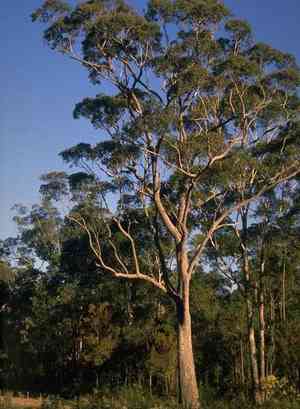
Red bloodwood(Corymbia gummifera)

Red bloodwood (Corymbia gummifera)

Also known as: Red Bloodwood

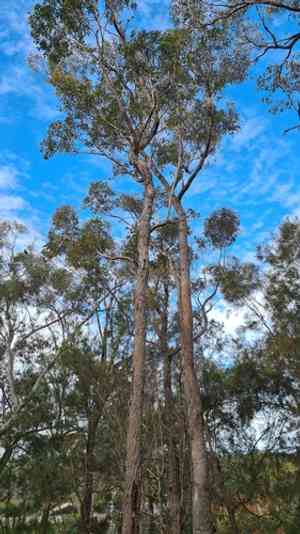
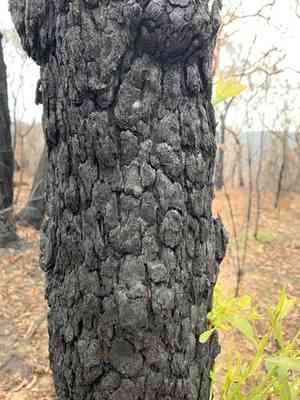
The red bloodwood tree (Corymbia gummifera) is a notable eucalyptus species characterized by its reddish, flaky bark and broad, spreading canopy. This evergreen tree can reach heights of 20-30 meters and features lance-shaped leaves. Its flowers, which range from white to cream, appear in clusters during late spring to summer, attracting various pollinators.

Native to eastern Australia, the red bloodwood thrives in dry sclerophyll forests and woodlands, particularly on sandstone-based soils. It prefers well-drained soils and is well-adapted to withstand drought and poor soil conditions. Additionally, the red bloodwood demonstrates a high resilience to fire, which plays a significant role in its life cycle and the health of its surrounding ecosystem.

Attributes of Red bloodwood

Lifespan
Perennial
Plant Type
Tree
Plant Height
20 m to 35 m
Spread
10 m
Leaf Color
Dark Green
Flower Size
1.7 cm to 3 cm
Flower Color
White

ForwardPlant - Identify plants with a snap

Identify and diagnose plants, get toxicity alerts, and explore safety guides for all types of fungi.

Try for Free

Images of Red bloodwood

Red bloodwood(Corymbia gummifera)

Quickly Identify Red bloodwood

1
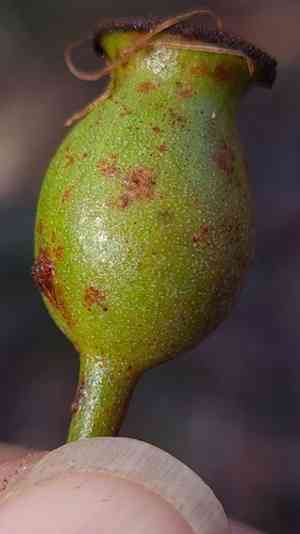
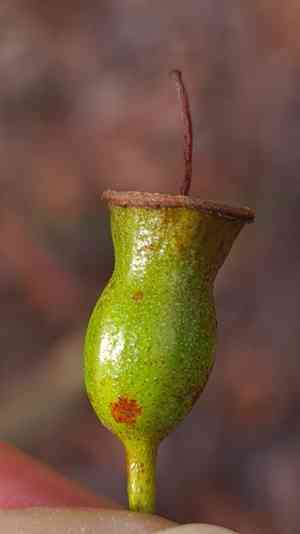
This species can be identified by its distinctive rough, fibrous bark covering the trunk and branches, along with its dark green, lance-shaped leaves. Its flowers are typically red, arranged in clusters.

Scientific Classification of Red bloodwood

Phylum
Vascular plants
Class
Dicotyledons
Order
Myrtales
Family
Myrtle
Genus
Corymbia
Species
Red bloodwood

Planting and Growing of Red bloodwood

Care Difficulty
Moderate
Watering Schedule
Every 2 days
Sunlight Requirements
Full sun
Sunshine Duration
6-10 hours
Ideal Temperature
60-80℉
Soil Type
Potting Mix, Peat Mix
Soil pH
4.5-6.5
Fertilizer Type
Balanced
Pruning Season
Spring, Summer
Pruning Area
Branches, Leaves
Pruning Frequency
2 times a year
Repotting Season
Spring
Pot Type
Plastic, Ceramic

water icon How to Water Red bloodwood?

Corymbia gummifera requires a measured watering approach. Aim to provide about 600 ml of water each time, ensuring the water penetrates the soil thoroughly without creating waterlogged conditions. This amount is sufficient to keep the root zone adequately moist without excessive saturation.
What are the symptoms of an underwatered Red bloodwood?
What should I do if my Red bloodwood is not getting enough water?
What are the symptoms of an overwatered Red bloodwood?
How to save an overwatered Red bloodwood?

sunlight icon What Are the Sunlight Requirements for Red bloodwood?

Sunlight Requirements: Full sun, Partial sun
Duration of light: 6-8 hours per day
Corymbia gummifera flourishes under conditions ranging from full sun to partial sun. This light range supports optimal photosynthesis, leading to lush foliage and overall plant health.
What is the optimal light level for Corymbia gummifera?
How can I optimize light conditions indoors if full sun isn’t available?
What are the benefits of achieving optimal lighting conditions for Corymbia gummifera?

temperature icon What Is the Ideal Temperature Range for Red bloodwood?

Ideal Temperature: 60 ~ 80℉
Corymbia gummifera thrives best in a temperature range between 60°F and 80°F. This range provides the optimal conditions for its growth and development by ensuring a balanced environment that supports photosynthesis and other physiological processes essential for the plant’s vitality.

soil icon What Soil is Best for Red bloodwood?

Soil type: Sandy soil, Loam
Soil PH: 4.5 ~ 6.5
Corymbia gummifera thrives in well-drained soils. This requirement helps prevent root rot by allowing excess water to drain away quickly, ensuring that the roots are not waterlogged and promoting healthy growth. Rich in organic matter, the soil enhances Corymbia gummifera's growth. Nutrients from decaying plant matter support the tree's development, resulting in better foliage and increased resilience against environmental stresses. A pH range of 4.5 to 6.5 is ideal for Corymbia gummifera. Acidic conditions ensure optimal nutrient uptake, vital for robust growth and maintaining the vibrant reddish-pink bark characteristic of this tree.

fertilize icon How to Fertilize Red bloodwood?

Fertilizer type: Balanced
For Corymbia gummifera, a general recommendation is to apply a balanced liquid fertilizer at half the strength suggested by the manufacturer. Use about 100-150 ml per plant when applying liquid fertilizers monthly during the growing season. For slow-release fertilizers, a handful of granules spread around the base once three times a year will suffice.

prune icon How to Prune Red bloodwood?

Pruning Time: Spring, Summer, Autumn, Winter
Start by gathering the right tools: sharp pruning shears or saws for thicker branches. Ensure your tools are sterilized to prevent disease transmission. Wearing gloves is recommended for protection against sap. Look for dead, diseased, or damaged branches. Remove these first as they consume the plant's energy and hinder growth. Next, identify crossing or rubbing branches and cut the less healthy one. Corymbia gummifera benefits from shaping to maintain its aesthetic form. Begin with the central leader and trim branches that diverge from your desired shape. Aim for an open canopy to facilitate air circulation and light penetration. For young specimens, focus on developing a strong structural foundation. Remove competing leaders and reduce co-dominant stems to foster a single, dominant trunk. This helps prevent future structural problems.

propagate icon How to Propagate Red bloodwood plant?

Propagate Time: Early spring, Spring
1
Fill seed trays with a quality potting mix, pressing down gently to remove air pockets. Ensure that the trays have drainage holes to prevent waterlogging, as excess moisture can suppress germination.
2
Distribute seeds evenly across the surface of the potting mix, lightly covering them with a thin layer of soil. Water gently to avoid displacing the seeds and ensure even moisture distribution.
3
Place trays in a warm, well-lit area, but not in direct sunlight. Maintain consistent moisture levels by watering from the bottom, allowing the soil to absorb the water it needs.

repot icon How to Repot Red bloodwood plant?

Repotting frequency: Every 2-3 years
1
Corymbia gummifera should be repotted when you notice roots emerging from the drainage holes or when the plant's growth seems stunted. Another signal is if the soil dries out too quickly after watering. These signs indicate your plant has outgrown its current pot and needs more space to thrive.
2
Opt for a pot that is one size larger than the current one. Ensure the pot has adequate drainage holes to prevent waterlogging, which can lead to root rot. A larger pot provides room for root expansion and stabilizes the plant while supporting healthy growth.
3
Select a well-draining potting mix, preferably one with added sand or perlite. A good soil choice ensures that water disperses evenly and reduces the risk of root rot. This soil type mimics the plant’s natural habitat and allows for optimal nutrient absorption.

ForwardPlant - Identify plants with a snap

Find the best spots for them to optimize their health, simply using your phone.

Try for Free