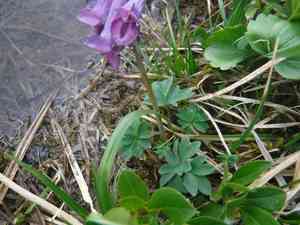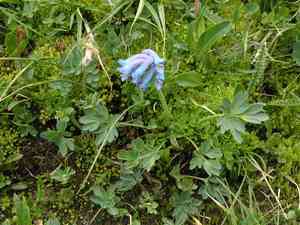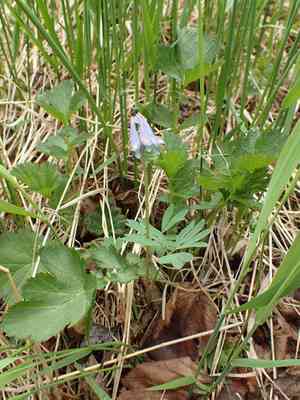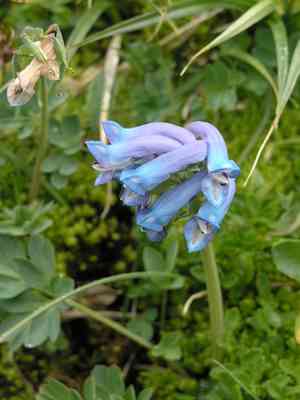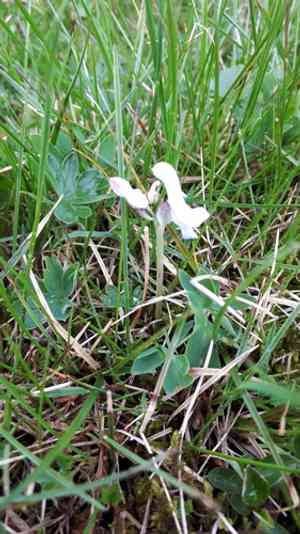
Fewflower fumewort(Corydalis pauciflora)

Fewflower fumewort (Corydalis pauciflora)

Also known as: Few-flowered Corydalis

Fewflower fumewort (Corydalis pauciflora) is a perennial herb notable for its sparse, delicate blooms that range from pale blue to lavender. Emerging in early spring, this plant features slender stems and finely divided, fern-like leaves with a glaucous hue.

For optimal growth, fewflower fumewort prefers:

1. **Habitat**: Shaded woodland areas.
2. **Soil**: Moist, well-drained, and rich in organic matter.
3. **Water**: Consistent moisture, avoiding soggy conditions.
4. **Light**: Partial to full shade.

This plant has an ephemeral lifestyle, retreating underground after its brief flowering period, making it well-suited for woodland gardens and shaded borders.

Attributes of Fewflower fumewort

Lifespan
Perennial
Plant Type
Herb
Plant Height
10-30 cm
Spread
N/A
Leaf Color
Green
Flower Size
1-2 cm
Flower Color
Pale yellow or white

ForwardPlant - Identify plants with a snap

Identify and diagnose plants, get toxicity alerts, and explore safety guides for all types of fungi.

Try for Free

Images of Fewflower fumewort

Fewflower fumewort(Corydalis pauciflora)

Quickly Identify Fewflower fumewort

1
Identification of Corydalis pauciflora involves looking for multiple small, tubular flowers that are usually pale yellow or white. The plant typically has finely divided leaves that resemble those of ferns.

Scientific Classification of Fewflower fumewort

Phylum
Vascular plants
Class
Dicotyledons
Order
Ranunculales
Family
Poppy
Genus
Fumeworts
Species
Fewflower fumewort

Planting and Growing of Fewflower fumewort

Care Difficulty
Moderate
Watering Schedule
Every 2 days
Sunlight Requirements
Partial sun
Sunshine Duration
6-10 hours
Ideal Temperature
60-75℉
Soil Type
Potting Mix, Peat Mix
Soil pH
6.5-7.5
Fertilizer Type
Balanced
Pruning Season
Spring, Summer
Pruning Area
Branches, Leaves
Pruning Frequency
2 times a year
Repotting Season
Spring
Pot Type
Plastic, Ceramic

water icon How to Water Fewflower fumewort?

For Corydalis pauciflora, it is crucial to ensure the soil is evenly moist but not saturated. Aim for about 250 ml of water per session. The goal is to moisten the soil to a depth where the roots can adequately absorb moisture, resembling a well-dampened sponge.
What are the symptoms of an underwatered Fewflower fumewort?
What should I do if my Fewflower fumewort is not getting enough water?
What are the symptoms of an overwatered Fewflower fumewort?
How to save an overwatered Fewflower fumewort?

sunlight icon What Are the Sunlight Requirements for Fewflower fumewort?

Sunlight Requirements: Partial sun
Duration of light: 2 to 4 hours
Partial sun ensures Corydalis pauciflora receives enough light for photosynthesis without causing stress. Ideal lighting results in healthy bloom production and vibrant leaves while preventing common issues related to improper lighting conditions.
What type of sunlight does Corydalis pauciflora prefer?
How can I ensure Corydalis pauciflora gets its ideal light requirement?
What benefits does ideal lighting bring to Corydalis pauciflora?

temperature icon What Is the Ideal Temperature Range for Fewflower fumewort?

Ideal Temperature: 60 ~ 75℉
The ideal temperature range for Corydalis pauciflora growth is between 60°F and 75°F. Maintaining temperatures within this range helps ensure healthy growth and flowering. This temperature range mimics its natural environment, providing the right conditions for enzymatic activities and metabolic processes essential for its development.

soil icon What Soil is Best for Fewflower fumewort?

Soil type: Loam, Sandy loam
Soil PH: 6.5 ~ 7.5
Corydalis pauciflora thrives in soils with excellent drainage to prevent root rot. The loamy texture helps excess water escape, promoting healthy root growth, which is crucial for its overall vitality. This plant prefers moderately fertile soil, allowing it to access essential nutrients without the risk of over-fertilization. The balanced nutrient supply sustains its foliage and flower production. While good drainage is key, the soil should retain enough moisture to keep the roots hydrated. Loamy soil provides the perfect balance, locking in moisture without waterlogging.

fertilize icon How to Fertilize Fewflower fumewort?

Fertilizer type: Balanced
When fertilizing Corydalis pauciflora, moderation is key. Use a diluted liquid fertilizer at half the recommended strength for flowering plants. For each application, use approximately 1 tablespoon per gallon of water. Ensure that the soil is moist before applying any fertilizer to prevent root burn.

prune icon How to Prune Fewflower fumewort?

Pruning Time: Spring, Summer
Begin by inspecting the plant for any stems that look dead, damaged, or diseased. Cut these back to the base to allow for healthier growth from new shoots. Trim back the longer stems to maintain a neat and tidy shape. This not only improves the plant's aesthetics but also promotes a more uniform growth pattern across the plant. Pruning after the first flowering helps encourage a second wave of blooms. Cut back spent flowers to the nearest leaf joint, fostering the energy of the plant towards producing new flowers. More About Pruning Techniques

propagate icon How to Propagate Fewflower fumewort plant?

Propagate Time: Spring, Early spring, Late spring
1
Fill a seed tray with well-draining potting mix. Create shallow grooves and evenly distribute the seeds, covering them lightly with soil. Keep the soil moist but not waterlogged to promote germination.
2
Select a mature Corydalis pauciflora clump during the division process. Gently dig around the plant and lift it from the soil, being careful not to damage the roots. Use a sharp knife to separate the clump into smaller sections.
3
Plant each division into a prepared pot or directly into the garden. Ensure each section has an adequate root system and is planted at the same depth as it was growing originally. Water thoroughly after planting.
More About Propagating Techniques

repot icon How to Repot Fewflower fumewort plant?

Repotting frequency: Every two to three years
1
Corydalis pauciflora exhibits the need for repotting when growth slows noticeably, roots start circling the pot, or drainage becomes problematic. Optimal repotting occurs in spring when the plant is gearing up for the growing season, aiding recovery and establishment in a larger pot.
2
Select a pot that's one size larger with drainage holes to prevent waterlogging. Terracotta pots work well as they allow air exchange, reducing potential root rot. A slightly wider pot also provides stability to this delicate plant.
3
Opt for a well-draining sandy loam that mimics its natural habitat. This type of soil retains enough moisture for growth while preventing root suffocation, thus fostering a healthy root environment and promoting vibrant blooms.

ForwardPlant - Identify plants with a snap

Find the best spots for them to optimize their health, simply using your phone.

Try for Free

Toxicity

Ingestion

Identify toxic plants for your safety

Learn which plants are harmful to you and your pets, and make informed choices for a safer home!

Try for Free
WARNING
The judgment on toxicity and danger is for reference only. We DO NOT GUARANTEE any accuracy of such judgment. Therefore, you SHALL NOT rely on such judgment. It is IMPORTANT TO SEEK PROFESSIONAL ADVICE in advance when necessary.