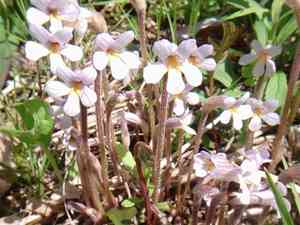
Pennell's bird's beak (Cordylanthus tenuis)
Also known as: Fresno county bird's-beak, Serpentine bird's-beak
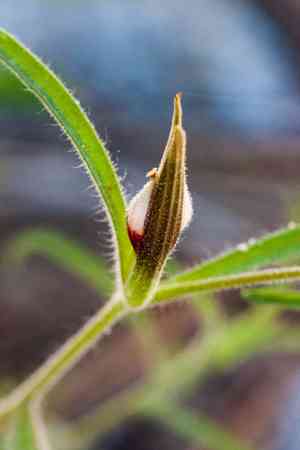
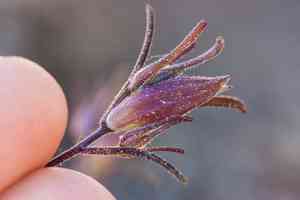
Pennell's bird's beak is named for its distinctive beak-like flowers. This annual herb partly parasitizes by connecting its roots to nearby shrubs and trees for nutrients. While it bears a resemblance to serpentine bird's-beak, it stands out due to its unique three-lobed outer bracts.
In This Article
Attributes of Pennell's bird's beak
Lifespan
Annual
Plant Type
Herb
Plant Height
10-50 cm
Spread
N/A
Leaf Color
Green
Flower Size
Up to 1 cm
Flower Color
White, reddish, or purple
Images of Pennell's bird's beak
Quickly Identify Pennell's bird's beak
1
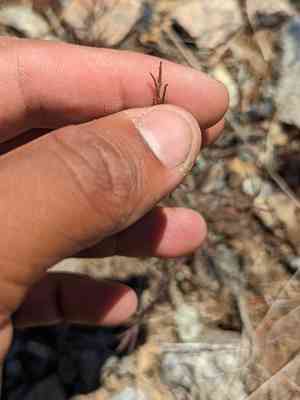
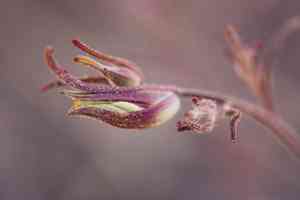
Look for a small, slightly hairy, branched herb with linear or narrowly lanceolate leaves. The flowers are tubular and can be white, reddish, or purple, resembling a bird\'s beak.
Scientific Classification of Pennell's bird's beak
Phylum
Vascular plants
Class
Dicotyledons
Order
Lamiales
Family
Broomrape
Genus
Bird's-beak
Species
Pennell's bird's beak
Planting and Growing of Pennell's bird's beak
Care Difficulty
Moderate
Watering Schedule
Every 3 days
Sunlight Requirements
Partial sun
Sunshine Duration
4-8 hours
Ideal Temperature
60-75℉
Soil Type
Potting Mix, Peat Mix
Soil pH
5.5-7.5
Fertilizer Type
Balanced
Pruning Season
Spring, Summer
Pruning Area
Branches, Leaves
Pruning Frequency
2 times a year
Repotting Season
Spring
Pot Type
Plastic, Ceramic
 How to Water Pennell's bird's beak?
When watering Cordylanthus tenuis, aim for approximately 150 milliliters per session. The soil should be moistened to a depth of a couple of inches but should not be soggy. It's crucial to allow the soil surface to dry out between waterings to prevent root rot.
What are the symptoms of an underwatered Pennell's bird's beak?
›
What should I do if my Pennell's bird's beak is not getting enough water?
›
What are the symptoms of an overwatered Pennell's bird's beak?
›
How to save an overwatered Pennell's bird's beak?
›
 What Are the Sunlight Requirements for Pennell's bird's beak?
Cordylanthus tenuis prefers partial sunlight, which balances enough light intensity with protection from harsh midday sun. This ideal range safeguards its foliage while supporting robust growth and natural blooming patterns.
What is the ideal lighting for Cordylanthus tenuis?
›
How to achieve ideal lighting conditions?
›
Benefits of ideal lighting for Cordylanthus tenuis
›
 What Is the Ideal Temperature Range for Pennell's bird's beak?
The ideal temperature range for Cordylanthus tenuis is between 60°F and 75°F. This range provides optimal conditions for growth and development, ensuring the plant receives adequate warmth to support its physiological processes such as photosynthesis and nutrient absorption.
 What Soil is Best for Pennell's bird's beak?
Cordylanthus tenuis appreciates soil with excellent drainage, as it is susceptible to root rot if left in waterlogged conditions. Effective drainage promotes healthy root development and prevents fungal infections. This plant does not require highly fertile soil. Instead, moderate fertility is optimal, enabling steady growth without excessive foliage at the expense of flowers. Soil with a loose texture, such as sandy loam, facilitates root expansion and access to nutrients, supporting the plant’s structural integrity and robust growth.
 How to Fertilize Pennell's bird's beak?
For Cordylanthus tenuis, it's essential to use a balanced fertilizer with a 10-10-10 NPK ratio. Apply approximately 1/4 cup of liquid fertilizer per gallon of water during the growing season. When using slow-release fertilizers, distribute about 1 tablespoon around the base of the plant, ensuring it is not too close to the roots to prevent damage.
 How to Prune Pennell's bird's beak?
Begin pruning with sterilized, sharp pruners to prevent disease spread. Start by removing any dead or damaged stems, cutting back to the base to encourage new growth. Thin out the plant by pruning away crowded branches to improve air circulation within the plant, preventing mold and fungus development. Aim to cut just above a leaf node to stimulate bushier growth. Be cautious not to remove more than a third of the plant's foliage at a time to avoid stress.
More About Pruning Techniques→
 How to Propagate Pennell's bird's beak plant?
1
Collect seeds from mature Cordylanthus tenuis plants in late autumn. Ensure they are fully dried and store them in a cool, dry place until you're ready to plant.
2
Sow seeds in a sterilized seed tray filled with potting mix. Lightly press them into the surface and cover them with a thin layer of soil.
3
Gently water the seeds using a misting spray bottle to avoid uprooting. Maintain consistent moisture levels without waterlogging the soil, as this can lead to seed rot.
 How to Repot Pennell's bird's beak plant?
1
Cordylanthus tenuis should be repotted when you notice signs such as roots growing out of the drainage holes, soil drying out faster than usual, or the plant appearing top-heavy. These are clear indications that the plant needs more space to grow healthily.
2
Select a pot that is 1-2 inches larger in diameter than the current one. Ensure the pot has adequate drainage holes to prevent waterlogging. A slightly larger pot aids in better root expansion and allows the plant to draw sufficient nutrients and water.
3
Opt for a well-draining, sandy mix that facilitates quick drainage and mimics the plant’s natural habitat. Such soil reduces the risk of root rot, provides adequate aeration, and maintains optimal moisture levels for the plant.
Learn More About Pennell's bird's beak Diseases
Anthracnose
Bacterial Leaf Spot
Bacterial Wilt
Chemical Injury
Crown Gall
Cyst Nematode
Damping-off
Downy Mildew
Drought Stress
Fusarium Wilt
Gray Mold
Leaf Curl
Leaf Spot
Mosaic
Nutrient Deficiency
Nutrient Toxicity
Powdery Mildew
Root Rot
Root-knot Nematode
Rusts
Sooty Mold
Spider Mites
Temperature Stress
Thrips Damage
White Mold



