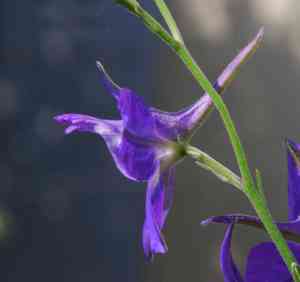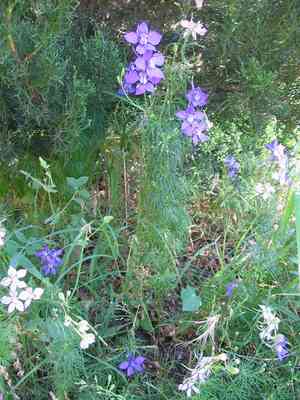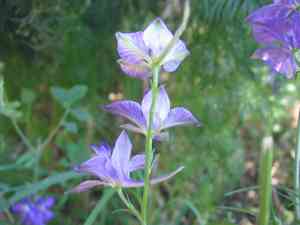
Doubtful knight's spur(Consolida ajacis)

Doubtful knight's spur (Consolida ajacis)

Also known as: Eastern larkspur

Doubtful knight's spur, originally from Eurasia, is often cultivated in the United States for its striking vertical clusters of blue, pink, or white flowers. While it enhances garden aesthetics, it also contains toxic alkaloids, making all parts of the plant hazardous if ingested. This toxicity is a significant concern, especially for households with pets or small children.

Attributes of Doubtful knight's spur

Lifespan
Annual, Perennial, Biennial
Plant Type
Herb
Plant Height
60 cm to 1.2 m
Spread
30 cm to 60 cm
Leaf Color
Green
Flower Size
5 cm
Flower Color
White Pink Blue Purple

ForwardPlant - Identify plants with a snap

Identify and diagnose plants, get toxicity alerts, and explore safety guides for all types of fungi.

Try for Free

Images of Doubtful knight's spur

Doubtful knight's spur(Consolida ajacis)

Quickly Identify Doubtful knight's spur

1
To identify Consolida ajacis, look for its tall, slender spikes of flowers, finely divided feathery leaves, and its unique, showy petal-like sepals.

Scientific Classification of Doubtful knight's spur

Phylum
Vascular plants
Class
Dicotyledons
Order
Ranunculales
Family
Buttercup
Genus
Larkspurs
Species
Doubtful knight's spur

Planting and Growing of Doubtful knight's spur

Care Difficulty
Easy
Watering Schedule
Every 3 days
Sunlight Requirements
Full sun
Sunshine Duration
4-8 hours
Ideal Temperature
60-75℉
Soil Type
Potting Mix, Peat Mix
Soil pH
6.5-7.5
Fertilizer Type
Balanced
Pruning Season
Spring, Summer
Pruning Area
Branches, Leaves
Pruning Frequency
2 times a year
Repotting Season
Spring
Pot Type
Plastic, Terracotta

water icon How to Water Doubtful knight's spur?

Consolida ajacis prefers a moderate amount of water. You should aim to deliver about 200 milliliters per watering session. The key principle is to keep the soil consistently moist but not waterlogged. When watering, ensure the water penetrates the top layer of the soil before it drains out to avoid oversaturation.
What are the symptoms of an underwatered Doubtful knight's spur? ›
What should I do if my Doubtful knight's spur is not getting enough water? ›
What are the symptoms of an overwatered Doubtful knight's spur? ›
How to save an overwatered Doubtful knight's spur? ›
More About Watering Techniques→

sunlight icon What Are the Sunlight Requirements for Doubtful knight's spur?

Sunlight Requirements: Full sun, Partial sun
Duration of light: 4-6 hours daily
Ideally, Consolida ajacis thrives in full sun to partial sun conditions. Adequate sunlight promotes healthy blooms, strong stems, and lush foliage, maximizing its ornamental appeal.
What is the ideal lighting condition for Consolida ajacis? ›
How can I ensure Consolida ajacis gets the best lighting? ›
What are the benefits of providing ideal lighting for Consolida ajacis? ›
More About Sunlight Requirements Techniques→

temperature icon What Is the Ideal Temperature Range for Doubtful knight's spur?

Ideal Temperature: 60 ~ 75℉
For optimal growth, Consolida ajacis prefers temperatures between 60°F and 75°F. This range supports healthy photosynthesis, aiding in robust leaf and flower development. Growing outside this range may affect its vibrant blooms.

soil icon What Soil is Best for Doubtful knight's spur?

Soil type: Loam, Sandy loam, Calcareous soil
Soil PH: 6.5 ~ 7.5
Consolida ajacis thrives in soil that drains well, preventing waterlogging which can lead to root rot. Good drainage encourages strong root development and healthier plant growth. This plant does best in soil with a pH range of 6.5 to 7.5. Maintaining this pH range ensures optimal nutrient availability which is crucial for vibrant blooms and robust plant health. Consolida ajacis requires soil with moderate fertility to support its growth. Soils enriched with organic matter can provide necessary nutrients without excessive fertilization. More About Soil→

fertilize icon How to Fertilize Doubtful knight's spur?

Fertilizer type: Balanced
For Consolida ajacis, it's ideal to use a balanced fertilizer like a 10-10-10 NPK mix. During active growth periods, apply liquid fertilizer at half strength to prevent over-fertilization, ensuring it receives nutrients without stress. More About Fertilizing Techniques→

prune icon How to Prune Doubtful knight's spur?

Pruning Time: Spring, Summer
Use clean, sharp pruning shears to make precise cuts without damaging the plant. Dirty or dull shears can introduce disease or make rough cuts that stress the plant, so keeping tools in top condition is crucial. While it may be tempting to prune extensively, over-pruning can weaken the plant and reduce the next cycle of blooms. Focus on removing only the necessary parts to keep the plant healthy and balanced. More About Pruning Techniques→

propagate icon How to Propagate Doubtful knight's spur plant?

Propagate Time: Early spring,Late spring
1
To begin propagation, sow Consolida ajacis seeds in a seed tray filled with a suitable potting mix. Lightly cover them with a thin layer of soil and ensure they are evenly spaced to prevent overcrowding. Water gently to avoid dislodging the seeds.
2
Place the seed tray in a location with ample indirect sunlight. Maintain a consistent temperature around 15-20°C (59-68°F) and keep the soil moderately moist. Avoid waterlogging, which can lead to fungal diseases and seedling rot.
3
Once the seedlings have developed a few true leaves, carefully transplant them into individual pots or directly into the garden. Handle the delicate roots gently, ensuring minimal disturbance, and continue to water regularly until the plants are well-established.
More About Propagating Techniques→

repot icon How to Repot Doubtful knight's spur plant?

Repotting frequency: Every 2-3 years
1
Repot Consolida ajacis when you notice the roots growing out of the drainage holes or when the plant's growth becomes stunted, indicating its current pot is too constrained. It's best to do this during its active growing season for minimal stress.
2
Choose a pot that is just one size larger than the current one, with good drainage holes. This prevents waterlogging and promotes healthy root development. A slightly larger pot encourages controlled growth without the risk of overwatering.
3
Opt for a well-draining potting mix that mimics the plant's natural habitat. A mix with sand and organic matter works best, allowing the roots to breathe and reducing the risk of root rot which is common in overly moist conditions.

ForwardPlant - Identify plants with a snap

Find the best spots for them to optimize their health, simply using your phone.

Try for Free

Toxicity of Doubtful knight's spur

Is Doubtful knight's spur toxic to humans?

The Doubtful knight's spur is exceptionally toxic to humans, but its toxicity poses a risk only when ingested. All parts of the plant, including the flowers, leaves, and seeds, contain the harmful toxin methyllycaconitine. Consumption of this toxin in substantial quantities can result in various symptoms such as rapid heart rate, tremors, spasms, and respiratory difficulties. Although cases of Doubtful knight's spur poisoning are exceedingly rare, they can be significantly serious and necessitate immediate medical attention. Fortunately, this commonly found ornamental plant is rarely consumed by people, as it lacks any edible counterparts. It is essential for parents to remain vigilant regarding their young children in gardens or parks where Doubtful knight's spurs might grow, as children may inadvertently ingest the flowers or leaves of this plant.

Is Doubtful knight's spur toxic to cat?

The doubtful knight's spur is a considerable threat to the health of cats, thus categorizing it as a toxic plant. Felines might unintentionally consume various parts of this plant, especially its roots, which contain the toxic compounds responsible for its harmful effects. Following the ingestion of doubtful knight's spur, a cat might display symptoms of physical discomfort or distress. It is crucial for pet owners to keep a close watch on their animals and promptly seek veterinary assistance at the first indications of illness to reduce the potential negative impacts of poisoning.

Is Doubtful knight's spur toxic to dog?

The doubtful knight's spur is a plant that poses a serious toxic threat to dogs, significantly endangering their health if ingested. Dogs may inadvertently consume different parts of this plant, especially the roots, which are particularly toxic. Following ingestion, dogs can display a range of symptoms indicative of poisoning. These symptoms may manifest as gastrointestinal distress, lethargy, tremors, or more severe reactions depending on the quantity consumed. It is essential for dog owners to vigilantly supervise their pets and restrict their access to the doubtful knight's spur. Should a dog ingest any portion of this plant, it is vital to obtain immediate veterinary assistance to secure the best possible outcome for the affected dog.

Identify toxic plants for your safety

Learn which plants are harmful to you and your pets, and make informed choices for a safer home!

Try for Free
WARNING
The judgment on toxicity and danger is for reference only. We DO NOT GUARANTEE any accuracy of such judgment. Therefore, you SHALL NOT rely on such judgment. It is IMPORTANT TO SEEK PROFESSIONAL ADVICE in advance when necessary.
More About Toxic Techniques→