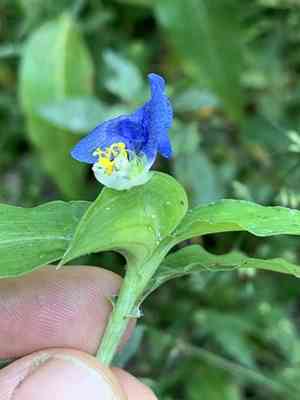
White mouth dayflower (Commelina erecta)
Also known as: Dayflower, Slender Dayflower
The White mouth dayflower (Commelina erecta) is a perennial wildflower commonly found in coastal uplands, scrub habitats, and pinelands. It features two prominent purplish-blue petals at the top of the stem, with a smaller white petal positioned below them. The presence of this small white petal resembling an open mouth is the reason for the "white mouth" descriptor in its name.
In This Article
Attributes of White mouth dayflower
Lifespan
Perennial
Plant Type
Herb
Plant Height
30 cm to 61 cm
Spread
15 cm to 30 cm
Leaf Color
Green Blue
Flower Size
7 mm to 2.5 cm
Flower Color
Blue White Purple Yellow
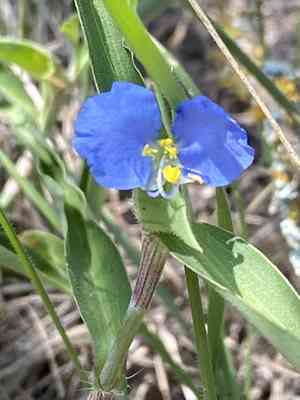
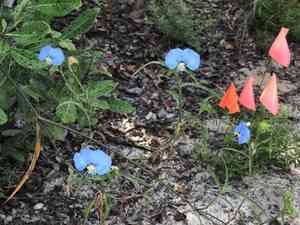
Images of White mouth dayflower


Quickly Identify White mouth dayflower
1
Commelina erecta can be identified by its erect stems, lance-shaped leaves, and distinctive blue flowers that typically have three petals – two large upper petals and a smaller lower petal.
Scientific Classification of White mouth dayflower
Phylum
Vascular plants
Class
Monocotyledons
Order
Commelinales
Family
Spiderwort
Genus
Dayflowers
Species
White mouth dayflower
Planting and Growing of White mouth dayflower
Care Difficulty
Easy
Watering Schedule
Every 3 days
Sunlight Requirements
Full sun
Sunshine Duration
4-6 hours
Ideal Temperature
75-85℉
Soil Type
Potting Mix, Peat Mix
Soil pH
6.5-7.5
Fertilizer Type
Balanced
Pruning Season
Spring, Summer
Pruning Area
Branches, Leaves
Pruning Frequency
2 times a year
Repotting Season
Spring
Pot Type
Plastic, Ceramic
 How to Water White mouth dayflower?
Commelina erecta prefers to be watered in a manner that ensures the soil stays moderately moist but not waterlogged. The key is to water until the topsoil, about 1 inch deep, is uniformly moist. This generally requires approximately 250 milliliters of water per session—enough to penetrate but not saturate the root zone excessively.
What are the symptoms of an underwatered White mouth dayflower?
›
What should I do if my White mouth dayflower is not getting enough water?
›
What are the symptoms of an overwatered White mouth dayflower?
›
How to save an overwatered White mouth dayflower?
›
 What Are the Sunlight Requirements for White mouth dayflower?
Commelina erecta thrives in partial to full sunlight, ideally receiving 4-8 hours daily. Adequate light ensures vibrant growth, promotes flowering, and supports its role in local ecosystems as a nectar source.
What is the ideal lighting condition for Commelina erecta?
›
How can you achieve ideal lighting for Commelina erecta?
›
What benefits does Commelina erecta gain from ideal light conditions?
›
 What Is the Ideal Temperature Range for White mouth dayflower?
The ideal temperature range for Commelina erecta is between 75°F and 85°F. This range provides the optimal conditions for photosynthesis and other metabolic processes, ensuring healthy growth and vibrant foliage. Maintaining these temperatures helps the plant thrive by supporting efficient water uptake and nutrient absorption.
 What Soil is Best for White mouth dayflower?
Commelina erecta thrives in soil that offers excellent drainage. Well-drained soil prevents waterlogging, which can lead to root rot. This plant benefits from the prevention of excess water accumulation around its roots, keeping them healthy and robust. This plant prefers moderately fertile soil. A nutrient-rich substrate provides essential elements that promote healthy growth and vibrant foliage, contributing to the plant's resilience in varying conditions. While it tolerates dryness, Commelina erecta performs best in consistently moist soil. This supports sustained hydration of the plant tissues, encouraging lush growth and vibrant flowering.
 How to Fertilize White mouth dayflower?
When fertilizing Commelina erecta, apply a balanced, water-soluble fertilizer at half the recommended strength. For example, if the label suggests 20 ml per gallon, use 10 ml. This plant doesn't require excessive nutrients, so err on the side of caution to avoid over-fertilization.
 How to Prune White mouth dayflower?
Begin by sterilizing your pruning shears to prevent infection. Identify any dead or diseased stems, and remove them first by cutting them back to the nearest healthy node. Next, target stems that are overly long to maintain the plant's shape, making cuts above a node at a slight angle to encourage new growth.
 How to Propagate White mouth dayflower plant?
1
Gather seeds from mature Commelina erecta plants after flowering in late summer. Ensure seeds are dried and stored in a cool, dry place until sowing in early spring.
2
Select healthy stems and cut them into sections about 4-6 inches long in spring. Remove lower leaves and immerse the cut end in rooting hormone before planting in soil.
3
Divide mature plants in early spring by gently separating clumps using a spade. Each division should have adequate roots, and then they should be replanted in prepared soil.
 How to Repot White mouth dayflower plant?
1
Repotting time for Commelina erecta is signaled by roots emerging from the drainage holes or slowed growth. In early spring, new growth begins, making it an ideal time to provide fresh nutrients with new soil.
2
Select a pot that is one size larger than the current one, with adequate drainage holes. This will allow for ample root space, preventing over-crowding and ensuring the roots have oxygen, which is crucial for healthy growth.
3
Use a well-draining soil mix composed of loam, sand, and organic matter. This combination ensures proper drainage while retaining enough moisture for nutrient uptake, contributing to a robust and thriving plant.



