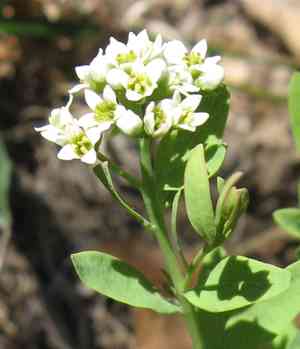
Umbellate bastard toad-flax (Comandra umbellata)
Also known as: False toadflax, Common toadflax
Comandra umbellata, commonly known as the bastard toadflax, is a semiparasitic herb found in North America and the Mediterranean. It attaches some of its roots to nearby plants to draw extra nutrients. This prairie plant produces fruit that is consumed by birds and rodents.
In This Article
Attributes of Umbellate bastard toad-flax
Lifespan
Perennial
Plant Type
Herb
Plant Height
8 cm to 34 cm
Spread
60 cm
Leaf Color
Green
Flower Size
6 mm
Flower Color
White Pink
Images of Umbellate bastard toad-flax
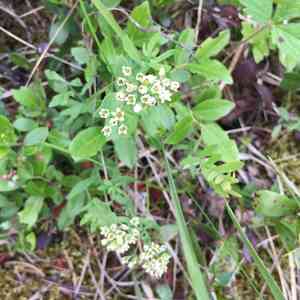
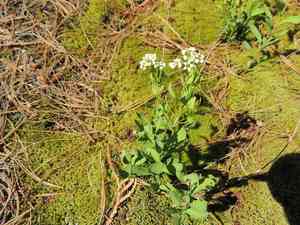
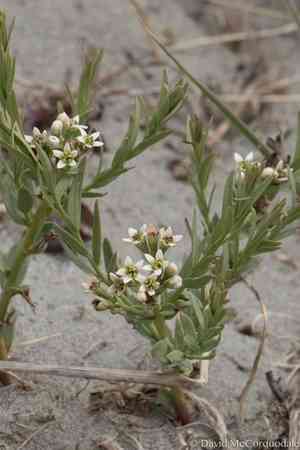
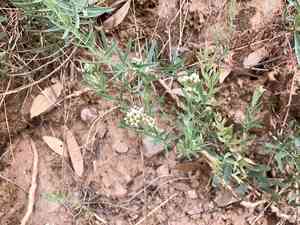
Quickly Identify Umbellate bastard toad-flax
1
Comandra umbellata can be identified by its small, whitish to greenish flowers arranged in umbels and its narrowly lance-shaped leaves. The plant typically grows low to the ground.
Scientific Classification of Umbellate bastard toad-flax
Phylum
Vascular plants
Class
Dicotyledons
Order
Santalales
Family
Sandalwood
Genus
Bastard Toadflax
Species
Umbellate bastard toad-flax
Planting and Growing of Umbellate bastard toad-flax
Care Difficulty
Easy
Watering Schedule
Every 2 days
Sunlight Requirements
Full sun
Sunshine Duration
4-8 hours
Ideal Temperature
59-77℉
Soil Type
Potting Mix, Peat Mix
Soil pH
6.5-7.5
Fertilizer Type
Balanced
Pruning Season
Spring, Summer
Pruning Area
Branches, Leaves
Pruning Frequency
2 times a year
Repotting Season
Spring
Pot Type
Plastic, Ceramic
 How to Water Umbellate bastard toad-flax?
Comandra umbellata has a moderate watering requirement. It is crucial to allow the soil to dry out between waterings, as excess moisture can lead to root rot. Water the plant until the top 1-2 inches of the soil are moist, using approximately 150 ml each time.
What are the symptoms of an underwatered Umbellate bastard toad-flax?
›
What should I do if my Umbellate bastard toad-flax is not getting enough water?
›
What are the symptoms of an overwatered Umbellate bastard toad-flax?
›
How to save an overwatered Umbellate bastard toad-flax?
›
 What Are the Sunlight Requirements for Umbellate bastard toad-flax?
This plant requires full to partial sun for optimal health. Ideal light promotes increased chlorophyll production and healthy structural development, leading to vibrant foliage and regular blooming cycles.
More About Sunlight Requirements Techniques→
How much light is ideal?
›
Solutions for ideal lighting
›
Advantages of right lighting
›
 What Is the Ideal Temperature Range for Umbellate bastard toad-flax?
Comandra umbellata, commonly known as Bastard toadflax, thrives best in moderate temperature conditions. It flourishes in temperatures between 59°F to 77°F, which closely mimics the temperate climates it naturally inhabits. This range ensures optimal photosynthesis and metabolic function, supporting healthy growth and reproduction.
 What Soil is Best for Umbellate bastard toad-flax?
Comandra umbellata thrives best in well-drained soils which prevent waterlogging. This is crucial for the plant’s health as it ensures roots receive adequate air and avoid root rot. While Comandra umbellata is adaptable, it benefits from nutrient-rich soil that supports its growth and vibrant appearance. Nutrients play a key role in vigorous plant development. The plant does not demand extremely fertile soils but prefers moderate fertility to balance its growth. Over-fertile conditions can lead to an imbalance causing excessive foliage and poor blooms.
 How to Fertilize Umbellate bastard toad-flax?
Comandra umbellata, commonly known as bastard toadflax, typically requires minimal fertilization. Use a balanced 10-10-10 liquid fertilizer at half-strength. For slow-release fertilizers, apply a thin layer around the base, approximately 1 tablespoon per plant, ensuring not to touch the stems.
 How to Prune Umbellate bastard toad-flax?
Start by removing any dead or damaged branches from the plant, cutting them back to their base. This encourages new growth and prevents the spread of disease. Carefully shape the plant to maintain its natural form. Thin out crowded areas to improve air circulation, making sure to cut at a 45-degree angle just above a node.
More About Pruning Techniques→
 How to Propagate Umbellate bastard toad-flax plant?
1
Start with a good quality seed-starting mix that drains well. Ensure it's moist but not waterlogged before placing in the seed tray to provide the right environment for germination.
2
Sow the seeds thinly and evenly over the surface of the moistened seed-starting mix. Cover lightly with additional mix to maintain adequate humidity and darkness, which can help in germination.
3
Keep the seed tray in a warm location and ensure constant moisture. Consider covering with a plastic dome to retain humidity and provide a mini-greenhouse effect.
 How to Repot Umbellate bastard toad-flax plant?
1
Comandra umbellata requires repotting when you notice limited growth, roots outgrowing their current pot, or water logging issues. The ideal time for repotting is early spring or fall, when the plant is not actively flowering. Observing these signals ensures that the plant doesn’t undergo unnecessary stress and can settle into its new home more efficiently.
2
Opt for a pot that is just a size larger than the current one, ensuring adequate drainage holes. Ceramic or terracotta pots are preferable as they allow the soil to dry out between waterings, mimicking the plant’s natural habitat. This choice encourages healthy root development and prevents water retention issues.
3
Use a well-draining sandy loam soil mix to replicate its natural growing conditions. The benefit of this soil is its ability to retain enough moisture without becoming waterlogged, providing the plant with necessary nutrients while allowing excess water to drain easily, preventing root rot.
Toxicity
Ingestion
WARNING
The judgment on toxicity and danger is for reference only. We DO NOT GUARANTEE any accuracy of such judgment. Therefore, you SHALL NOT rely on such judgment. It is IMPORTANT TO SEEK PROFESSIONAL ADVICE in advance when necessary.



