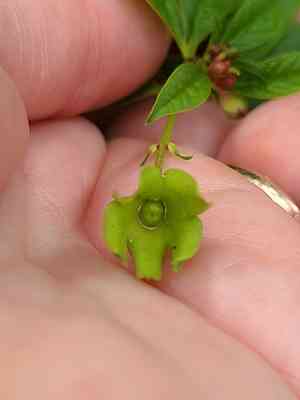
Turk's turbin (Clerodendrum indicum)
Also known as: Turk's turban
Plumeria, a tropical perennial shrub, features striking tubular white flowers and elongated green leaves. As it matures, it stands tall and elegant, displaying clusters of fragrant blooms that attract numerous pollinators. Well-suited to warmer climates, Plumeria's robust growth makes it a standout in garden landscapes, where its unique floral beauty often becomes a central attraction.
In This Article
Attributes of Turk's turbin
Lifespan
Perennial
Plant Type
Herb, Shrub
Plant Height
2-4 meters
Spread
1-2 meters
Leaf Color
Green
Flower Size
2-3 cm
Flower Color
White
Images of Turk's turbin
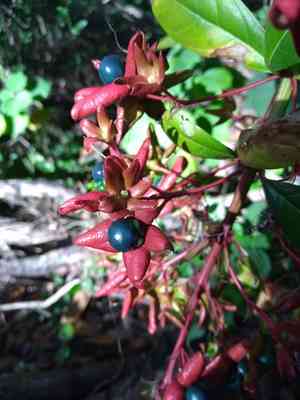
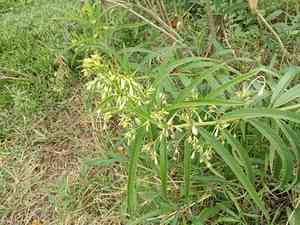
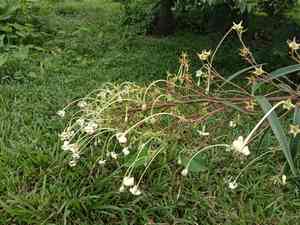
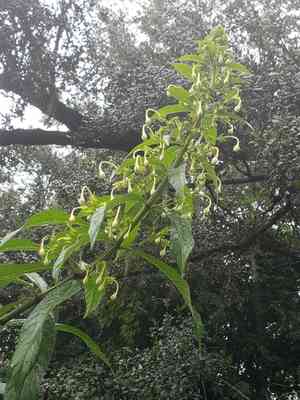
Quickly Identify Turk's turbin
1
Identify Clerodendrum indicum by its tall, upright growth habit and long, tubular white flowers. The leaves are typically ovate with a glossy texture.
Scientific Classification of Turk's turbin
Phylum
Vascular plants
Class
Dicotyledons
Order
Lamiales
Family
Mint
Genus
Glorybowers
Species
Turk's turbin
Planting and Growing of Turk's turbin
Care Difficulty
Moderate
Watering Schedule
Every 2 days
Sunlight Requirements
Full sun
Sunshine Duration
6-8 hours
Ideal Temperature
68-86℉
Soil Type
Potting Mix, Peat Mix
Soil pH
6.5-7.5
Fertilizer Type
Balanced
Pruning Season
Spring, Summer
Pruning Area
Branches, Leaves
Pruning Frequency
2 times a year
Repotting Season
Spring
Pot Type
Plastic, Ceramic
 How to Water Turk's turbin?
The ideal watering amount for Clerodendrum indicum is around 500 ml per session. Water until you see a slight drainage start from the bottom, ensuring the soil is uniformly moistened without being waterlogged.
What are the symptoms of an underwatered Turk's turbin?
›
What should I do if my Turk's turbin is not getting enough water?
›
What are the symptoms of an overwatered Turk's turbin?
›
How to save an overwatered Turk's turbin?
›
 What Are the Sunlight Requirements for Turk's turbin?
Partial sun, involving 4 to 6 hours of sunlight, suits Clerodendrum indicum best. This range balances warmth and light exposure, facilitating optimal photosynthesis and resilient growth, enhancing the plant's vigor.
How much sunlight does Clerodendrum indicum need?
›
What are some tips to achieve ideal sunlight for Clerodendrum indicum?
›
Why is ideal sunlight crucial for Clerodendrum indicum?
›
 What Is the Ideal Temperature Range for Turk's turbin?
The ideal temperature range for Clerodendrum indicum is between 68°F to 86°F. At these temperatures, the plant thrives and exhibits optimal growth and flowering. It is important to maintain consistent temperatures within this range to ensure that the plant achieves its full potential. Temperatures below or above this range may stress the plant, affecting its growth and health.
 What Soil is Best for Turk's turbin?
Does Clerodendrum indicum require well-draining soil? Yes, it thrives in well-draining soil, preventing root rot by allowing excess water to escape, ensuring the plant remains healthy. Does the plant need nutrient-rich soil? Certainly, nutrient-rich loam supports its rapid growth and vibrant foliage by providing essential elements and promoting strong root development. Is moisture retention critical for Clerodendrum indicum? Absolutely, while drainage is crucial, retaining some moisture ensures the plant's hydration, supporting continuous and lush growth.
 How to Fertilize Turk's turbin?
For Clerodendrum indicum, a moderate amount of fertilizer is recommended. Apply approximately 1 tablespoon of balanced liquid fertilizer mixed with 1 liter of water. This ensures the plant gets enough nutrients without the risk of over-fertilization.
 How to Prune Turk's turbin?
Excessive pruning can stress the plant and inhibit flowering. Always aim to remove no more than a third of the plant's volume in one session to ensure plant vitality. Inspect pruning wounds regularly for signs of infection or disease. Dress wounds with a suitable fungicide if necessary to prevent pathogens from taking hold.
More About Pruning Techniques→
 How to Propagate Turk's turbin plant?
1
Collect seeds from mature Clerodendrum indicum plants in late summer. Allow the seed pods to dry before extracting the seeds.
2
Use a clean, sharp cutter to take 6-8 inch cuttings from healthy stems during early morning. Remove the leaves from the lower half.
3
Gently dig up an established plant in the spring or early summer and divide its roots into sections, each with a healthy shoot and root base.
 How to Repot Turk's turbin plant?
1
Observe the plant's roots. If they are emerging from drainage holes or circling within the pot, it's time to repot. Additionally, if the plant's growth has noticeably slowed despite optimal care, this could also indicate the need for a new pot.
2
Select a pot that's one size larger than the current one, which provides ample space for root expansion but isn't excessively large, preventing overwatering issues. Ensure it has sufficient drainage holes to prevent waterlogged soil.
3
Opt for a well-draining potting mix enriched with organic matter. This soil type provides necessary nutrients while ensuring excess water escapes easily, reducing the risk of root rot and maintaining optimal moisture levels.
Toxicity
Ingestion
WARNING
The judgment on toxicity and danger is for reference only. We DO NOT GUARANTEE any accuracy of such judgment. Therefore, you SHALL NOT rely on such judgment. It is IMPORTANT TO SEEK PROFESSIONAL ADVICE in advance when necessary.



