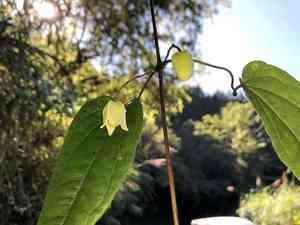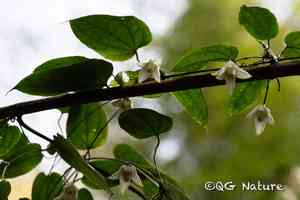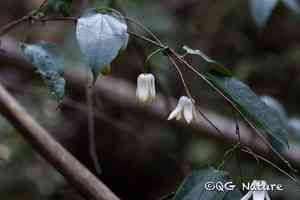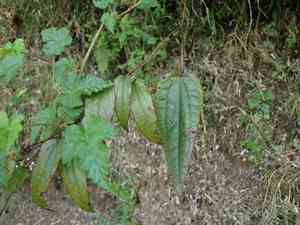
Early large-flowered clematis(Clematis henryi)

Early large-flowered clematis (Clematis henryi)

Also known as: Henry's Clematis, Henryi Clematis

Early large-flowered clematis are notable for their striking blooms, which can reach up to 6-10 inches in diameter and come in a variety of colors such as blue, purple, pink, red, and white. Their blossoms typically appear from late spring to early summer, attracting pollinators with their vibrant display.

**Key Characteristics:**
1. **Flower Size and Color**: Flowers can be as large as 15 cm wide, available in multiple hues.
2. **Stamens**: Prominent and often contrasting in color, enhancing the flower's visual appeal.
3. **Growth Habit**: Climbing vines that can grow to heights of 6-12 feet.
4. **Foliage**: Deciduous with compound green leaves.

**Ideal Growing Conditions:**
1. **Sunlight**: Prefers full sun to partial shade, requiring at least 6 hours of sunlight daily.
2. **Soil**: Needs well-draining, fertile soil with a neutral to slightly alkaline pH.
3. **Watering**: Requires consistent moisture without becoming waterlogged.
4. **Support Structures**: Benefits from trellises, fences, or walls to support its climbing habit.
5. **Pruning**: Light pruning after the first bloom can encourage a second flowering and help maintain shape.
6. **Mulching**: Helps retain soil moisture and keeps roots cool, which is crucial for healthy growth.

Early large-flowered clematis are adaptable and resilient, making them a versatile choice for adding vertical interest and lush blooms to gardens.

Attributes of Early large-flowered clematis

Lifespan
Perennial
Plant Type
Vine
Plant Height
1.8 m to 2.5 m
Spread
90 cm to 1.8 m
Leaf Color
Green
Flower Size
2 cm to 2.5 cm
Flower Color
White

ForwardPlant - Identify plants with a snap

Identify and diagnose plants, get toxicity alerts, and explore safety guides for all types of fungi.

Try for Free

Images of Early large-flowered clematis
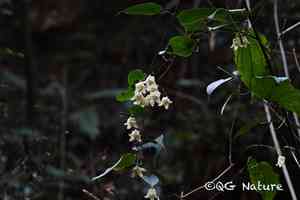
Early large-flowered clematis(Clematis henryi)

Quickly Identify Early large-flowered clematis

1
Identify Clematis henryi by its woody vines, pinnate leaves, and large single flowers with six to eight petals. The flowers usually appear in late spring to early summer.

Scientific Classification of Early large-flowered clematis

Phylum
Vascular plants
Class
Dicotyledons
Order
Ranunculales
Family
Buttercup
Genus
Clematis
Species
Early large-flowered clematis

Planting and Growing of Early large-flowered clematis

Care Difficulty
Easy
Watering Schedule
Every 3 days
Sunlight Requirements
Partial sun
Sunshine Duration
4-6 hours
Ideal Temperature
60-75℉
Soil Type
Potting Mix, Peat Mix
Soil pH
6.5-7.5
Fertilizer Type
Balanced
Pruning Season
Spring, Summer
Pruning Area
Branches, Leaves
Pruning Frequency
2 times a year
Repotting Season
Spring
Pot Type
Plastic, Ceramic

water icon How to Water Early large-flowered clematis?

Clematis henryi requires consistent moisture but not soggy roots. Water it deeply each time, ensuring the soil is soaked to a depth of about 20 cm, allowing excess water to drain away. The goal is to reach the roots while avoiding waterlogging.
What are the symptoms of an underwatered Early large-flowered clematis?
What should I do if my Early large-flowered clematis is not getting enough water?
What are the symptoms of an overwatered Early large-flowered clematis?
How to save an overwatered Early large-flowered clematis?

sunlight icon What Are the Sunlight Requirements for Early large-flowered clematis?

Sunlight Requirements: Partial sun, Full sun
Duration of light: 6 to 8 hours daily
Partial to full sun augments Clematis henryi’s flowering potential and vigor. Adequate sun exposure boosts photosynthetic efficiency, ensuring vibrant and plentiful blooms characteristic of healthy clematis.
What is the ideal sunlight level?
Why does it need balanced light?
How can I achieve this lighting balance?

temperature icon What Is the Ideal Temperature Range for Early large-flowered clematis?

Ideal Temperature: 60 ~ 75℉
For Clematis henryi, the ideal temperature range is between 60°F and 75°F. This range provides the optimum conditions for its enzymatic activities, growth rate, and overall health. Maintaining consistent temperatures within this range helps ensure vibrant blooms and robust plant structures.

soil icon What Soil is Best for Early large-flowered clematis?

Soil type: Loam, Sandy loam, Clay soil
Soil PH: 6.5 ~ 7.5
Clematis henryi thrives in nutrient-rich soil that provides essential minerals and organic matter. Nutrients support robust growth, vibrant foliage, and prolonged flowering, making this soil condition vital for healthy development. Well-draining soil prevents waterlogging, which can lead to root rot. Clematis henryi benefits from this as it ensures optimal moisture levels, promoting strong root systems and reducing the risk of diseases. Clematis henryi can tolerate slightly alkaline conditions, allowing for a wider range of planting sites. This flexibility helps in adapting to various garden soils, facilitating easy gardening without intensive soil modification.

fertilize icon How to Fertilize Early large-flowered clematis?

Fertilizer type: Balanced
For Clematis henryi, the recommended amount of liquid fertilizer is to apply it as a diluted solution. Typically, mix about 1/2 tablespoon of a balanced 10-10-10 or 20-20-20 liquid fertilizer per gallon of water. When using slow-release fertilizers, sprinkle around 1 to 2 ounces per square yard over the root zone once during the growing season, ensuring the soil is slightly moist beforehand to avoid root burn.

prune icon How to Prune Early large-flowered clematis?

Pruning Time: Spring, Summer, Autumn, Winter
The timing of pruning is crucial for Clematis henryi. This plant blooms on both old and new wood, so it's important to be cautious not to remove too many old-growth branches. Aim to conduct the main pruning in late winter to early spring to stimulate new growth, while slight trims can be done throughout the growing season to maintain shape. Ensure to use proper pruning tools that are clean and sharp to make smooth cuts without tearing the plant's tissue. Always wear gloves to protect your hands from thorns and potential allergens, and consider using eye protection from falling debris or branches.

propagate icon How to Propagate Early large-flowered clematis plant?

Propagate Time: Early spring, Late spring, Early autumn
1
Collect ripe seeds in late summer and store them in a cool, dry place. Before sowing, soak the seeds in warm water for 24 hours to soften the seed coat.
2
Select healthy, non-flowering shoots in early spring. Cut 3-4 inch sections, ensuring each has at least two leaf nodes. Remove leaves from the lower node.
3
Bend a low-growing stem to the ground in early autumn. Secure it with a pin and cover the midsection with soil, leaving the tip exposed. Ensure it's regularly watered.

repot icon How to Repot Early large-flowered clematis plant?

Repotting frequency: Every 2-3 years
1
Repot Clematis henryi when you notice the roots are growing out of the drainage holes or the current pot is no longer sufficient to support the plant's growth. This typically occurs every two to three years or when the plant shows signs of stunted growth and water retention issues.
2
Select a pot that is one size larger than the current one, with sufficient drainage holes to prevent waterlogging. Clay pots are ideal as they allow for air circulation, which promotes healthier root systems. The added weight also provides stability for this vining plant.
3
Choose soil that is well-draining and rich in organic matter, like a mix of potting compost and perlite. This ensures good aeration and retains enough moisture for the plant's needs without becoming waterlogged, promoting healthy root development.

ForwardPlant - Identify plants with a snap

Find the best spots for them to optimize their health, simply using your phone.

Try for Free