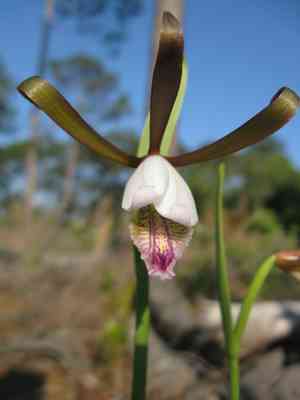
Large spreading pogonia (Cleistesiopsis divaricata)
Also known as: Small Spreading Pogonia, Spreading Pogonia
Cleistesiopsis divaricata, also known as the rosebud orchid or small spreading pogonia, is a ground-dwelling orchid species. It is indigenous to the eastern United States, with a range extending from New Jersey down to Florida.
In This Article
Attributes of Large spreading pogonia
Lifespan
Perennial
Plant Type
Herb
Plant Height
1 to 2 feet (30 to 60 cm)
Spread
Not applicable (herbaceous plant)
Leaf Color
Green
Flower Size
1.5 to 2 inches (3.8 to 5 cm)
Flower Color
Pink
Images of Large spreading pogonia
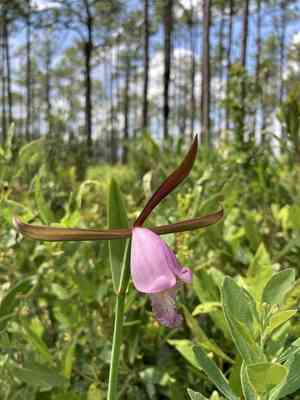
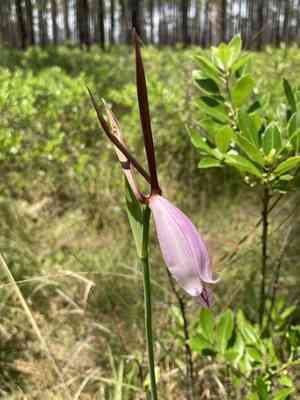
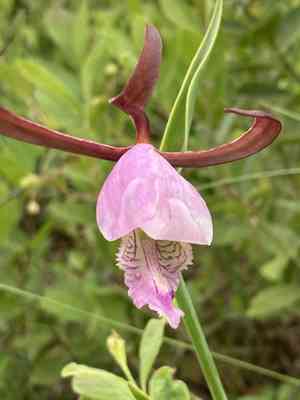
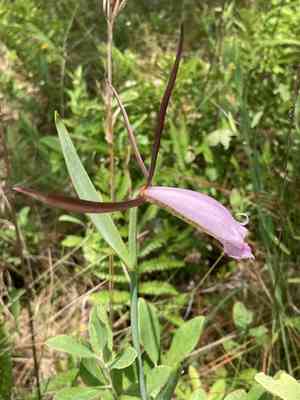
Quickly Identify Large spreading pogonia
1
Look for a single, slender floral stalk arising from a basal rosette of leaves. The flowers are pink with a three-lobed lip and are fragrant. Leaves are grassy and typically found in wet, acidic soils.
Scientific Classification of Large spreading pogonia
Phylum
Vascular plants
Class
Monocotyledons
Order
Asparagales
Family
Orchid
Genus
Rosebud orchid
Species
Large spreading pogonia
Planting and Growing of Large spreading pogonia
Care Difficulty
Hard
Watering Schedule
Every 2 days
Sunlight Requirements
Partial sun
Sunshine Duration
6-10 hours
Ideal Temperature
68-77℉
Soil Type
Potting Mix, Peat Mix
Soil pH
6.5-7.5
Fertilizer Type
Balanced
Pruning Season
Spring, Summer
Pruning Area
Branches, Leaves
Pruning Frequency
2 times a year
Repotting Season
Spring
Pot Type
Plastic, Ceramic
 How to Water Large spreading pogonia?
Cleistesiopsis divaricata requires moderate watering. Ensure the soil is evenly moist but not waterlogged. Use around 200 ml of water per session, letting the water soak thoroughly to reach the roots, without leaving excess standing water.
What are the symptoms of an underwatered Large spreading pogonia?
›
What should I do if my Large spreading pogonia is not getting enough water?
›
What are the symptoms of an overwatered Large spreading pogonia?
›
How to save an overwatered Large spreading pogonia?
›
 What Are the Sunlight Requirements for Large spreading pogonia?
Partial sun to full sun conditions are ideal. Such light promotes vigorous growth, healthy foliage, and abundant flowering, crucial for the plant's overall well-being.
What kind of sunlight is ideal for Cleistesiopsis divaricata?
›
How can I achieve ideal lighting conditions for my plant?
›
What benefits do perfect lighting conditions offer Cleistesiopsis divaricata?
›
 What Is the Ideal Temperature Range for Large spreading pogonia?
The ideal temperature range for Cleistesiopsis divaricata is between 68°F and 77°F. This range ensures optimal growth and photosynthesis, providing the plant with conditions similar to its native habitat. Staying within this range minimizes stress on the plant and encourages flourishing blooms and healthy foliage.
 What Soil is Best for Large spreading pogonia?
Cleistesiopsis divaricata thrives in well-draining soil types that prevent waterlogging. Such soil ensures its roots remain aerated and healthy, reducing root rot risks and promoting vigorous plant growth. This plant benefits from a substrate enriched with organic material, providing essential nutrients for growth. A nutrient-rich environment supports robust foliage and overall plant health. While well-draining, the soil should also retain some moisture to sustain the plant without constant watering, balancing hydration needs without oversaturating the roots.
 How to Fertilize Large spreading pogonia?
Cleistesiopsis divaricata benefits from a moderate amount of fertilizer. Use half the recommended dose on the packaging for liquid fertilizers to prevent nutrient burn. For slow-release granules, apply according to the manufacturer's instructions, ensuring not to exceed 1 teaspoon per square foot to maintain balance in the soil.
 How to Prune Large spreading pogonia?
Use sharp, clean pruners to make precise cuts. Trim dead or diseased parts back to healthy tissue, and be cautious to cut at angles to promote natural healing. Trim back excessive foliage to improve sunlight penetration and airflow. This not only keeps the plant neat but also reduces the risk of disease. Focus on shaping the plant to ensure an even distribution of flowers next blooming cycle. Remove any cross-branching stems to let the plant expand evenly.
More About Pruning Techniques→
 How to Propagate Large spreading pogonia plant?
1
Collect seeds from mature Cleistesiopsis divaricata plants during the appropriate season. Ensure seeds are dry and free from any plant debris before storing them in a cool, dry place.
2
Use the prepared seed trays and scatter the seeds evenly on the surface of the potting mix. Do not cover seeds with soil as they require light for germination.
3
Place the seed trays in a warm spot with indirect light. Maintain consistent moisture levels by gently misting the surface and cover the trays with a plastic dome to retain humidity.
 How to Repot Large spreading pogonia plant?
1
Cleistesiopsis divaricata should be repotted when its roots have outgrown its current pot or when the potting mix has degraded significantly. Another signal to look for is when water is no longer draining efficiently from the pot.
2
Choose a pot that is slightly larger in diameter with adequate drainage holes. This will prevent water from accumulating at the root zone, reducing the risk of root rot and accommodating future growth.
3
Use a well-draining orchid mix that mimics the plant's natural habitat. A suitable mix promotes airflow around the roots and prevents waterlogging, essential for maintaining root health.
Learn More About Large spreading pogonia Diseases
Anthracnose
Bacterial Leaf Spot
Bacterial Soft Rot
Bacterial Wilt
Crown Gall
Cyst Nematode
Damping-off
Downy Mildew
Drought Stress
Fusarium Wilt
Gray Mold
Leaf Spot
Mosaic
Nutrient Deficiency
Nutrient Toxicity
Powdery Mildew
Root Rot
Root-knot Nematode
Rusts
Sooty Mold
Spider Mites
Temperature Stress
Thrips Damage
White Mold



