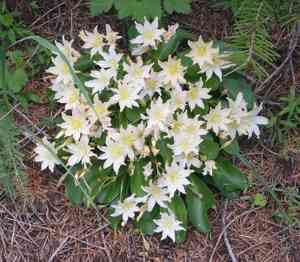
Tweedy's pussypaws (Cistanthe tweedyi)
Also known as: Tweedyi's rockflower, Tweedy's pussypaws
Plants with coral, apricot, or pink flowers often flourish in well-drained environments such as rocky slopes or crevices. These plants can be found from low elevation forests, like ponderosa pine areas, to the drier regions of the Grand Fir zone in the North Cascades.
In This Article
Attributes of Tweedy's pussypaws
Lifespan
Perennial
Plant Type
Herb
Plant Height
10 cm to 20 cm
Spread
30 cm
Leaf Color
Green
Flower Size
5-8 cm
Flower Color
White Yellow Pink
Quickly Identify Tweedy's pussypaws
1
To identify Cistanthe tweedyi, look for its large, fleshy, ovate leaves that form a basal rosette. The plant produces clusters of showy, pink to orangish flowers with five petals, typically blooming in late spring to early summer. The stems are thick and succulent.
Scientific Classification of Tweedy's pussypaws
Phylum
Vascular plants
Class
Dicotyledons
Order
Caryophyllales
Family
Pussypaw
Genus
Cistanthe
Species
Tweedy's pussypaws
Planting and Growing of Tweedy's pussypaws
Care Difficulty
Moderate
Watering Schedule
Every 2 days
Sunlight Requirements
Full sun
Sunshine Duration
4-6 hours
Ideal Temperature
60-75℉
Soil Type
Potting Mix, Peat Mix
Soil pH
6.5-7.5
Fertilizer Type
Balanced
Pruning Season
Spring, Summer
Pruning Area
Branches, Leaves
Pruning Frequency
2 times a year
Repotting Season
Spring
Pot Type
Plastic, Ceramic
 How to Water Tweedy's pussypaws?
Cistanthe tweedyi requires just enough water to keep the soil slightly moist but not soggy. It's important to ensure the water reaches the root zone, typically needing about 150 ml per watering session. Overwatering can lead to root rot, so ensure good drainage.
What are the symptoms of an underwatered Tweedy's pussypaws?
›
What should I do if my Tweedy's pussypaws is not getting enough water?
›
What are the symptoms of an overwatered Tweedy's pussypaws?
›
How to save an overwatered Tweedy's pussypaws?
›
 What Are the Sunlight Requirements for Tweedy's pussypaws?
Cistanthe tweedyi flourishes in full sunlight exposure for about six to eight hours daily. Optimal light conditions ensure prolific blooms and maintain its vibrant leaf colors, contributing significantly to its decorative appeal and longevity.
What is the ideal lighting for Cistanthe tweedyi?
›
How can I provide ideal lighting for Cistanthe tweedyi?
›
What happens when Cistanthe tweedyi receives ideal lighting?
›
 What Is the Ideal Temperature Range for Tweedy's pussypaws?
Cistanthe tweedyi thrives best in temperatures ranging from 60°F to 75°F. This range allows for optimal physiological processes such as photosynthesis and nutrient absorption, ensuring healthy growth and vibrant blooms. Maintaining these temperatures will help avoid stress and maximize the plant's potential.
 What Soil is Best for Tweedy's pussypaws?
Cistanthe tweedyi thrives in well-draining soil, which helps prevent root rot and allows for healthy root development by ensuring water does not accumulate around the roots. This is essential for maintaining vibrant foliage and blooms. This plant is adapted to thrive in nutrient-poor soils, reducing the need for frequent fertilization. By growing in such soils, Cistanthe tweedyi can focus its energy on flowering rather than excessive vegetative growth. A sandy texture provides the ideal setting for Cistanthe tweedyi, facilitating quick drainage and aeration. This soil type prevents waterlogging, a condition that can be detrimental to the plant's roots.
 How to Fertilize Tweedy's pussypaws?
For Cistanthe tweedyi, it is important to apply a balanced fertilizer at reduced strength. Use about half the recommended dosage on the fertilizer label to ensure you don't overwhelm the plant, given its delicate nature.
 How to Prune Tweedy's pussypaws?
Begin by removing any dead or damaged stems. This allows the plant to focus its energy on producing healthy foliage and minimizes the risk of disease. Trim the outer branches to maintain the desired shape and size. This encourages a bushier growth pattern and ensures that sunlight reaches inner leaves. Prune after the flowering period to stimulate new growth. Remove spent flowers to prevent seed formation and redirect energy to future blooms. Regularly check the plant for signs of overgrowth or imbalance. Adjust pruning as needed to keep the plant healthy and aesthetically pleasing.
More About Pruning Techniques→
 How to Propagate Tweedy's pussypaws plant?
1
Start by filling seed trays with a fine seed-starting mix. Sow the seeds thinly on the surface and lightly cover them with soil. Water gently to settle the seeds and place the trays in a warm, bright location.
2
Select healthy, non-flowering stems and cut a 4-6 inch section. Remove the lower leaves and dip the cut end in rooting hormone. Insert the cuttings into a pot filled with a moist sandy substrate.
3
Carefully dig up the parent plant and gently separate the root clumps using your hands or a clean knife. Ensure each division has an adequate root system before planting each section in a prepared hole.
 How to Repot Tweedy's pussypaws plant?
1
The best time to repot Cistanthe tweedyi is during the spring when the plant shows signs of outgrowing its current pot. Look for roots growing out of the drainage holes or slowed growth. These are clear indicators that your plant is ready for a new home.
2
Select a pot with adequate drainage holes that is no more than 1-2 inches larger in diameter than the current pot. A slightly larger pot helps to prevent waterlogging while allowing room for growth, ensuring your Cistanthe tweedyi thrives.
3
Opt for a well-draining gritty mix with a good proportion of perlite or coarse sand to ensure the soil does not retain excess moisture. This type of soil provides an ideal environment that mimics the plant's natural habitat, promoting healthy roots.
Learn More About Tweedy's pussypaws Diseases
Anthracnose
Bacterial Leaf Spot
Bacterial Soft Rot
Bacterial Wilt
Crown Gall
Cyst Nematode
Damping-off
Downy Mildew
Drought Stress
Fusarium Wilt
Gray Mold
Leaf Curl
Leaf Spot
Mosaic
Nutrient Deficiency
Nutrient Toxicity
Powdery Mildew
Root Rot
Root-knot Nematode
Rusts
Sooty Mold
Spider Mites
Temperature Stress
Thrips Damage
White Mold



