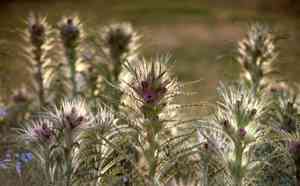
Meadow thistle (Cirsium scariosum)
Also known as: Elk thistle, Crow thistle, Southern meadow thistle, Stemless thistle, Dinnerplate thistle
The meadow thistle, part of the Asteraceae family, is a perennial herb known for its deep taproot and purple disc flowers. It typically grows in moist meadows, grasslands, and marshes across parts of Europe, including the UK and Ireland.
In This Article
Attributes of Meadow thistle
Lifespan
Biennial, Perennial
Plant Type
Herb
Plant Height
13 cm to 1.02 m
Spread
20-45 cm (8-18 inches)
Leaf Color
Green with whitish hairs
Flower Size
2 cm to 4 cm
Flower Color
White Pink Purple Brown
Images of Meadow thistle
Quickly Identify Meadow thistle
1
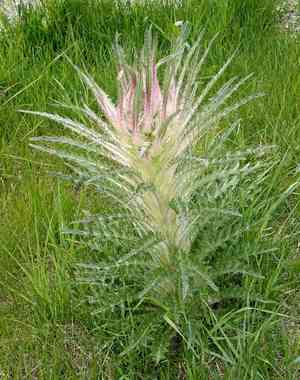
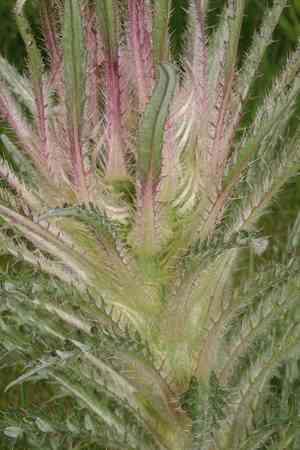
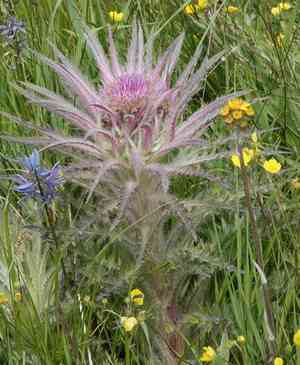
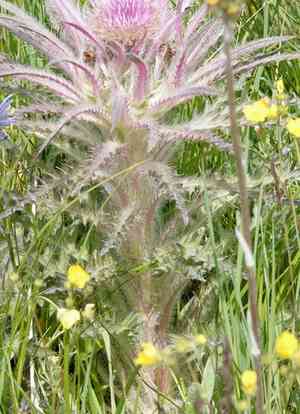
Identify Cirsium scariosum by its sharply lobed leaves with spiny margins and its large, cylindrical, light purple to pink flower heads. The plant often has a woolly appearance due to the dense hair on its leaves and stems.
Scientific Classification of Meadow thistle
Phylum
Vascular plants
Class
Dicotyledons
Order
Asterales
Family
Daisy
Genus
Thistles
Species
Meadow thistle
Planting and Growing of Meadow thistle
Care Difficulty
Easy
Watering Schedule
Every 2 days
Sunlight Requirements
Full sun
Sunshine Duration
4-8 hours
Ideal Temperature
60-75℉
Soil Type
Potting Mix, Peat Mix
Soil pH
6.5-7.5
Fertilizer Type
Balanced
Pruning Season
Spring, Summer
Pruning Area
Branches, Leaves
Pruning Frequency
2 times a year
Repotting Season
Spring
Pot Type
Plastic, Ceramic
 How to Water Meadow thistle?
Cirsium scariosum thrives best when it is watered until the soil reaches a moderate level of moisture. It’s essential that the water penetrates the soil enough to reach the roots, but not so much that it leaves the soil waterlogged. A good practice is to check the top inch of soil, and if it is dry, water until that's moist without leaving standing water.
What are the symptoms of an underwatered Meadow thistle?
›
What should I do if my Meadow thistle is not getting enough water?
›
What are the symptoms of an overwatered Meadow thistle?
›
How to save an overwatered Meadow thistle?
›
 What Are the Sunlight Requirements for Meadow thistle?
Cirsium scariosum ideally grows in areas with full sun to partial sun, benefitting from 6 to 8 hours of sunlight. The ideal light ensures robust growth, enhanced blooming, and increased resistance to environmental stressors.
What is the ideal sun exposure?
›
How can I ensure my plant gets ideal sunlight?
›
What benefits does ideal sunlight provide?
›
 What Is the Ideal Temperature Range for Meadow thistle?
Cirsium scariosum, commonly known as elk thistle, thrives best in temperatures ranging from 60°F to 75°F. This temperature range allows for optimal growth by facilitating critical physiological processes such as photosynthesis and nutrient uptake. Maintaining this range ensures the plant remains healthy, maintains vigorous growth, and maximizes its aesthetic appeal.
 What Soil is Best for Meadow thistle?
Cirsium scariosum thrives in well-drained soil conditions. This preference helps prevent root rot, which can occur if water stagnates around the roots. The plant benefits from soil that is moderately rich in organic matter, ensuring it gets ample nutrients for optimal growth without requiring extremely fertile conditions. While the soil should drain well, it should retain enough moisture to prevent the plant from drying out completely, supporting consistent growth.
 How to Fertilize Meadow thistle?
For Cirsium scariosum, apply a balanced liquid fertilizer at half the recommended strength to avoid root burn. Use approximately 1/2 teaspoon per gallon of water for liquid fertilizers every month during the growing season. When using slow-release fertilizers, apply about 1/4 cup around the base of the plant in early spring.
 How to Prune Meadow thistle?
Begin by identifying any dead or diseased stems. These are the ones you'll want to remove first, to promote healthy growth. You can identify them by looking for stems that are discolored, brittle, or showing other signs of distress. Removing these stems helps the plant conserve resources and stay healthy. Use sharp and clean pruning shears to make precise cuts. Sharp tools ensure clean cuts that are less likely to damage the plant tissues, which helps prevent potential infections. Clean your tools before and after use to avoid transferring diseases from one plant to another. Once dead or diseased stems are removed, focus on shaping the plant. Trim any overgrown or wayward stems to maintain a neat, compact appearance. This will also increase airflow and light penetration, which are vital for the plant's overall health and vigor.
More About Pruning Techniques→
 How to Propagate Meadow thistle plant?
1
To propagate Cirsium scariosum from seeds, sow the seeds in a seed tray with well-draining soil in early spring. Cover the seeds lightly with soil and keep them moist until they germinate.
2
Select healthy, mature roots and cut them into 2-3 inch sections. Each section should have at least one node. Plant these in a pot with a light soil mix, ensuring the node is just below the surface.
3
For division, carefully dig up an established plant in early spring and gently separate the root ball into sections. Each section should have both roots and shoots. Replant each division at the same depth it was growing before.
 How to Repot Meadow thistle plant?
1
Cirsium scariosum typically needs repotting when you notice roots starting to escape through drainage holes or if growth has significantly slowed. Repotting during spring or summer allows the plant to establish in its new pot as these are active growth periods. These signals indicate that the plant is either root-bound or the soil has become depleted of nutrients, necessitating a refresh.
2
Look for a pot that is just one size larger than the current one. This helps avoid excessive moisture retention, promoting healthy root growth. Ensure the pot has drainage holes to prevent waterlogging and root rot, a common issue for plants if water is not able to escape efficiently.
3
Use a well-draining potting mix that allows for air circulation around the roots. This type of soil minimizes the risk of root rot, ensuring that excess moisture drains away while retaining enough moisture to keep the plant healthy. A mix with added sand or perlite can enhance drainage effectively.
Learn More About Meadow thistle Diseases
Anthracnose
Bacterial Leaf Spot
Bacterial Wilt
Cyst Nematode
Damping-off
Downy Mildew
Drought Stress
Fusarium Wilt
Gray Mold
Leaf Spot
Mosaic
Nutrient Deficiency
Nutrient Toxicity
Powdery Mildew
Root Rot
Root-knot Nematode
Rusts
Sooty Mold
Spider Mites
Temperature Stress
Thrips Damage
White Mold
Chemical Injury



