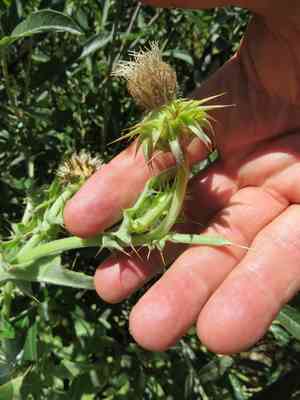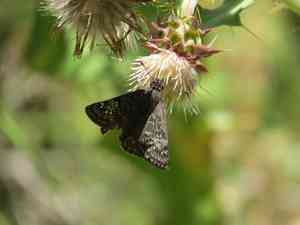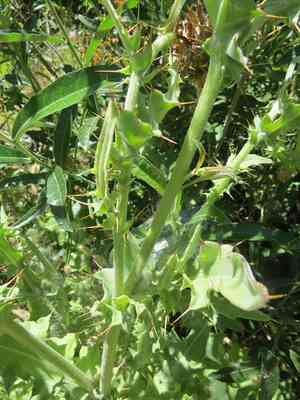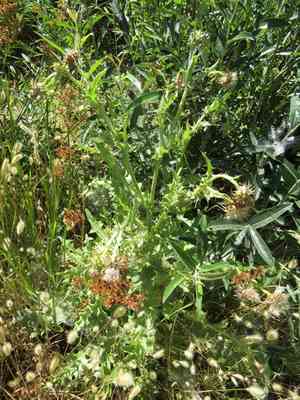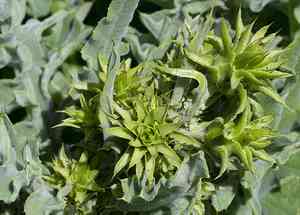
Fountain thistle(Cirsium fontinale)

Fountain thistle (Cirsium fontinale)

Also known as: Mt hamilton thistle, Crystal springs fountain thistle

The fountain thistle (Cirsium fontinale) is well-suited to its wetland environment thanks to several key adaptations:

1. **Robust Water Adaptation:** This perennial plant excels in moist, waterlogged soils, displaying remarkable resilience to saturated conditions.
2. **Deep Root Penetration:** It features an extensive root system that reaches deep into the soil, facilitating access to water and nutrients even during dry spells.
3. **Oxygen Transport:** Specialized tissue called aerenchyma aids in delivering oxygen to submerged roots, crucial for respiration in wet environments.
4. **Seed Buoyancy:** Its seeds are designed to float, enabling them to spread across water surfaces and colonize new areas effectively.
5. **Defensive Spines:** The plant's spiny leaves deter herbivores, providing a natural defense mechanism.
6. **Pollinator Attraction:** Its striking purple flower heads attract local pollinators, enhancing its reproductive success and contributing to the local ecosystem.

These adaptations collectively enable the fountain thistle to thrive and sustain itself in its competitive wetland habitat.

Attributes of Fountain thistle

Lifespan
Perennial
Plant Type
Herb
Plant Height
30-150 cm
Spread
20-50 cm
Leaf Color
Green with white spines
Flower Size
2-4 cm
Flower Color
Purple

ForwardPlant - Identify plants with a snap

Identify and diagnose plants, get toxicity alerts, and explore safety guides for all types of fungi.

Try for Free

Images of Fountain thistle

Fountain thistle(Cirsium fontinale)

Quickly Identify Fountain thistle

1
Identifying Cirsium fontinale involves looking for its spiny leaves, purple flowers, and its preference for serpentine seeps. The plant often has a rosette of basal leaves and erect flowering stems.

Scientific Classification of Fountain thistle

Phylum
Vascular plants
Class
Dicotyledons
Order
Asterales
Family
Daisy
Genus
Thistles
Species
Fountain thistle

Planting and Growing of Fountain thistle

Care Difficulty
Moderate
Watering Schedule
Every 2 days
Sunlight Requirements
Full sun
Sunshine Duration
4-6 hours
Ideal Temperature
60-75℉
Soil Type
Potting Mix, Peat Mix
Soil pH
6.5-7.5
Fertilizer Type
Balanced
Pruning Season
Spring, Summer
Pruning Area
Branches, Leaves
Pruning Frequency
2 times a year
Repotting Season
Spring
Pot Type
Plastic, Terracotta

water icon How to Water Fountain thistle?

Cirsium fontinale thrives in moist conditions, but it's essential to avoid waterlogged soil. Water thoroughly until the top 2 inches of soil feel consistently moist but not soggy.
What are the symptoms of an underwatered Fountain thistle?
What should I do if my Fountain thistle is not getting enough water?
What are the symptoms of an overwatered Fountain thistle?
How to save an overwatered Fountain thistle?

sunlight icon What Are the Sunlight Requirements for Fountain thistle?

Sunlight Requirements: Full sun, Partial sun
Duration of light: 6 to 8 hours daily
Cirsium fontinale ideally requires full to partial sun exposure, averaging about 6 to 8 hours a day. This optimal range supports robust growth and vibrant flowering, crucial for its ornamental and ecological roles.
How much light is ideal for Cirsium fontinale?
What are the solutions to achieve ideal lighting for Cirsium fontinale?
What are the benefits of ideal lighting for Cirsium fontinale?

temperature icon What Is the Ideal Temperature Range for Fountain thistle?

Ideal Temperature: 60 ~ 75℉
Cirsium fontinale thrives best in temperatures ranging from 60 to 75°F. This range provides a conducive environment for photosynthesis, metabolic activities, and overall growth. Within this temperature, the plant experiences optimal leaf and flower production, contributing to its robust health. Additionally, the ideal range supports soil nutrient absorption and adequate moisture retention, critical for maintaining plant vitality.

soil icon What Soil is Best for Fountain thistle?

Soil type: Loam, Sandy loam, Clay soil
Soil PH: 6.5 ~ 7.5
Cirsium fontinale needs soil that retains moisture well to prevent dehydration. Loamy and clay soils are excellent at maintaining the necessary moisture for sustained growth, helping the plant avoid stress during dry spells. This plant thrives in nutrient-rich soils that provide essential minerals for its growth. An abundance of organic matter promotes healthy root development and robust flowering. While it requires moisture retention, good drainage is crucial to prevent root rot. Sandy loam mixes offer an ideal balance, allowing excess water to drain away while keeping enough moisture.

fertilize icon How to Fertilize Fountain thistle?

Fertilizer type: Balanced
Cirsium fontinale, commonly known as fountain thistle, requires moderate fertilization. Use a balanced liquid fertilizer at half the recommended strength. For slow-release fertilizers, apply about 2 tablespoons per plant annually to ensure optimal growth.

prune icon How to Prune Fountain thistle?

Pruning Time: Spring, Summer
Begin by using clean, sharp pruning shears to avoid unnecessary damage to the plant. First, remove any dead or diseased stems close to the base to promote healthy growth. Next, prune back any overly long or leggy stems to encourage bushier growth. Aim to create a shape that allows air and light to penetrate the plant's center, which helps in reducing mold and disease. Regularly check for new shoots and guide their growth direction with light trimming if necessary. More About Pruning Techniques

propagate icon How to Propagate Fountain thistle plant?

Propagate Time: Spring, Early summer
1
To propagate Cirsium fontinale by seeds, begin by filling a seed tray with a well-draining potting mix. Sow the seeds lightly on the surface and water gently to avoid displacing them. Place the tray in a sunny spot and keep the soil moist.
2
When propagating by division, carefully dig up a mature plant during early spring. Gently shake off excess soil to expose the roots, then use a sharp knife to divide the plant into smaller sections, ensuring each section has roots attached.
3
After dividing the plant, each section should be planted in its own pot or directly into the ground. Water well immediately after planting and ensure each division is at the same soil depth as the original plant.
More About Propagating Techniques

repot icon How to Repot Fountain thistle plant?

Repotting frequency: Every 1-2 years
1
You should consider repotting Cirsium fontinale when you notice root circling the pot's interior or emerging through drainage holes. Another sign is when the plant outgrows its current pot, causing the soil to dry out very quickly after watering. It's crucial to see these signs early to help the plant continue thriving and prevent stress.
2
Select a pot that is 1-2 inches larger in diameter than the current pot. Ensure it has drainage holes to prevent waterlogging, which can lead to root rot. The right size ensures the roots have enough space to grow without being constrained, promoting robust plant health and avoiding over-watering issues.
3
Use a well-draining sandy soil mix to mimic the plant’s natural environment. Soil that retains too much moisture can damage the roots by suffocation or encourage the maturation of rot-fostering bacteria. A sandy mix ensures excellent aeration and fast drainage, enhancing root growth and plant vigor.

ForwardPlant - Identify plants with a snap

Find the best spots for them to optimize their health, simply using your phone.

Try for Free