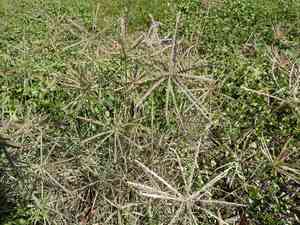
Tumble windmill grass (Chloris verticillata)
Also known as: Windmill Grass, Whorled Chloris
Tumble windmill grass, scientifically known as **Chloris verticillata**, is a resilient perennial native to North America, historically grazed by bison on the Great Plains. The genus name "Chloris" is inspired by a Greek mythological figure, a nymph named Chloris. According to legend, Zephyrus, the god of the west wind, abducted her and she became Flora, the goddess of spring.
In This Article
Attributes of Tumble windmill grass
Lifespan
Perennial
Plant Type
Grass
Plant Height
15 cm
Spread
15 cm
Leaf Color
Green
Flower Size
3 mm to 4 mm
Flower Color
Yellow Green Purple Brown
Images of Tumble windmill grass
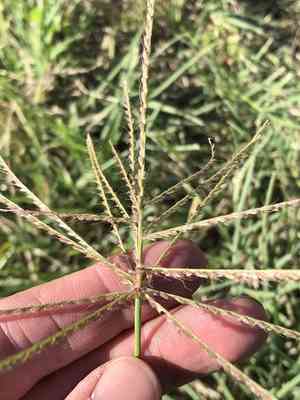
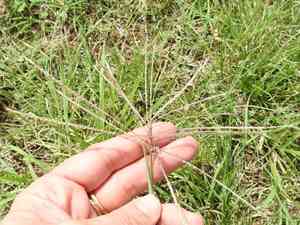
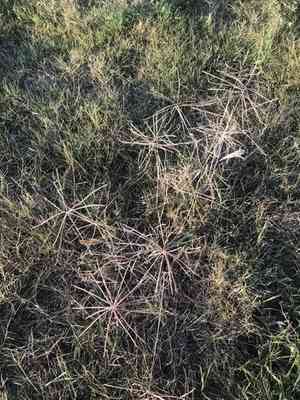
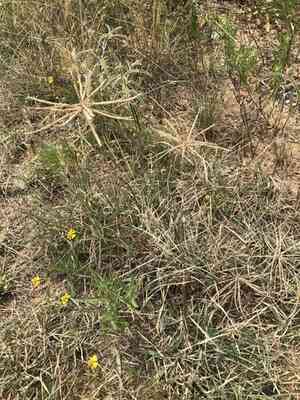
Quickly Identify Tumble windmill grass
1
Chloris verticillata can be identified by its whorled inflorescence that resembles a windmill, its narrow, wiry leaves, and its height, which can reach up to 2-3 feet. The seed heads are distinctive with several spikes radiating from a central point.
Scientific Classification of Tumble windmill grass
Phylum
Vascular plants
Class
Monocotyledons
Order
Poales
Family
Grass
Genus
Windmill grasses
Species
Tumble windmill grass
Planting and Growing of Tumble windmill grass
Care Difficulty
Easy
Watering Schedule
Every 3 days
Sunlight Requirements
Full sun
Sunshine Duration
4-8 hours
Ideal Temperature
65-75℉
Soil Type
Potting Mix, Peat Mix
Soil pH
6.5-7.5
Fertilizer Type
Balanced
Pruning Season
Spring, Summer
Pruning Area
Branches, Leaves
Pruning Frequency
2 times a year
Repotting Season
Spring
Pot Type
Plastic, Ceramic
 How to Water Tumble windmill grass?
For Chloris verticillata, the watering amount follows the principle of moistening the soil adequately without waterlogging it. About 250 ml of water per session should suffice to penetrate the root zone thoroughly but ensure it is well-drained to avoid stagnation.
What are the symptoms of an underwatered Tumble windmill grass?
›
What should I do if my Tumble windmill grass is not getting enough water?
›
What are the symptoms of an overwatered Tumble windmill grass?
›
How to save an overwatered Tumble windmill grass?
›
 What Are the Sunlight Requirements for Tumble windmill grass?
Chloris verticillata thrives in full sun conditions, requiring about 6 to 8 hours of direct sunlight daily. Optimal light ensures vigorous growth, vibrant color, and resilience against pests and diseases.
What are the optimal light conditions for Chloris verticillata?
›
How can you ensure Chloris verticillata gets the optimal light?
›
What are the benefits if Chloris verticillata receives proper light?
›
 What Is the Ideal Temperature Range for Tumble windmill grass?
Chloris verticillata thrives best in a temperature range of 65 to 75 degrees Fahrenheit. This range allows for optimal photosynthesis and growth processes. Maintaining this temperature range ensures that the plant's metabolic and physiological processes occur without stress.
 What Soil is Best for Tumble windmill grass?
Chloris verticillata thrives in soils enriched with organic matter, providing essential nutrients that support its robust growth and vibrant greenness. This plant prefers well-draining soils to prevent root rot; proper drainage ensures that water does not accumulate around the roots, promoting healthy growth. The ideal soil should hold moderate moisture levels, keeping the roots hydrated while avoiding waterlogging, which can cause undesirable stress to the plant.
 How to Fertilize Tumble windmill grass?
For Chloris verticillata, use a balanced liquid fertilizer diluted to half its strength. Apply approximately 100-150 ml per plant during the active growing season. As for slow-release fertilizer, 20 grams per square meter should suffice, spread evenly across the soil surface.
 How to Prune Tumble windmill grass?
Avoid pruning during the hottest part of the day to prevent stress on the plant. Morning or late afternoon are ideal times as cooler temperatures help the plant recover quickly from cuts. Observe for any signs of pest infestation or disease symptoms before pruning. Address any health concerns to avoid spreading issues through pruning activities.
More About Pruning Techniques→
 How to Propagate Tumble windmill grass plant?
1
Choose seeds from mature plants or take cuttings from healthy, disease-free specimens to ensure the success of your propagation endeavor. This critical first step influences overall growth.
2
For both seeds and cuttings, the growing medium should be well-draining and nutrient-rich. Mixing garden soil with compost or perlite can improve aeration and enhance root development.
3
When planting seeds, ensure they are spaced adequately in the seed tray to prevent overcrowding. For cuttings, insert them gently into the medium, ensuring nodes are slightly buried.
 How to Repot Tumble windmill grass plant?
1
You'll know it's time to repot Chloris verticillata when you notice roots emerging from the drainage holes, indicating it's becoming root-bound. Poor growth and soil compaction are also telltale signs. Ideally, repot at the beginning of its growing season to minimize stress and encourage healthy growth.
2
Select a pot that's one size larger than the current one to provide ample space for growth without overwhelming the roots. Ensure it has adequate drainage holes; this prevents waterlogging, which can lead to root rot, maintaining optimal health and promoting vibrant foliage.
3
Opt for a light, well-draining potting mix rich in organic matter. This type of soil ensures efficient drainage, preventing root rot while providing essential nutrients. A well-aerated composition fosters robust root development and supports the plant's overall health.



