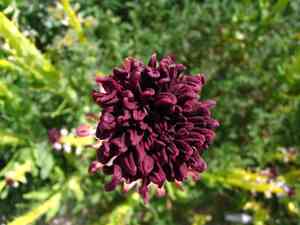
Desert candle (Caulanthus inflatus)
Also known as: Desert Candle, Jewel Flower, Snakewort
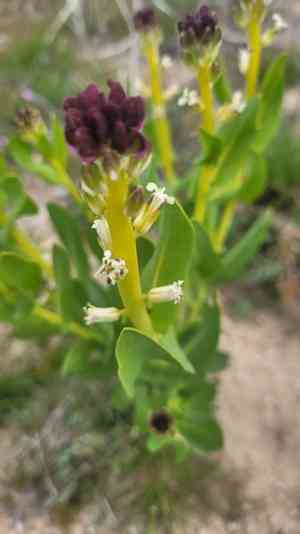
Caulanthus inflatus is native to the United States. This unique plant can reach heights of up to 70 cm and features a distinctively thick, swollen stem resembling a yellow candle. Its basal leaves range from 2 to 7 cm in length, becoming smaller as they ascend the stem. The plant produces small flowers with four reddish-purple petals.
In This Article
Attributes of Desert candle
Lifespan
Annual
Plant Type
Herb, Succulent
Plant Height
Up to 1 meter (3.3 feet)
Spread
N/A as it typically does not have a crown-like structure
Leaf Color
Green
Flower Size
0.5 to 1 centimeter
Flower Color
Yellow
Images of Desert candle
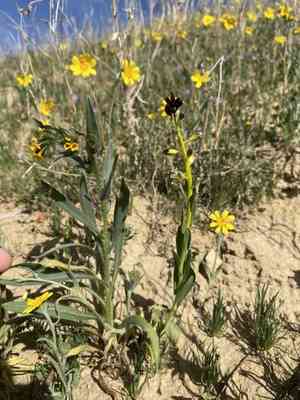
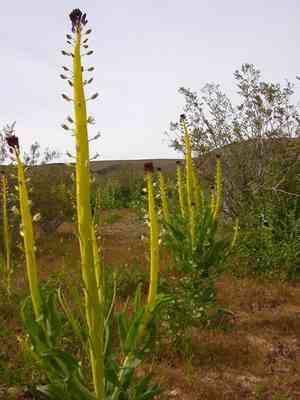
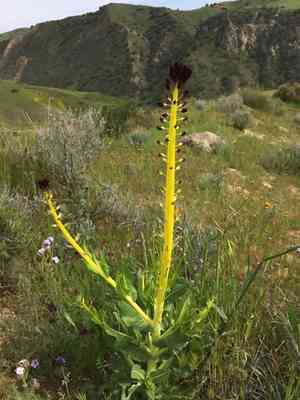
Quickly Identify Desert candle
1
Identifiable by its thick, hollow, and inflated stem, which is bright green to yellowish-green. The basal leaves are lanceolate and may appear in spire-like clusters. The small, four-petaled flowers are usually yellow.
Scientific Classification of Desert candle
Phylum
Vascular plants
Class
Dicotyledons
Order
Brassicales
Family
Cruciferae
Genus
Wild cabbage
Species
Desert candle
Planting and Growing of Desert candle
Care Difficulty
Moderate
Watering Schedule
Every 2 days
Sunlight Requirements
Full sun
Sunshine Duration
6-10 hours
Ideal Temperature
65-75℉
Soil Type
Potting Mix, Peat Mix
Soil pH
6.5-7.5
Fertilizer Type
Balanced
Pruning Season
Spring, Summer
Pruning Area
Branches, Leaves
Pruning Frequency
2 times a year
Repotting Season
Spring
Pot Type
Terracotta, Plastic
 How to Water Desert candle?
Caulanthus inflatus requires a moderate watering amount, typically around 250 milliliters per session. Ensure the soil becomes evenly moist but not waterlogged. The plant thrives best when its roots remain aerated, so it's crucial to avoid overwhelming it with water.
What are the symptoms of an underwatered Desert candle?
›
What should I do if my Desert candle is not getting enough water?
›
What are the symptoms of an overwatered Desert candle?
›
How to save an overwatered Desert candle?
›
 What Are the Sunlight Requirements for Desert candle?
Caulanthus inflatus thrives best under full to partial sun, benefiting from several hours of exposure daily. Ideal lighting promotes robust growth and flower development.
Solution to Achieve Ideal Light
›
Specific Actions to Ensure Ideal Light
›
Effects of Ideal Light on Plant Health
›
 What Is the Ideal Temperature Range for Desert candle?
Caulanthus inflatus thrives best in temperatures ranging from 65°F to 75°F. This range provides optimal conditions for growth, maximizing photosynthesis and nutrient uptake. It mimics the plant's natural habitat conditions, providing stability that helps alleviate potential stress factors.
 What Soil is Best for Desert candle?
Caulanthus inflatus thrives in soil with excellent drainage to prevent root rot. Adequate water flow allows roots to access oxygen and nutrients efficiently, enhancing plant growth and health. This plant prefers soils with moderate fertility. Excess nutrients can stress the plant, while a moderate level ensures steady growth, vibrant flowering, and resistance to pests. A slightly alkaline soil pH between 6.5 and 7.5 suits Caulanthus inflatus, providing optimal nutrient availability and encouraging beneficial microbial activity in the root zone.
 How to Fertilize Desert candle?
For Caulanthus inflatus, the fertilizer amount should be moderate to avoid any nutrient burn. A well-balanced, water-soluble liquid fertilizer can be applied at half the strength recommended on the label. About 1 teaspoon per gallon of water is often sufficient, ensuring the soil does not become saturated.
 How to Prune Desert candle?
Begin pruning Caulanthus inflatus in early Spring just as new growth appears. Use clean, sharp scissors or pruning shears to trim away any dead or damaged stems. Focus on removing spent flower stalks down to the base to encourage new blooms. Be sure to keep the plant's unique inflated stems intact during the process.
More About Pruning Techniques→
 How to Propagate Desert candle plant?
1
Gently sow the seeds of Caulanthus inflatus on the surface of a sterile potting mix. Do not bury them deeply; instead, lightly press them into the soil to ensure contact. Mist the surface lightly to keep the soil moist but not overly wet.
2
Place the seed tray in a location where it will receive ample light, such as a sunny windowsill. Alternatively, use grow lights positioned about six inches above the tray for at least 12-16 hours a day to encourage even growth.
3
Check the moisture level daily and mist as necessary. The potting mix should be kept moist, but overwatering should be avoided to prevent seedling rot. Ensure that the conditions are warm to aid the germination process.
 How to Repot Desert candle plant?
1
You'll know it's time to repot Caulanthus inflatus when you notice rootbound conditions, like roots peeking out from drainage holes or a slower growth rate. Additionally, fresh growth in spring heralds the ideal time to repot this unique plant, ensuring it gets a fresh start with new soil to thrive during the active growing season.
2
Opt for a pot that is slightly larger than the current one, with ample drainage holes. This ensures adequate space for root expansion without overwhelming the plant. A well-chosen pot offers superior drainage, essential for preventing root rot and supporting healthy growth patterns in this distinctive desert dweller.
3
Select a gritty, well-draining soil mix that mirrors the plant’s natural arid habitat. The ideal soil will have a combination of sand, perlite, and peat, ensuring excellent drainage and aeration to protect against overwatering. Using appropriately formulated soil promotes strong root health and overall plant vitality.
Learn More About Desert candle Diseases
Bacterial Leaf Spot
Bacterial Soft Rot
Bacterial Wilt
Clubroot
Crown Gall
Cyst Nematode
Damping-off
Downy Mildew
Drought Stress
Fusarium Wilt
Gray Mold
Leaf Spot
Mosaic
Nutrient Deficiency
Nutrient Toxicity
Powdery Mildew
Root Rot
Root-knot Nematode
Rusts
Sooty Mold
Spider Mites
Temperature Stress
Thrips Damage
White Mold
Chemical Injury



