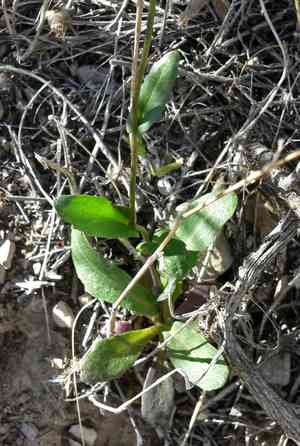
Cooper's wild cabbage (Caulanthus cooperi)
Also known as: Desert Candle, Wild Cabbage
Cooper's wild cabbage, native to desert regions, exhibits several distinct adaptations for arid survival. Its slender, wax-coated stems help reduce water loss, while its elongated clusters of yellow flowers add to its unique appearance. Blooming mainly from March to May, this plant demonstrates remarkable resilience through its waxy surfaces that conserve moisture, deep root systems for accessing water, and efficient water use mechanisms. These features enable it to endure and flourish in harsh, dry environments.
In This Article
Attributes of Cooper's wild cabbage
Lifespan
Annual
Plant Type
Herb
Plant Height
1 to 3 feet
Spread
N/A
Leaf Color
Bright green
Flower Size
0.5 to 1 inches
Flower Color
Yellowish-green with purple streaks
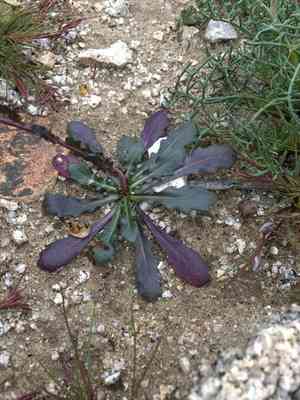
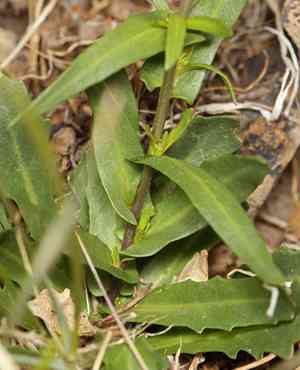
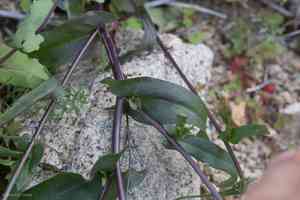
Images of Cooper's wild cabbage
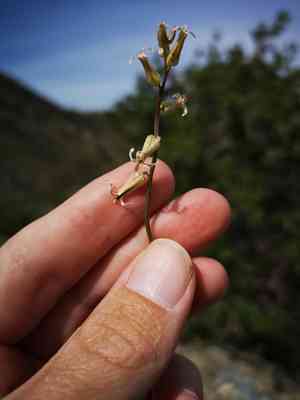
Quickly Identify Cooper's wild cabbage
1
Caulanthus cooperi can be identified by its tall, slender stems and its bright green, often waxy leaves that are dense near the base. The flowers are usually yellowish-green with purple streaks and are clustered at the tops of the stems, making them quite distinctive.
Scientific Classification of Cooper's wild cabbage
Phylum
Vascular plants
Class
Dicotyledons
Order
Brassicales
Family
Cruciferae
Genus
Wild cabbage
Species
Cooper's wild cabbage
Planting and Growing of Cooper's wild cabbage
Care Difficulty
Hard
Watering Schedule
Every 2 days
Sunlight Requirements
Full sun
Sunshine Duration
4-8 hours
Ideal Temperature
50-68℉
Soil Type
Potting Mix, Peat Mix
Soil pH
6.5-7.5
Fertilizer Type
Balanced
Pruning Season
Spring, Summer
Pruning Area
Branches, Leaves
Pruning Frequency
2 times a year
Repotting Season
Spring
Pot Type
Plastic, Ceramic
 How to Water Cooper's wild cabbage?
The watering amount for Caulanthus cooperi should be around 250 ml per session. It is essential to ensure that the water reaches the roots but doesn't linger excessively in the soil. The principle to follow is to provide enough moisture without making the soil soggy.
What are the symptoms of an underwatered Cooper's wild cabbage?
›
What should I do if my Cooper's wild cabbage is not getting enough water?
›
What are the symptoms of an overwatered Cooper's wild cabbage?
›
How to save an overwatered Cooper's wild cabbage?
›
 What Are the Sunlight Requirements for Cooper's wild cabbage?
Caulanthus cooperi ideally requires full sun exposure. Adequate sunlight boosts its flowering and overall vigor, ensuring a striking presence in the garden enriched by bright blooms.
What is the optimal sunlight condition for Caulanthus cooperi?
›
How can you ensure that Caulanthus cooperi gets the ideal sunlight?
›
What benefits does Caulanthus cooperi gain from ideal lighting conditions?
›
 What Is the Ideal Temperature Range for Cooper's wild cabbage?
The ideal temperature range for Caulanthus cooperi is between 50°F and 68°F. This range ensures optimal growth and health for the plant, providing the necessary warmth without causing heat stress. Maintaining this temperature allows the plant's physiological processes to function efficiently, promoting robust growth and flowering.
 What Soil is Best for Cooper's wild cabbage?
Caulanthus cooperi thrives in well-drained soil which prevents root rot and ensures the roots get enough oxygen. This type of soil supports healthy growth and vibrant foliage, vital for the plant's survival in both natural and cultivated settings. Though not exceedingly demanding, Caulanthus cooperi appreciates a nutrient-rich medium to boost its growth. Providing balanced nutrients helps the plant develop robust stems and healthy leaves, supporting its natural resilience. This plant favors sandy soils, which are light and allow excess water to drain quickly. By ensuring rapid drainage, sandy soils help prevent waterlogging, which can be detrimental to Caulanthus cooperi.
 How to Fertilize Cooper's wild cabbage?
For Caulanthus cooperi, the right amount of fertilizer is crucial. Use a balanced liquid fertilizer at half the recommended strength on the label for monthly applications. Avoid full strength to prevent nutrient burn.
 How to Prune Cooper's wild cabbage?
Begin by inspecting the plant for any dead or diseased stems, which should be removed first. Next, trim back any leggy growth to encourage bushiness. Use clean, sharp tools to make angled cuts just above a leaf node. This will promote the best regrowth. Always prune no more than one-third of the plant at a time to avoid excessive shock. Regular pruning can also help to manage the height of the plant, keeping it contained and tidy. Between cuts, especially when switching plants, disinfect your tools to prevent the spread of diseases. Use a solution of one part bleach to nine parts water or readily available sanitizer. Allow tools to dry completely before storing them to avoid rusting.
More About Pruning Techniques→
 How to Propagate Cooper's wild cabbage plant?
1
Gather seeds from mature Caulanthus cooperi plants when the seed pods have dried. It's vital to do this carefully to avoid damaging the seeds, and to store them in a dry, cool place until sowing.
2
Use a well-draining seed starting mix in trays or pots for cultivating seeds. Ensure the soil is adequately moist but not saturated to promote optimal seed germination conditions.
3
Choose healthy stems for cuttings and use pruning shears to create precise cuts. Plant them in a rooting medium and maintain consistent moisture to encourage root development.
 How to Repot Cooper's wild cabbage plant?
1
Repotting Caulanthus cooperi is best done when you notice the plant becoming root-bound or the soil begins to decompose. Typically, this also aligns with early spring or autumn, when the plant is not in active growth. It’s wise to check the drainage as well; poor drainage can signal the need for repotting.
2
Selecting the right pot for Caulanthus cooperi is crucial. The pot should be slightly larger than the existing one but not excessively so. A pot with drainage holes is essential to prevent water logging, which can be detrimental to this species. The pot's material should ideally be porous, such as terracotta, to facilitate air exchange around the roots.
3
For Caulanthus cooperi, a well-draining cactus mix is ideal. This type of soil prevents root rot by allowing excess water to flow through easily. It typically contains components like sand or perlite, improving aeration and ensuring the roots get the necessary oxygen.
Learn More About Cooper's wild cabbage Diseases
Bacterial Leaf Spot
Bacterial Soft Rot
Clubroot
Crown Gall
Cyst Nematode
Damping-off
Downy Mildew
Drought Stress
Fusarium Wilt
Gray Mold
Leaf Spot
Mosaic
Nutrient Deficiency
Nutrient Toxicity
Powdery Mildew
Root Rot
Root-knot Nematode
Rusts
Sooty Mold
Spider Mites
Temperature Stress
Thrips Damage
White Mold



