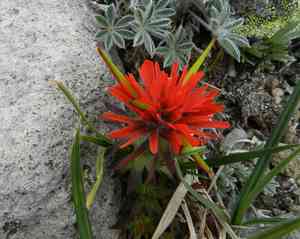
Cliff indian paintbrush (Castilleja rupicola)
Also known as: Cliff Paintbrush
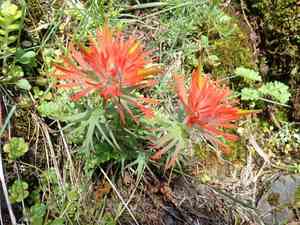
The Cliff Indian Paintbrush (Castilleja rupicola) is a perennial wildflower known for its distinctive red, paintbrush-like blooms. Belonging to the figwort family, it thrives in alpine environments, particularly on rocky slopes and cliffs in the Northern USA and Canada.
In This Article
Attributes of Cliff indian paintbrush
Lifespan
Perennial
Plant Type
Herb
Plant Height
15 cm to 25 cm
Spread
N/A
Leaf Color
Green
Flower Size
1-2 cm
Flower Color
Red, orange
Images of Cliff indian paintbrush
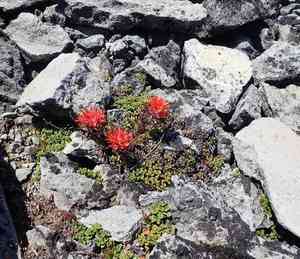
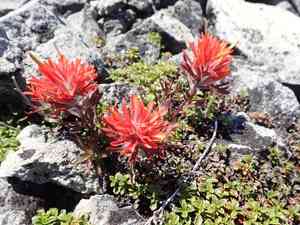
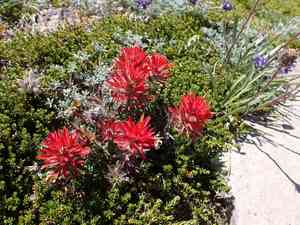
Quickly Identify Cliff indian paintbrush
1
This plant can be identified by its distinctive bright red to orange bracts surrounding small flowers, its narrow, lance-shaped leaves, and its preference for rocky, high-altitude habitats.
Scientific Classification of Cliff indian paintbrush
Phylum
Vascular plants
Class
Dicotyledons
Order
Lamiales
Family
Broomrape
Genus
Indian paintbrush
Species
Cliff indian paintbrush
Planting and Growing of Cliff indian paintbrush
Care Difficulty
Hard
Watering Schedule
Every 3 days
Sunlight Requirements
Partial sun
Sunshine Duration
6-10 hours
Ideal Temperature
55-75℉
Soil Type
Potting Mix, Peat Mix
Soil pH
6.5-7.5
Fertilizer Type
Balanced
Pruning Season
Spring, Summer
Pruning Area
Branches, Leaves
Pruning Frequency
2 times a year
Repotting Season
Spring
Pot Type
Plastic, Ceramic
 How to Water Cliff indian paintbrush?
Castilleja rupicola prefers a moderate amount of water. Ideally, provide about 150 milliliters of water per session. This ensures the soil is evenly moist but not soggy. Water should penetrate the soil, reaching the root zone.
What are the symptoms of an underwatered Cliff indian paintbrush?
›
What should I do if my Cliff indian paintbrush is not getting enough water?
›
What are the symptoms of an overwatered Cliff indian paintbrush?
›
How to save an overwatered Cliff indian paintbrush?
›
 What Are the Sunlight Requirements for Cliff indian paintbrush?
Partial sun, involving a balance between sun and shade, encourages robust growth and flowering. This light range supports Chlorophyll production while preventing stress associated with extreme exposure.
What is the best lighting condition for Castilleja rupicola?
›
How can you achieve this optimal light setting?
›
What benefits does ideal lighting bring to Castilleja rupicola?
›
 What Is the Ideal Temperature Range for Cliff indian paintbrush?
The ideal temperature range for Castilleja rupicola generally falls between 55°F and 75°F. This range ensures optimal growth conditions by promoting successful photosynthesis and cellular processes. Keeping temperatures within this range can enhance flowering and overall plant health. This is particularly true in regions where this species is native.
 What Soil is Best for Cliff indian paintbrush?
Castilleja rupicola thrives in soil that boasts excellent drainage. A well-draining soil minimizes waterlogging and root rot, allowing the roots to breathe and absorb necessary nutrients efficiently. This plant prefers nutrient-rich soil due to its semi-parasitic nature. An enriched soil environment supports its growth and enables effective nutrient absorption from its host plant. It's essential to have soil with a moderate texture that supports anchorage and provides enough space for root expansion. This balance ensures optimal growth and prevents compaction.
 How to Fertilize Cliff indian paintbrush?
For Castilleja rupicola, use a balanced liquid fertilizer diluted to half strength. During the active growing season, which is spring and early summer, provide about 200ml per plant. This will ensure the plant receives adequate nutrients without the risk of over-feeding.
 How to Prune Cliff indian paintbrush?
Begin your pruning task by identifying and cutting away any dead or damaged stems. Removing these parts helps direct the plant’s energy towards healthy growth, ensuring that every ounce of the plant's vigor goes to productive parts. Prune back the tips of healthy branches slightly to encourage bushier growth. This not only enhances the plant’s fullness but also promotes a more robust flowering display in subsequent seasons. Trim down tall or uneven branches to maintain a pleasing shape and manage the plant's height. This contributes to a well-balanced appearance and prevents the plant from becoming too leggy.
More About Pruning Techniques→
 How to Propagate Cliff indian paintbrush plant?
1
Fill the seed tray with a well-draining potting mix and moisten it thoroughly. Ensure the mix is loose and not compacted to allow for good root development of the seedlings.
2
Scatter the seeds thinly over the surface of the prepared soil. Lightly press them into the soil without covering, as some seeds require light for germination. Keep the soil consistently moist.
3
Select healthy, non-flowering stems from the parent plant. Use pruning shears to cut sections that are around 4 to 6 inches long. Remove the lower leaves to reduce water loss.
 How to Repot Cliff indian paintbrush plant?
1
Signs that Castilleja rupicola requires repotting include roots growing out of drainage holes, soil compacted and waterlogged, or visibly less vigorous growth. Spring or early summer is ideal as the plant is entering its growth phase, ensuring minimal stress and rapid recovery.
2
Select a pot slightly larger than the current one to allow room for growth, improving nutrient availability and root space. Ensure it has adequate drainage holes to prevent waterlogging, which can harm these xerophytic plants by causing root rot.
3
Choose a well-draining loamy mix, essential for preventing root rot and allowing air circulation. A mix rich in organic matter supports nutrient retention, promoting healthier growth and mimicking the plant's native, rocky habitat.
Learn More About Cliff indian paintbrush Diseases
Anthracnose
Bacterial Leaf Spot
Bacterial Wilt
Chemical Injury
Crown Gall
Cyst Nematode
Damping-off
Downy Mildew
Drought Stress
Fusarium Wilt
Gray Mold
Leaf Curl
Leaf Spot
Mosaic
Nutrient Deficiency
Nutrient Toxicity
Powdery Mildew
Root Rot
Root-knot Nematode
Rusts
Sooty Mold
Spider Mites
Temperature Stress
Thrips Damage
White Mold



