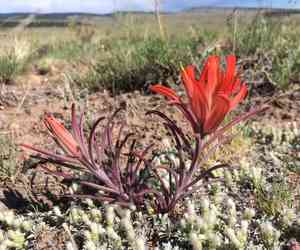
Wholeleaf indian paintbrush (Castilleja integra)
Also known as: Entireleaf Indian Paintbrush
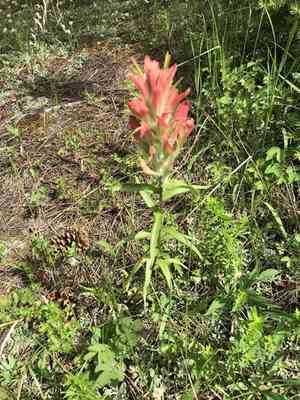
Wholeleaf indian paintbrush is a striking wildflower known for its vibrant bracts, which range in color from yellow to red. This perennial herb typically thrives in dry, open areas, where it forms a symbiotic relationship with native grasslands. Wholeleaf indian paintbrush exhibits slender, greenish stems and narrow leaves, with the notable bracts resembling petals that enshroud its small, tubular flowers. Adaptive to harsh environments, wholeleaf indian paintbrush is both a beacon of color and a testament to resilience in nature.
In This Article
Attributes of Wholeleaf indian paintbrush
Lifespan
Perennial
Plant Type
Herb
Plant Height
30 cm to 91 cm
Spread
Typically grows in clumps with a diameter of around 30-50 cm
Leaf Color
Green
Flower Size
Approximately 1-2 cm
Flower Color
Red, orange
Images of Wholeleaf indian paintbrush
Quickly Identify Wholeleaf indian paintbrush
1
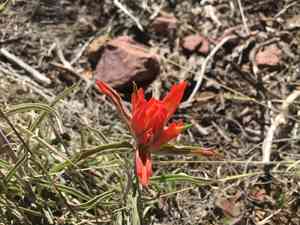
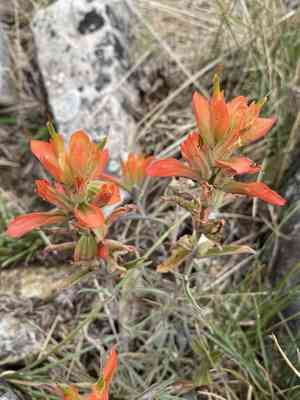
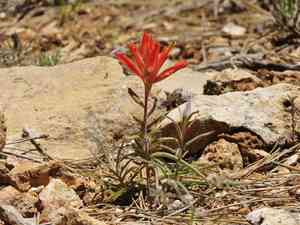
Identify Castilleja integra by its bright red or orange bracts that resemble paintbrushes, and its green, lance-shaped leaves. The plant typically grows in clumps and has a hairy stem.
Scientific Classification of Wholeleaf indian paintbrush
Phylum
Vascular plants
Class
Dicotyledons
Order
Lamiales
Family
Broomrape
Genus
Indian paintbrush
Species
Wholeleaf indian paintbrush
Planting and Growing of Wholeleaf indian paintbrush
Care Difficulty
Moderate
Watering Schedule
Every 2 days
Sunlight Requirements
Full sun
Sunshine Duration
6-10 hours
Ideal Temperature
68-75℉
Soil Type
Potting Mix, Peat Mix
Soil pH
6.5-7.5
Fertilizer Type
Balanced
Pruning Season
Spring, Summer
Pruning Area
Branches, Leaves
Pruning Frequency
2 times a year
Repotting Season
Spring
Pot Type
Plastic, Ceramic
 How to Water Wholeleaf indian paintbrush?
When watering Castilleja integra, it's essential to ensure the soil is evenly moist but never soaked. Use approximately 250 ml of water each time. This plant prefers the soil to dry out slightly between waterings, mimicking its natural environment. Overwatering can lead to root rot, so always ensure proper drainage.
What are the symptoms of an underwatered Wholeleaf indian paintbrush?
›
What should I do if my Wholeleaf indian paintbrush is not getting enough water?
›
What are the symptoms of an overwatered Wholeleaf indian paintbrush?
›
How to save an overwatered Wholeleaf indian paintbrush?
›
 What Are the Sunlight Requirements for Wholeleaf indian paintbrush?
Ideally, Castilleja integra thrives in full sunlight for about 6-8 hours daily. This light exposure stimulates active growth, vibrant bloom production and maintains its structural integrity.
What is the ideal lighting condition?
›
How can I provide ideal lighting?
›
What are the benefits of ideal lighting?
›
 What Is the Ideal Temperature Range for Wholeleaf indian paintbrush?
Castilleja integra thrives best between temperatures of 68°F and 75°F. These conditions mimic its natural habitat and provide an ideal environment for photosynthesis, growth, and flowering.
 What Soil is Best for Wholeleaf indian paintbrush?
One of the crucial soil requirements for Castilleja integra is that the soil must be well-draining. This type of soil ensures that excess water does not stay around the roots, which can lead to root rot. Well-draining soils allow roots to breathe and absorb essential nutrients efficiently, promoting healthy growth and vibrant blooms. A nutrient-rich soil is fundamental for Castilleja integra to flourish. Good levels of organic matter contribute vital nutrients that enhance the growth and flowering potential of the plant. This kind of soil supports robust health and resilience against diseases and environmental stresses. Castilleja integra thrives best in soil with a slightly acidic to neutral pH range. Maintaining this pH level facilitates optimum nutrient uptake, ensuring the plant attains its full growth potential. It also helps in preventing nutrient deficiencies and maintaining overall plant health.
 How to Fertilize Wholeleaf indian paintbrush?
For Castilleja integra, use a minimal amount of balanced fertilizer. Typically, a diluted liquid fertilizer at half strength is ideal, roughly 5 ml per liter of water. Avoid over-fertilizing as this plant is accustomed to nutrient-poor environments.
 How to Prune Wholeleaf indian paintbrush?
Prune just before or during the onset of new growth in the spring and summer to shape the plant and remove less vigorous branches. Focus on cutting above the nodes to encourage growth and remove any diseased or dead leaves to maintain plant health. To achieve a fuller appearance, trim the top of the plant to encourage branching. This encourages bushier growth habits and results in a more aesthetically pleasing plant.
More About Pruning Techniques→
 How to Propagate Wholeleaf indian paintbrush plant?
1
Start by filling seed trays with a well-draining potting mix. Sow seeds on the surface and cover lightly with soil. Maintain consistent moisture and temperature to enhance germination. Placing the trays in a warm spot with indirect light can boost germination rates.
2
To propagate via cuttings, choose a healthy parent plant. Use sharp pruners to take 4-6 inch cuttings from non-flowering shoots. Remove the lower leaves and dip the cut ends into rooting hormone before planting them in a suitable medium.
3
Division involves separating a mature plant into smaller sections, each with roots and shoots. Carefully dig up the plant and use a sharp knife to separate sections. Replant immediately in suitable locations or containers, ensuring they are watered well.
 How to Repot Wholeleaf indian paintbrush plant?
1
Repot Castilleja integra when you notice its roots growing out of the drainage holes or if the plant's growth becomes stunted. Another sign is if the soil dries out too quickly after watering, indicating that the current pot is too small. Ideally, repotting should occur in spring or autumn when the plant is not in full bloom, reducing transplant shock.
2
Select a pot that is one size larger than the current one. Ensure it has drainage holes to prevent waterlogging, which can lead to root rot. A slightly larger pot will give the roots space to grow, promoting healthy plant development without overwhelming it with too much soil volume at once.
3
Opt for a well-draining potting mix designed for wildflowers or cacti. This type of soil prevents water retention, which can cause root rot. A mix of peat, perlite, and sand creates an ideal environment that mimics the plant's natural habitat, ensuring proper moisture and aeration.
Toxicity
Ingestion
WARNING
The judgment on toxicity and danger is for reference only. We DO NOT GUARANTEE any accuracy of such judgment. Therefore, you SHALL NOT rely on such judgment. It is IMPORTANT TO SEEK PROFESSIONAL ADVICE in advance when necessary.



