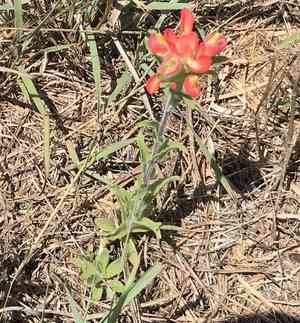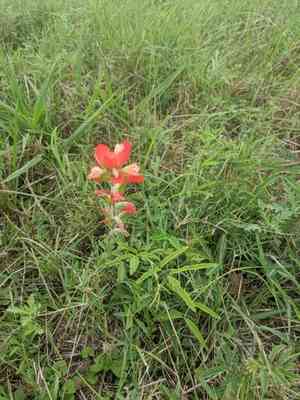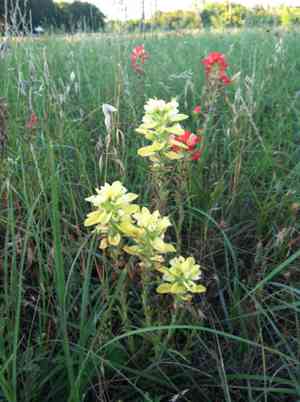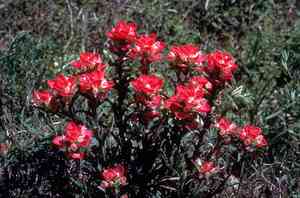
Entireleaf Indian paintbrush(Castilleja indivisa)

Entireleaf Indian paintbrush (Castilleja indivisa)

Also known as: Texas Indian paintbrush, Scarlet Paintbrush

The common name for entireleaf Indian paintbrush (Castilleja indivisa) arose because this plant looks like a paintbrush with paint on it. The roots of this plant spread out underground until they reach the roots of other plants. Then, they intertwine with the roots of their host plant to derive nourishment from it. That's the reason why botanists call this plant "semi-parasitic."

Attributes of Entireleaf Indian paintbrush

Lifespan
Annual, Biennial
Plant Type
Herb
Plant Height
30 cm to 45 cm
Spread
15 cm
Leaf Color
Red
Flower Size
3 cm to 6 cm
Flower Color
Red White Green Orange

ForwardPlant - Identify plants with a snap

Identify and diagnose plants, get toxicity alerts, and explore safety guides for all types of fungi.

Try for Free

Images of Entireleaf Indian paintbrush
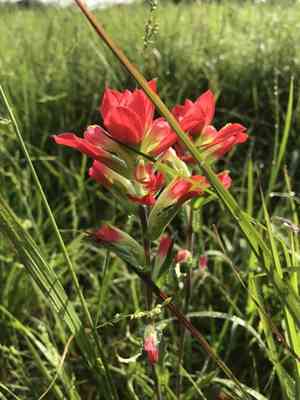
Entireleaf Indian paintbrush(Castilleja indivisa)

Quickly Identify Entireleaf Indian paintbrush

1
Look for bright red-orange bracts that appear to be the flower petals but are actually modified leaves. The true flowers are small and tube-like, surrounded by these colorful bracts. The plant is typically found in meadows and prairies.

Scientific Classification of Entireleaf Indian paintbrush

Phylum
Vascular plants
Class
Dicotyledons
Order
Lamiales
Family
Broomrape
Genus
Indian paintbrush
Species
Entireleaf Indian paintbrush

Planting and Growing of Entireleaf Indian paintbrush

Care Difficulty
Easy
Watering Schedule
Every 4 days
Sunlight Requirements
Full sun
Sunshine Duration
4-8 hours
Ideal Temperature
60-75℉
Soil Type
Potting Mix, Peat Mix
Soil pH
6.5-7.5
Fertilizer Type
Balanced
Pruning Season
Spring, Summer
Pruning Area
Branches, Leaves
Pruning Frequency
2 times a year
Repotting Season
Spring
Pot Type
Plastic, Ceramic

water icon How to Water Entireleaf Indian paintbrush?

For Castilleja indivisa, watering should be measured carefully. It thrives in moderate watering environments, allowing the soil to dry slightly between waterings. Ensure water penetrates to a depth of 15-20 cm, which typically means about 500 ml per watering session, depending on the size of the plant and its environment.
What are the symptoms of an underwatered Entireleaf Indian paintbrush?
What should I do if my Entireleaf Indian paintbrush is not getting enough water?
What are the symptoms of an overwatered Entireleaf Indian paintbrush?
How to save an overwatered Entireleaf Indian paintbrush?

sunlight icon What Are the Sunlight Requirements for Entireleaf Indian paintbrush?

Sunlight Requirements: Full sun, Partial sun
Duration of light: 6 to 8 hours
Half to full day of sunlight. With adequate sunlight, this plant blossoms profusely, maintaining strong health, and showcasing its vibrant natural colors.
Preferred Light Type
Solutions for Ideal Sunlight
Benefits of Ideal Sunlight
More About Sunlight Requirements Techniques

temperature icon What Is the Ideal Temperature Range for Entireleaf Indian paintbrush?

Ideal Temperature: 60 ~ 75℉
Castilleja indivisa thrives best in temperatures ranging from 60°F to 75°F. This range provides the warmth necessary for optimal photosynthesis and growth, ensuring vibrant blooms and healthy foliage.

soil icon What Soil is Best for Entireleaf Indian paintbrush?

Soil type: Sandy soil, Sandy loam
Soil PH: 6.5 ~ 7.5
Castilleja indivisa thrives in soils with excellent drainage. Sandy soils provide this benefit, ensuring that water does not linger around the roots, reducing the chance of root rot. Loam offers a mix of sand and organic material, supplying enough nutrients for growth. This balanced approach sustains healthy development and vibrant flowering. These plants do well with moderate soil fertility. Hot soils can support their needs without the risk of nutrient lockup that occurs in richer soils, encouraging healthy root systems.

fertilize icon How to Fertilize Entireleaf Indian paintbrush?

Fertilizer type: Balanced
For Castilleja indivisa, it is crucial to apply fertilizers sparingly due to its semi-parasitic nature. When using liquid fertilizer, dilute it to half of the recommended strength to prevent any potential harm to the plant. For solid or slow-release fertilizers, use approximately a tablespoon spread evenly around the base of the plant, ensuring it remains at a safe distance from the roots.

prune icon How to Prune Entireleaf Indian paintbrush?

Pruning Time: Spring, Summer
First, identify any dead, damaged, or overgrown stems. These should be the first targets for pruning. Removing these stems allows the plant to allocate resources efficiently to healthier parts and promotes vigorous growth. After removing unwanted stems, focus on shaping the plant. Cut back the stems to your desired shape, encouraging a more compact and aesthetically pleasing form. Always cut just above a leaf node to stimulate new growth. After pruning, it's crucial to clean up any fallen plant debris to prevent disease. Dispose of cuttings properly; if the cuttings are healthy, they can be composted, but diseased or pest-infested material should be discarded. More About Pruning Techniques

propagate icon How to Propagate Entireleaf Indian paintbrush plant?

Propagate Time: Spring, Early spring
1
Fill the seed tray with sterile potting mix and lightly moisten it. The mix should be damp but not soggy to avoid fungal growths that can harm the seeds.
2
Sprinkle Castilleja indivisa seeds evenly over the surface of the potting mix. Do not cover them as they require light for germination. Space the seeds out to prevent overcrowding.
3
Place the seed tray in a location with bright, indirect sunlight and maintain a temperature of about 70°F (21°C). Keep the potting mix consistently moist without overwatering.
More About Propagating Techniques

repot icon How to Repot Entireleaf Indian paintbrush plant?

Repotting frequency: Every 2-3 years
1
Castilleja indivisa should be repotted when its roots begin to outgrow the current container or when the soil becomes overly compacted. If you notice roots appearing at the drainage holes or the soil not absorbing water as it used to, it is a clear signal that it's time to repot. Observing these signs can significantly help maintain the health of your Indian Paintbrush and ensure continued growth.
2
Selecting the right pot for Castilleja indivisa involves considering both material and size. A slightly larger pot than the current one is ideal, ensuring there's enough room for root expansion. The pot must have good drainage holes to prevent excessive water retention, which can lead to root rot. Terracotta pots are a great choice as they allow better breathability, helping to balance moisture levels.
3
For Castilleja indivisa, a well-draining, sandy soil mix is optimal. This ensures that excess water can escape easily, preventing the roots from sitting in water, which could cause rot. A mix that promotes aeration and supports the plant's nutrient needs will enhance its growth and sustain its vibrant blooms.

ForwardPlant - Identify plants with a snap

Find the best spots for them to optimize their health, simply using your phone.

Try for Free

Toxicity of Entireleaf Indian paintbrush

Is Entireleaf Indian paintbrush toxic to humans?

Entireleaf Indian paintbrush exhibits a mild level of toxicity to humans, primarily when ingested. This plant contains selenium throughout, which can be detrimental to health if consumed. Ingestion of entireleaf Indian paintbrush may lead to symptoms such as nausea, vomiting, fatigue, and irritability. In more serious instances, individuals might experience hair and nail loss or neurological disturbances. Since the entire plant is toxic, it is critical to prevent accidental ingestion, especially because entireleaf Indian paintbrush is not typically regarded as food. Precautions should be taken to ensure that children and pets do not ingest any part of the entireleaf Indian paintbrush, as their smaller body size renders them more vulnerable to its toxic effects.

Is Entireleaf Indian paintbrush toxic to cat?

Entireleaf Indian paintbrush poses a mild toxicity risk to cats. Ingestion of any part of this plant can lead to poisoning, primarily due to the selenium found throughout its structure. Cats may inadvertently consume the plant out of curiosity or simply due to its easy accessibility. After such exposure, affected cats could show signs of physical unease, which signals distress due to the toxic substance ingested. It is crucial to act quickly by consulting a veterinarian to address and alleviate the effects of the poisoning.

Is Entireleaf Indian paintbrush toxic to dog?

The entireleaf Indian paintbrush is identified as having a mild toxic effect on dogs. Canines might unknowingly consume portions of this plant, resulting in the risk of poisoning. The entire plant is deemed toxic, making it essential to keep it beyond the reach of pets. If a dog happens to ingest any portion of the entireleaf Indian paintbrush, symptoms such as gastrointestinal distress may emerge, with more severe reactions possible depending on the amount consumed. The harmful substance in entireleaf Indian paintbrush is selenium, which can lead to toxicity when ingested in considerable amounts. Dog owners should remain alert and inhibit their pets from accessing regions where entireleaf Indian paintbrush flourishes. If a dog does consume this plant, it is crucial to seek veterinary assistance immediately to ensure adequate treatment and management of any symptoms.

Identify toxic plants for your safety

Learn which plants are harmful to you and your pets, and make informed choices for a safer home!

Try for Free
WARNING
The judgment on toxicity and danger is for reference only. We DO NOT GUARANTEE any accuracy of such judgment. Therefore, you SHALL NOT rely on such judgment. It is IMPORTANT TO SEEK PROFESSIONAL ADVICE in advance when necessary.
More About Toxic Techniques