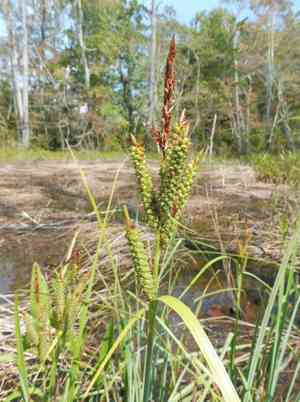
Cypress swamp sedge (Carex joorii)
Also known as: Joor's Sedge
Carex joorii, or cypress-knee sedge, is native to the southeastern United States. It thrives in wet, swampy environments such as the shallow waters of depression swamps, often coexisting with Sphagnum moss. Additionally, it can be found in bottomland forests and wet prairies. As a perennial graminoid, it produces fruits from summer to early fall.
In This Article
Attributes of Cypress swamp sedge
Lifespan
Perennial
Plant Type
Grass
Plant Height
50-70 cm
Spread
Not applicable
Leaf Color
Green
Flower Size
Less than 1 cm
Flower Color
Brown or greenish-brown
Images of Cypress swamp sedge
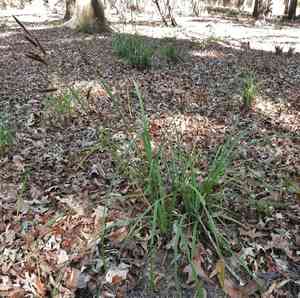
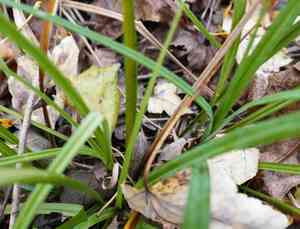
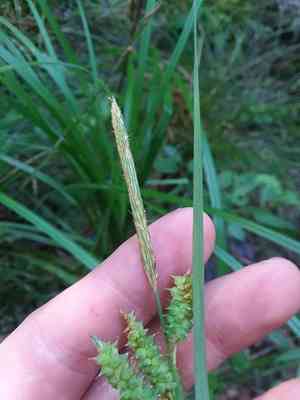
Quickly Identify Cypress swamp sedge
1
Carex joorii can be identified by its triangular stems, grass-like leaves, and the presence of both male and female flowers on the same plant. The female flowers have distinct perigynia (sac-like structures) that are a key identifying feature.
Scientific Classification of Cypress swamp sedge
Phylum
Vascular plants
Class
Monocotyledons
Order
Poales
Family
Sedge
Genus
True sedges
Species
Cypress swamp sedge
Planting and Growing of Cypress swamp sedge
Care Difficulty
Moderate
Watering Schedule
Every 3 days
Sunlight Requirements
Partial sun
Sunshine Duration
6-10 hours
Ideal Temperature
65-75℉
Soil Type
Potting Mix, Peat Mix
Soil pH
6.5-7.5
Fertilizer Type
Balanced
Pruning Season
Spring, Summer
Pruning Area
Branches, Leaves
Pruning Frequency
2 times a year
Repotting Season
Spring
Pot Type
Plastic, Ceramic
 How to Water Cypress swamp sedge?
For Carex joorii, ensure the soil is consistently moist but not waterlogged. Water thoroughly, allowing about 300ml to seep through the soil, preventing the base from sitting in excess water which can lead to rot.
What are the symptoms of an underwatered Cypress swamp sedge?
›
What should I do if my Cypress swamp sedge is not getting enough water?
›
What are the symptoms of an overwatered Cypress swamp sedge?
›
How to save an overwatered Cypress swamp sedge?
›
 What Are the Sunlight Requirements for Cypress swamp sedge?
Carex joorii performs best with partial to full shade, maximizing growth and health by balancing light and shade. Thus, ample indirect light supports vibrancy and strong growth.
Optimal sunlight exposure
›
Balancing light intensity
›
Reducing stress with ideal light
›
 What Is the Ideal Temperature Range for Cypress swamp sedge?
The ideal temperature range for Carex joorii is between 65°F and 75°F. This range ensures optimal growth and development, allowing the plant to photosynthesize efficiently and maintain healthy cellular functions. Maintaining temperatures within this range will promote robust foliage and a strong root system, yielding a vibrant and healthy plant.
 What Soil is Best for Cypress swamp sedge?
Carex joorii thrives in well-draining soil types, which help prevent root rot by allowing excess water to easily escape. This condition is crucial for maintaining plant health and vitality. While drainage is important, the soil should also retain adequate moisture. This balance ensures that the plant's roots receive consistent hydration without becoming waterlogged. A slightly nutrient-rich soil composition benefits Carex joorii by providing essential nutrients that support robust growth and leaf development, ensuring a lush and vibrant appearance.
 How to Fertilize Cypress swamp sedge?
For Carex joorii, use a balanced liquid fertilizer diluted to half its strength, applying it lightly to keep the plant well-nourished without causing nutrient burn. When using granular slow-release fertilizer, scatter a small handful around the base of the plant, ensuring even distribution to provide a gentle nutrient release throughout the growing season.
 How to Prune Cypress swamp sedge?
Begin by inspecting Carex joorii for any dead, yellowing, or damaged leaves. Using your pruning shears, carefully snip them off at the base, ensuring a clean cut to reduce the risk of infection. Removing these helps the plant allocate its resources more effectively to healthy parts. After removing damaged leaves, observe the plant's overall shape. Trim back any excessively long or wayward stems to create a more cohesive appearance. Cut just above a node to encourage branching and fuller growth, which enhances the plant's aesthetic appeal. Carex joorii can become dense over time, so thinning is essential. Carefully trim select stems within the interior to improve light penetration and airflow. This not only maintains the plant’s structure but also reduces the risk of mold and pest infestations.
More About Pruning Techniques→
 How to Propagate Cypress swamp sedge plant?
1
To ensure successful seed or division propagation of Carex joorii, begin by preparing a well-draining mix. A combination of potting soil and sand or perlite helps in maintaining proper moisture levels while preventing waterlogging around roots or seeds.
2
Carex joorii seeds should be evenly sprinkled over the prepared growing medium and lightly covered with soil. It's crucial to maintain a moist environment, either by misting or covering with a plastic wrap, to facilitate germination.
3
For division propagation, mature plants must be lifted from the ground using a fork and gently separated. Each division should have a part of the root system intact. Replant these divisions at the same soil depth to promote quick establishment.
 How to Repot Cypress swamp sedge plant?
1
Carex joorii should be repotted when you notice roots growing through the drainage holes or the soil becomes compacted. Additionally, if the plant's growth has significantly slowed down despite regular care, it might be indicative of a need for repotting.
2
Select a pot that is slightly larger than the current one to give Carex joorii room to grow. Ensure it has adequate drainage holes to prevent waterlogging, which is essential for the plant's health as it prevents root rot and supports oxygen circulation.
3
Opt for a soil mix that retains moisture yet drains well to mimic the natural ecosystem of Carex joorii. This provides a balance, allowing root access to water without creating a soggy environment that can lead to root diseases.
Learn More About Cypress swamp sedge Diseases
Anthracnose
Bacterial Leaf Spot
Bacterial Soft Rot
Damping-off
Downy Mildew
Drought Stress
Fusarium Wilt
Gray Mold
Leaf Spot
Mosaic
Nutrient Deficiency
Nutrient Toxicity
Powdery Mildew
Root Rot
Root-knot Nematode
Rusts
Sooty Mold
Spider Mites
Temperature Stress
Thrips Damage
White Mold
Chemical Injury



