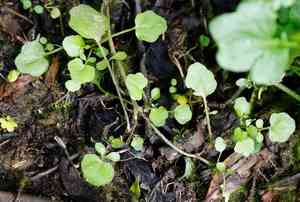
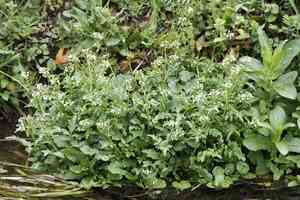
Big-flower bittercress (Cardamine scutata)
Also known as: Nakedstem Bittercress
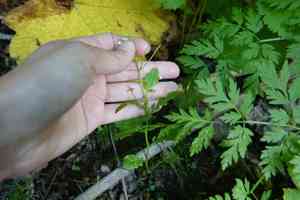
The plant typically grows to a height of 10 to 30 cm. Its leaves are primarily located at the base, emerging from the root and lower stem area. The flowers are positioned at the top of the stem, forming a spike. The petals are white, and the fruits are elongated and upright.
In This Article
Attributes of Big-flower bittercress
Lifespan
Annual, Biennial
Plant Type
Herb
Plant Height
30 cm
Spread
Not applicable
Leaf Color
Green
Flower Size
0.5-1 cm
Flower Color
White
Images of Big-flower bittercress
Quickly Identify Big-flower bittercress
1
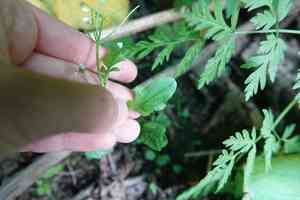
The plant can be identified by its small white flowers with four petals, usually blooming in spring. Its leaves are pinnate with several narrow leaflets, and it generally has a hairless, slender stem.
Scientific Classification of Big-flower bittercress
Phylum
Vascular plants
Class
Dicotyledons
Order
Brassicales
Family
Cruciferae
Genus
Bittercresses
Species
Big-flower bittercress
Planting and Growing of Big-flower bittercress
Care Difficulty
Easy
Watering Schedule
Every 4 days
Sunlight Requirements
Partial sun
Sunshine Duration
4-8 hours
Ideal Temperature
59-77℉
Soil Type
Potting Mix, Peat Mix
Soil pH
6.5-7.5
Fertilizer Type
Balanced
Pruning Season
Spring, Summer
Pruning Area
Branches, Leaves
Pruning Frequency
2 times a year
Repotting Season
Spring
Pot Type
Plastic, Ceramic
 How to Water Big-flower bittercress?
Water Cardamine scutata with approximately 150 ml each time you water. Ensure the water is enough to moisten the soil evenly without leaving it soggy. The aim is to provide moisture without causing waterlogging, allowing the soil to retain its structure and providing essential hydration to the plant without drowning it.
What are the symptoms of an underwatered Big-flower bittercress?
›
What should I do if my Big-flower bittercress is not getting enough water?
›
What are the symptoms of an overwatered Big-flower bittercress?
›
How to save an overwatered Big-flower bittercress?
›
 What Are the Sunlight Requirements for Big-flower bittercress?
Partial sun is ideal for Cardamine scutata. Four to six hours of filtered or dappled sunlight enhances photosynthesis without overexposing the plant to stress, resulting in healthier, vibrant foliage.
How much light does Cardamine scutata need?
›
What are the solutions for ideal lighting?
›
What are the benefits of ideal lighting?
›
 What Is the Ideal Temperature Range for Big-flower bittercress?
The ideal temperature range for cultivating Cardamine scutata is between 59°F and 77°F. Within this range, the plant can thrive and exhibit optimal growth. Consistent temperatures within this range facilitate proper physiological processes, supporting healthy foliage and vibrant flowering.
 What Soil is Best for Big-flower bittercress?
Cardamine scutata thrives in well-drained soil, which ensures that the roots do not get waterlogged, preventing root rot. This drainage ability is crucial for maintaining healthy root systems and promoting vigorous growth. While well-drained, the soil must retain moderate moisture levels. This balance allows the plant to access necessary water resources without causing oversaturation, leading to robust foliage and vivid blooms. The soil should be nutrient-rich to support the plant's growth demands. High organic matter helps deliver essential nutrients, ensuring the plant's metabolic processes function optimally, resulting in healthier foliage.
 How to Fertilize Big-flower bittercress?
Cardamine scutata thrives with a balanced approach to fertilization. For liquid fertilizers used biweekly, a dilution of one tablespoon per gallon of water is ideal. For slow-release fertilizers, use 1-2 teaspoons per plant, three times a year. This ensures the plant gets adequate nutrients without the risk of burning the roots.
 How to Prune Big-flower bittercress?
Begin by cleaning your pruning tools to prevent the spread of diseases. For Cardamine scutata, trim back any dead or damaged stems. Shape the plant gently to maintain a compact form while ensuring not to remove too much foliage, which can stress the plant. Target the thinnest or weakest growths and those showing signs of illness. Regular pruning encourages fuller growth and more vigorous blooming cycles.
More About Pruning Techniques→
 How to Propagate Big-flower bittercress plant?
1
Collect seeds from mature Cardamine scutata plants and allow them to dry naturally. Once dried, store them in a cool, dry place until ready for planting.
2
Select healthy cuttings from the plant, ensuring each has at least one set of leaves. Avoid using flowering stems as they have less energy for root development.
3
Use a well-draining soil mix enhanced with organic matter. This provides essential nutrients while ensuring proper aeration and moisture retention for seedlings and cuttings.
 How to Repot Big-flower bittercress plant?
1
Repot Cardamine scutata when you notice roots growing out of the drainage holes, or when the plant seems to be growing slower than usual despite regular care. These signs indicate that the roots need more space to expand.
2
Choose a pot that is 1-2 inches larger in diameter than the current one. This size allows room for root growth without overwhelming the plant. Opt for a pot with drainage holes to prevent waterlogging, which can lead to root rot.
3
Select a well-draining loamy soil mix to provide Cardamine scutata with the optimal balance of moisture retention and aeration. Such a mix will help prevent root rot while ensuring that the plant gets the nutrients it needs to thrive.



