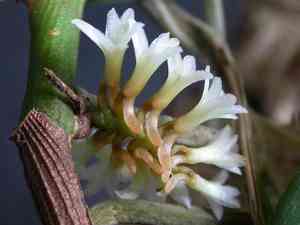
Fairy bentspur orchid (Campylocentrum micranthum)
Also known as: Micranthum
The fairy bentspur orchid is a small orchid that flourishes in tropical climates, where it attaches to tree hosts using its tiny, unobtrusive roots. Its delicate, tiny flowers, which can easily go unnoticed, bloom from thin, leafless stems and sparkle like dewdrops in the filtered light of the forest understory. This epiphytic orchid blends effortlessly into the vibrant greenery of the forest canopy, with its beauty rooted in its understated elegance.
In This Article
Attributes of Fairy bentspur orchid
Lifespan
Perennial
Plant Height
5-15 cm
Spread
N/A
Leaf Color
Green
Flower Size
0.1-0.2 cm
Flower Color
Greenish or yellowish
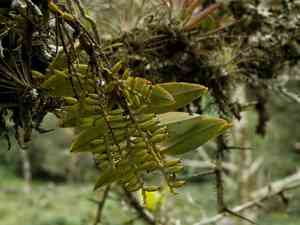
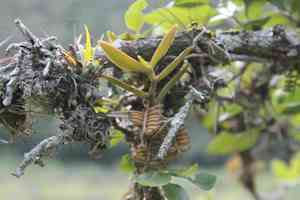
Images of Fairy bentspur orchid


Quickly Identify Fairy bentspur orchid
1
Identifying Campylocentrum micranthum involves looking for its tiny, greenish or yellowish flowers, which are often arranged in dense clusters. Its leaves are typically thick and fleshy, adapting well to retain moisture.
Scientific Classification of Fairy bentspur orchid
Phylum
Vascular plants
Class
Monocotyledons
Order
Asparagales
Family
Orchid
Genus
Bentspur orchid
Species
Fairy bentspur orchid
Planting and Growing of Fairy bentspur orchid
Care Difficulty
Moderate
Watering Schedule
Every 3 days
Sunlight Requirements
Partial sun
Sunshine Duration
4-6 hours
Ideal Temperature
70-85℉
Soil Type
Potting Mix, Peat Mix
Soil pH
6.5-7.5
Fertilizer Type
Balanced
Pruning Season
Spring, Summer
Pruning Area
Branches, Leaves
Pruning Frequency
Once a year
Repotting Season
Spring
Pot Type
Plastic, Ceramic
 How to Water Fairy bentspur orchid?
For Campylocentrum micranthum, the watering amount should be about 50 milliliters per instance. Since this orchid is an epiphyte, it needs just enough water to keep the roots moist but not soggy. When watering, ensure the roots have absorbed enough water but excess water should drain out completely to prevent rot.
What are the symptoms of an underwatered Fairy bentspur orchid?
›
What should I do if my Fairy bentspur orchid is not getting enough water?
›
What are the symptoms of an overwatered Fairy bentspur orchid?
›
How to save an overwatered Fairy bentspur orchid?
›
 What Are the Sunlight Requirements for Fairy bentspur orchid?
Partial sun exposure is ideal. Ensuring the plant receives moderate light enhances photosynthesis, supports healthy development, and encourages vibrant blooms, reflecting its natural environmental conditions.
What is the best light level for Campylocentrum micranthum?
›
How can I achieve the ideal lighting conditions for Campylocentrum micranthum?
›
What benefits does Campylocentrum micranthum gain from ideal lighting?
›
 What Is the Ideal Temperature Range for Fairy bentspur orchid?
The ideal temperature range for Campylocentrum micranthum is between 70°F and 85°F. This range mimics the plant's natural tropical environment, where consistent warmth promotes optimal growth and flowering. Within this range, the plant's physiological processes function at their best, allowing for robust root development and healthy foliage.
 What Soil is Best for Fairy bentspur orchid?
Campylocentrum micranthum thrives in well-draining soil, such as sandy or loamy soil. This ensures that excess water does not remain at the roots, preventing root rot and allowing the plant to access oxygen and nutrients effectively. To support its growth, this plant prefers soil rich in organic matter. Adding compost or leaf mulch to the soil provides necessary nutrients, encouraging vibrant foliage and healthy flower production. An aerated soil structure is crucial for Campylocentrum micranthum. It allows roots to penetrate easily and facilitates exchange of gases, fostering an environment where the plant can thrive and absorb moisture efficiently.
 How to Fertilize Fairy bentspur orchid?
For Campylocentrum micranthum, a delicate balance in fertilizer quantity is essential. For liquid fertilizers, dilute to half the recommended strength on the product label, applying about 20 ml per application. This ensures the plant receives steady nutrients without overwhelming its roots.
 How to Prune Fairy bentspur orchid?
Campylocentrum micranthum is a unique orchid that thrives with minimal pruning. Begin by familiarizing yourself with the plant’s growth patterns and preferences. Pruning should focus on removing any dead or wilted roots and leaves, which will help to conserve the plant's energy for new growth and flowering. Use a pair of sterilized, sharp scissors or pruning shears. Carefully prune any discolored or mushy roots, which are signs of decay. If the plant has lost its vigor, you may also trim away some of the older leaves that are not contributing to the plant’s robustness. Throughout, be gentle to prevent unnecessary damage to the plant.
More About Pruning Techniques→
 How to Propagate Fairy bentspur orchid plant?
1
Use a well-draining orchid mix for sowing seeds or tissue cultures. The medium should be sterilized to eliminate pathogens and should maintain a balance of moisture retention and aeration.
2
Sprinkle seeds evenly over the surface of the medium without covering them, as light may be necessary for germination. Maintaining high humidity, using a clear cover, can help facilitate germination.
3
Initiate tissue cultures in a sterile lab environment. Use explants from a healthy plant, and subculture on a medium with the appropriate growth hormones to encourage callus formation and subsequent shoot proliferation.
 How to Repot Fairy bentspur orchid plant?
1
Campylocentrum micranthum exhibits signs that signal the need for repotting, such as outgrowing its current container, roots protruding out of the pot, or reduced blooming. These are key indicators that the plant needs more space and nourishment. Choosing the right time, typically during its growth period in spring or summer, ensures minimized stress and promotes healthier regrowth.
2
Selecting the appropriate pot for Campylocentrum micranthum is crucial. Opt for a container slightly larger than the current one, with ample drainage holes. This ensures proper airflow to the roots and prevents water stagnation, minimizing the risk of root rot. The material of the pot, whether clay or plastic, should also provide stability and moisture retention suitable for an epiphyte.
3
Campylocentrum micranthum thrives in an epiphyte orchid mix that provides excellent drainage while retaining some moisture. A mix of bark, sphagnum moss, and perlite is ideal. This combination mimics its natural habitat, allowing roots to breathe and access the needed nutrients without waterlogging, promoting robust growth.



