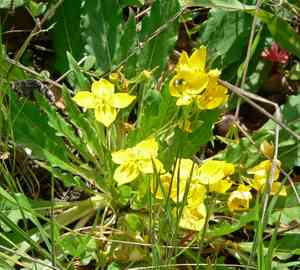
Sun cup (Camissonia ovata)
Also known as: Sun Cup, Sun Drops
The Sun cup is a striking wildflower commonly found in grassy areas along the coastlines of western North America. Despite its modest size, it stands out in spring due to its vibrant yellow blossoms. The plant relies on ants to disperse its seeds, as they collect and bury them, aiding in the plant's propagation.
In This Article
Attributes of Sun cup
Lifespan
Perennial
Plant Type
Herb
Plant Height
10-50 cm
Spread
10-30 cm
Leaf Color
Green
Flower Size
1.5 cm to 4.5 cm
Flower Color
Yellow
Images of Sun cup

Quickly Identify Sun cup
1
Camissonia ovata can be identified by its bright yellow, four-petaled flowers and its ovate leaves. The plant typically has a rosette of basal leaves and branching stems that hold the flowers. Look for its preference for dry, sandy soils.
Scientific Classification of Sun cup
Phylum
Vascular plants
Class
Dicotyledons
Order
Myrtales
Family
Evening primrose
Genus
Sun cup
Species
Sun cup
Planting and Growing of Sun cup
Care Difficulty
Easy
Watering Schedule
Every 2 days
Sunlight Requirements
Full sun
Sunshine Duration
6-8 hours
Ideal Temperature
65-75℉
Soil Type
Potting Mix, Peat Mix
Soil pH
6.5-7.5
Fertilizer Type
Balanced
Pruning Season
Spring, Summer
Pruning Area
Branches, Leaves
Pruning Frequency
2 times a year
Repotting Season
Spring
Pot Type
Plastic, Ceramic
 How to Water Sun cup?
Camissonia ovata, commonly known as California primrose, prefers moderate watering. It's crucial to provide approximately 250ml of water per session, ensuring the soil is moist but not waterlogged. Water until the top inch of soil feels moist to the touch.
What are the symptoms of an underwatered Sun cup?
›
What should I do if my Sun cup is not getting enough water?
›
What are the symptoms of an overwatered Sun cup?
›
How to save an overwatered Sun cup?
›
 What Are the Sunlight Requirements for Sun cup?
Full sun allowing 6-8 hours of light ensures robust growth; benefits include enhanced flowering, vigorous foliage, and a prosperous lifecycle.
Optimal Sun Exposure
›
Balancing Partial Sun
›
Monitor and Adjust
›
 What Is the Ideal Temperature Range for Sun cup?
Camissonia ovata thrives best in temperatures ranging from 65°F to 75°F. This range provides optimal conditions for photosynthesis and growth, allowing the plant to develop robustly with minimal stress. Maintaining this temperature range ensures that the internal physiological processes of the plant function at their peak efficiency, thus promoting health and longevity.
 What Soil is Best for Sun cup?
Camissonia ovata thrives in well-drained soils, ensuring that excess water does not linger around the roots, which can prevent root rot and improve nutrient uptake. This plant prefers soils with moderate nutrient levels, providing enough essentials without overwhelming the roots, promoting steady and robust growth. Camissonia ovata grows best in slightly acidic to neutral soils with pH levels between 6.5 and 7.5, fostering optimal enzyme and nutrient activity for plant health.
 How to Fertilize Sun cup?
Camissonia ovata, known for its resilience, does well with moderate fertilization. Too much might harm more than help. A balanced 10-10-10 or 20-20-20 NPK fertilizer at a rate of half a tablespoon diluted in a gallon of water suffices.
 How to Prune Sun cup?
Start by locating any branches that appear dead, broken, or diseased. Removing these will help the plant to focus its energy on healthy growth and improve overall appearance. To promote bushier growth, trim the ends of branches. Make cuts above leaf nodes to stimulate new shoots. This technique not only improves the plant's shape but also enhances blooming. Camissonia ovata can be shaped according to your preference. Regular trims help maintain its size and prevent it from becoming leggy. Always step back and assess the plant's shape as you prune.
More About Pruning Techniques→
 How to Propagate Sun cup plant?
1
Begin by collecting seeds from mature Camissonia ovata plants. Clean the seeds to remove any debris and dry them thoroughly. Store the seeds in a cool, dark place until planting time.
2
Select a healthy parent plant and cut a 4-6 inch stem segment using a sterilized sharp knife. Ensure the cutting has at least one node and remove lower leaves to reduce moisture loss.
3
For seeds, sow them in the seed tray filled with a sterile potting mix, covering lightly with soil. For cuttings, dip the cut end in rooting hormone and plant in moist soil. Place in a warm area that receives indirect light.
 How to Repot Sun cup plant?
1
Camissonia ovata should be repotted when you notice that roots are coming out of the drainage holes, or if the plant's growth has significantly slowed down. Another good time is when the soil seems compact or retains water longer than usual, indicating a need for fresh, better-draining soil. Early spring or summer is ideal to allow the plant ample time to adjust before going dormant.
2
Select a pot that is slightly larger than the current one, ideally 1-2 inches wider in diameter. Make sure it has adequate drainage holes to prevent waterlogging. A terracotta pot is highly recommended as it allows the soil to dry out more rapidly, which is beneficial for Camissonia ovata. It also has the advantage of being heavy enough to provide stability as the plant grows.
3
Opt for a well-draining sandy loam soil enriched with organic matter. This type of soil allows excess water to escape swiftly, which is crucial for preventing root rot. Incorporating organic matter ensures that the plant receives enough nutrients while maintaining the airy structure required for root health. This balance is particularly well-suited for Camissonia ovata.
Learn More About Sun cup Diseases
Anthracnose
Bacterial Leaf Spot
Bacterial Soft Rot
Bacterial Wilt
Chemical Injury
Crown Gall
Cyst Nematode
Damping-off
Downy Mildew
Drought Stress
Fusarium Wilt
Gray Mold
Leaf Curl
Leaf Spot
Mosaic
Nutrient Deficiency
Nutrient Toxicity
Powdery Mildew
Root Rot
Root-knot Nematode
Rusts
Sooty Mold
Spider Mites
Temperature Stress
Thrips Damage
White Mold



