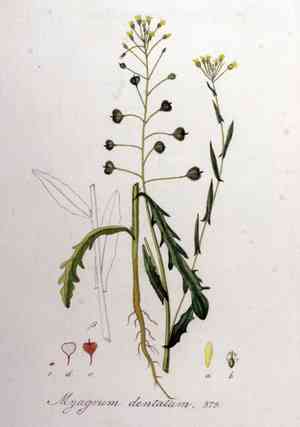
False flax (Camelina alyssum)
Also known as: Stinking flaxweed, Gold-of-pleasure
The plant reaches a height of 20 to 60 cm. It produces yellow flowers that are 4 to 5 mm in size, blooming from spring to summer. The stems are upright and branch out at the top. Lower leaves taper into the stem, while upper leaves have stalks and feature an arrow-shaped or ear-like base.
In This Article
Attributes of False flax
Lifespan
Annual, Biennial
Plant Type
Herb
Plant Height
30-80 cm
Spread
30-50 cm
Leaf Color
Green
Flower Size
0.3-0.5 cm
Flower Color
Pale yellow
Images of False flax
Quickly Identify False flax
1
Look for rosettes of narrow, lance-shaped leaves, and small, pale yellow flowers in clusters on branched stems.
Scientific Classification of False flax
Phylum
Vascular plants
Class
Dicotyledons
Order
Brassicales
Family
Cruciferae
Genus
False flaxes
Species
False flax
Planting and Growing of False flax
Care Difficulty
Easy
Watering Schedule
Every 2 days
Sunlight Requirements
Full sun
Sunshine Duration
6-10 hours
Ideal Temperature
65-75℉
Soil Type
Potting Mix, Peat Mix
Soil pH
6.5-7.5
Fertilizer Type
Balanced
Pruning Season
Spring, Summer
Pruning Area
Branches, Leaves
Pruning Frequency
2 times a year
Repotting Season
Spring
Pot Type
Plastic, Ceramic
 How to Water False flax?
Camelina alyssum prefers well-drained soil and does not require heavy watering. Aim for about 250ml of water per session. Water the soil evenly until it feels moist but not soaked to avoid root rot while promoting healthy growth.
What are the symptoms of an underwatered False flax?
›
What should I do if my False flax is not getting enough water?
›
What are the symptoms of an overwatered False flax?
›
How to save an overwatered False flax?
›
 What Are the Sunlight Requirements for False flax?
Camelina alyssum benefits from both full sun and partial sun, thriving best in areas with 6 to 8 hours of light. This range enhances photosynthesis, promoting growth and flowering.
Optimal Sunlight Exposure
›
Solution to Achieve Ideal Lighting
›
Benefits of Ideal Lighting
›
 What Is the Ideal Temperature Range for False flax?
Camelina alyssum thrives best in temperatures ranging from 65°F to 75°F. This range allows for optimal metabolic activities and nutrient uptake, which fosters healthy growth and development. Ensuring that the temperature remains within this range can lead to more robust plants with higher resistance to diseases and pests.
 What Soil is Best for False flax?
Camelina alyssum thrives in well-drained soil, which prevents waterlogging and root rot. The plant benefits from the aeration and nutrient availability such soil conditions offer, promoting healthy growth. The plant prefers moderately fertile soils that provide essential nutrients without excessive richness, which can lead to excessive foliage and poor seed production. Balanced soil fertility supports optimal plant health. Adding organic matter to the soil improves its structure and nutrient content. This enhances root development and water retention, allowing Camelina alyssum to better withstand drought periods.
 How to Fertilize False flax?
Camelina alyssum generally requires moderate fertilization. Use approximately 20 grams of balanced fertilizer per square meter. Ensure the fertilizer is evenly distributed around the plant's root zone to avoid nutrient imbalances and promote healthy growth.
 How to Prune False flax?
Begin by removing any dead, damaged, or diseased branches. This not only improves the plant's appearance but also helps focus its energy on healthy growth. Trim back excessive growth to maintain a balanced shape. This helps improve airflow and light penetration, essential for a flourishing Camelina alyssum. Regularly pinch back the tips of growing stems to encourage denser foliage and increased flowering. This method keeps the plant compact and attractive.
 How to Propagate False flax plant?
1
Fill seed trays with a high-quality potting mix and water them thoroughly. Ensure the soil is moist but not waterlogged to promote optimal seed germination.
2
Distribute Camelina alyssum seeds evenly across the surface of the soil. Lightly cover them with a thin layer of soil or vermiculite to protect the seeds while allowing light exposure for germination.
3
Keep the soil consistently moist by gently misting it with water. Avoid overwatering as soggy conditions can lead to seed rot or fungal diseases.
 How to Repot False flax plant?
1
Camelina alyssum usually signals its need for repotting when roots start emerging from the drainage holes of its current container. Additionally, if you notice the plant's growth stagnating despite adequate light and watering, it's likely due to root-bound conditions requiring repotting. The ideal repotting time is during the growing seasons of spring and summer when the plant can recover quickly.
2
When selecting a pot for Camelina alyssum, aim for a container that is 1-2 inches larger in diameter than the current one. Choose a pot with ample drainage holes to prevent waterlogging, which can lead to root rot. The material of the pot, whether ceramic, plastic, or terracotta, should be based on your environment, ensuring adequate moisture retention or evaporation.
3
Opt for a well-draining, sandy soil mix to ensure proper aeration and prevent waterlogging for Camelina alyssum. A soil blend rich in organic matter can provide the essential nutrients while promoting healthy root development. The sandy texture aids in avoiding compaction, offering the ease needed for roots to spread comfortably.
Learn More About False flax Diseases
Anthracnose
Bacterial Leaf Spot
Bacterial Soft Rot
Bacterial Wilt
Clubroot
Crown Gall
Cyst Nematode
Damping-off
Downy Mildew
Drought Stress
Fusarium Wilt
Gray Mold
Leaf Spot
Mosaic
Nutrient Deficiency
Nutrient Toxicity
Powdery Mildew
Root Rot
Root-knot Nematode
Rusts
Sooty Mold
Spider Mites
Temperature Stress
Thrips Damage
White Mold



