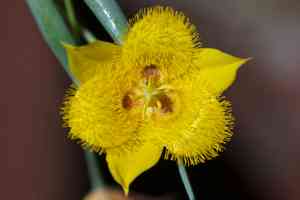
Yellow star-tulip (Calochortus monophyllus)
Also known as: Goldenstar
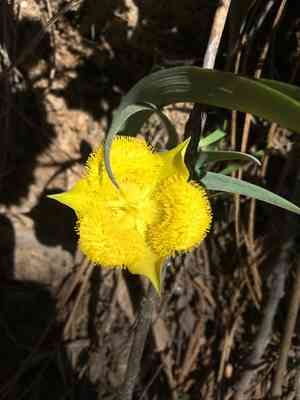
Calochortus monophyllus is a perennial herb characterized by a slender, occasionally branched stem that can grow up to 20 centimeters in height. The basal leaf measures between 10 and 30 centimeters long and remains green and unwithered during the flowering period. The plant features an inflorescence with 1 to 6 upright, bell-shaped flowers.
In This Article
Attributes of Yellow star-tulip
Lifespan
Perennial
Plant Type
Herb
Plant Height
0 mm to 30 cm
Spread
N/A
Leaf Color
Green
Flower Size
2 to 5 cm (0.8 to 2 inches)
Flower Color
Bright yellow with red or brown markings
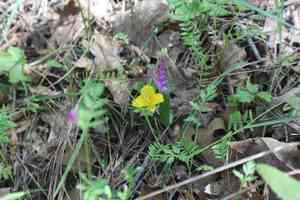
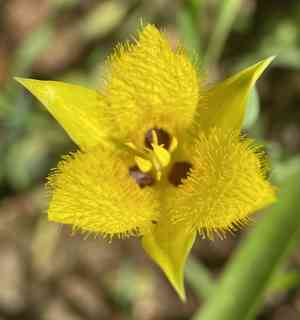
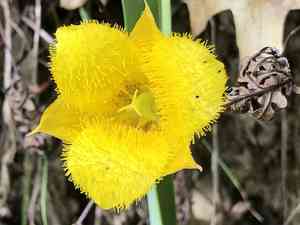
Images of Yellow star-tulip
Quickly Identify Yellow star-tulip
1
This plant can be identified by its single, linear basal leaf and bright yellow flowers that have distinctive, fringed or hair-lined petals.
Scientific Classification of Yellow star-tulip
Phylum
Vascular plants
Class
Monocotyledons
Order
Liliales
Family
Lily
Genus
Mariposas
Species
Yellow star-tulip
Planting and Growing of Yellow star-tulip
Care Difficulty
Moderate
Watering Schedule
Every 2 days
Sunlight Requirements
Partial sun
Sunshine Duration
6-12 hours
Ideal Temperature
60-75℉
Soil Type
Potting Mix, Peat Mix
Soil pH
6.5-7.5
Fertilizer Type
Balanced
Pruning Season
Spring, Summer
Pruning Area
Branches, Leaves
Pruning Frequency
2 times a year
Repotting Season
Spring
Pot Type
Plastic, Ceramic
 How to Water Yellow star-tulip?
Calochortus monophyllus thrives best with a moderate watering amount of around 200 ml per session. This amount ensures that the soil is sufficiently moist but not waterlogged, mimicking its natural habitat conditions. Water until the topsoil is damp and moisture slightly penetrates deeper, but avoid stagnant water.
What are the symptoms of an underwatered Yellow star-tulip?
›
What should I do if my Yellow star-tulip is not getting enough water?
›
What are the symptoms of an overwatered Yellow star-tulip?
›
How to save an overwatered Yellow star-tulip?
›
 What Are the Sunlight Requirements for Yellow star-tulip?
Partial sun to full sun helps Calochortus monophyllus to maintain its health and bloom vigorously. Ideal light exposure ensures efficient photosynthesis, vital energy production, and robust growth, which contribute significantly to the plant's overall vitality.
What is the ideal light intensity for Calochortus monophyllus?
›
How can you achieve this ideal lighting for your plant?
›
What are the benefits of ideal lighting for Calochortus monophyllus?
›
 What Is the Ideal Temperature Range for Yellow star-tulip?
The ideal temperature range for growing Calochortus monophyllus is between 60°F and 75°F. This range ensures optimal growth and flowering, as it mimics the plant's natural habitat conditions. Maintaining these temperatures can help in encouraging healthy foliage and vibrant blooms.
 What Soil is Best for Yellow star-tulip?
Calochortus monophyllus thrives in well-drained soil to prevent waterlogging and root rot. This allows the roots to breathe easily, ensuring healthy growth and vibrant blooms. Soils with moderate fertility are ideal for this plant, as they provide the necessary nutrients without causing excessive vegetative growth, which can impede its delicate flowering. Incorporating organic matter into the soil enhances its structure and nutrient-holding capacity, supporting Calochortus monophyllus with a steady nutrient supply and vigorous growth.
 How to Fertilize Yellow star-tulip?
Calochortus monophyllus requires careful fertilization due to its delicate root system. Use a diluted solution at a quarter strength for liquid fertilizer. For slow-release fertilizer, a scant tablespoon per bulb is adequate. Always ensure the soil is moist before application to avoid root burn.
 How to Prune Yellow star-tulip?
The bulb of Calochortus monophyllus is the heart of the plant. While pruning, avoid disturbing or damaging the bulb, as it is the source of the plant's growth energy. Make sure any cuts near the base are clean and precise. Calochortus monophyllus does not require extensive pruning. Over-pruning can stress the plant, reducing its ability to flower well in the subsequent season. Focus on removing only the dead and diseased parts to maintain its natural form and vigor.
More About Pruning Techniques→
 How to Propagate Yellow star-tulip plant?
1
Collect seeds from mature Calochortus monophyllus plants during late summer to early autumn. Ensure seeds are fully ripe and dry before attempting to store or plant them to guarantee the best chance of successful germination.
2
Scatter seeds across the surface of a pre-moistened seed tray filled with potting soil in early spring. Lightly press the seeds into the soil but do not cover them completely, as they require light for germination.
3
Ensure consistent moisture by misting the soil surface regularly, but avoid waterlogging which can lead to seed rot. Maintain high humidity until germination occurs, typically within a few weeks.
 How to Repot Yellow star-tulip plant?
1
You should consider repotting Calochortus monophyllus when the bulb starts to outgrow its pot, evidenced by roots visible on the surface or through drainage holes. Also, if the soil retains moisture for too long, it's probably time to refresh the soil. The best time to do this is during its dormant period in early spring or late autumn.
2
Select a pot that is just slightly larger than the current one, providing enough space for growth without overwhelming the roots. Ensure the pot has adequate drainage holes to prevent waterlogging. A well-chosen pot minimizes water retention, fostering healthy bulb growth and preventing dreaded root rot.
3
Opt for a sandy soil mix that allows water to flow freely, avoiding any excessive retention. This type of soil mimics the plant's natural environment, promoting robust root health and reducing the risk of diseases associated with overwatering. A well-draining mix ensures your Calochortus monophyllus thrives.
Learn More About Yellow star-tulip Diseases
Bacterial Leaf Spot
Bacterial Soft Rot
Chemical Injury
Crown Gall
Cyst Nematode
Damping-off
Downy Mildew
Drought Stress
Fusarium Wilt
Gray Mold
Leaf Spot
Mosaic
Nutrient Deficiency
Nutrient Toxicity
Powdery Mildew
Root Rot
Root-knot Nematode
Rusts
Sooty Mold
Spider Mites
Temperature Stress
Thrips Damage
White Mold



