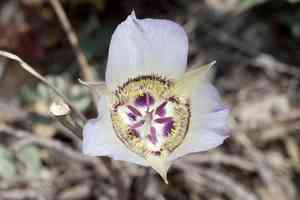
Doubting mariposa lily (Calochortus ambiguus)
Also known as: None
The Desert Mariposa Lily (Calochortus kennedyi) features elegant, grass-like leaves and stems that end in large, tulip-shaped blooms. These flowers come in shades from pale yellow to deep purple, sometimes with a distinctive central eye zone. Well-suited for arid climates, this plant's bulbous roots are adapted to endure dry conditions, showcasing its remarkable resilience.
In This Article
Attributes of Doubting mariposa lily
Lifespan
Perennial
Plant Type
Herb
Plant Height
10-40 cm
Spread
N/A
Leaf Color
Green
Flower Size
3-5 cm
Flower Color
White to pinkish with purple to yellow accents
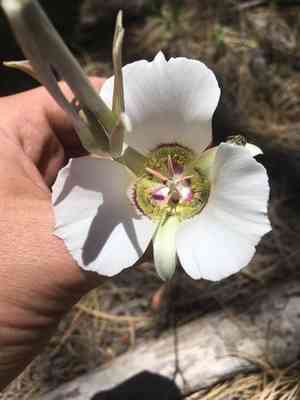
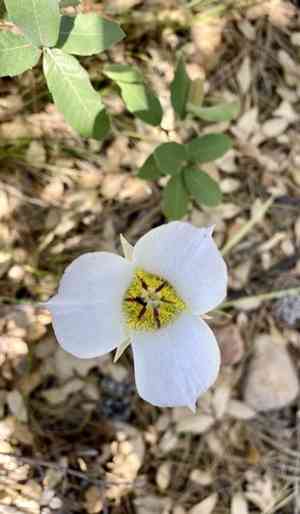
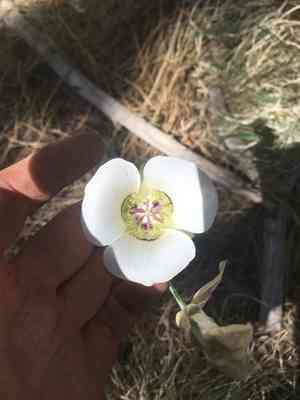
Images of Doubting mariposa lily
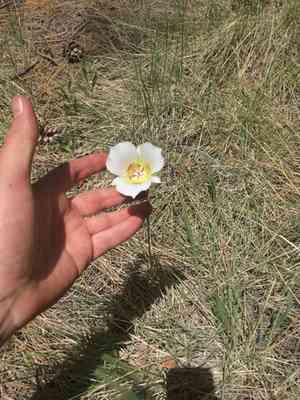
Quickly Identify Doubting mariposa lily
1
Calochortus ambiguus can be identified by its distinctive bell-shaped flowers, which typically have three large petals and three smaller sepals. The petals are usually white to pinkish with purple to yellow accents at the base. The plant has grass-like leaves.
Scientific Classification of Doubting mariposa lily
Phylum
Vascular plants
Class
Monocotyledons
Order
Liliales
Family
Lily
Genus
Mariposas
Species
Doubting mariposa lily
Planting and Growing of Doubting mariposa lily
Care Difficulty
Moderate
Watering Schedule
Every 2 days
Sunlight Requirements
Full sun
Sunshine Duration
4-8 hours
Ideal Temperature
60-75℉
Soil Type
Potting Mix, Peat Mix
Soil pH
6.5-7.5
Fertilizer Type
Balanced
Pruning Season
Spring, Summer
Pruning Area
Branches, Leaves
Pruning Frequency
2 times a year
Repotting Season
Spring
Pot Type
Plastic, Ceramic
 How to Water Doubting mariposa lily?
When watering Calochortus ambiguus, consider mimicking their natural habitat by providing moderate moisture levels. Apply around 500 milliliters per session, ensuring the soil becomes moist but not soggy. It's crucial to allow the soil to dry out between waterings to prevent root rot.
What are the symptoms of an underwatered Doubting mariposa lily?
›
What should I do if my Doubting mariposa lily is not getting enough water?
›
What are the symptoms of an overwatered Doubting mariposa lily?
›
How to save an overwatered Doubting mariposa lily?
›
 What Are the Sunlight Requirements for Doubting mariposa lily?
Calochortus ambiguus thrives best in full sun to partial sun environments. This range promotes vigorous growth and flowering, essential for its visual appeal and health. Full sun for a minimum of 6 to 8 hours daily is recommended.
Achieving Optimal Sunlight Exposure
›
Solutions for Ideal Light Conditions
›
Effects of Ideal Lighting
›
 What Is the Ideal Temperature Range for Doubting mariposa lily?
For optimal growth, Calochortus ambiguus thrives best within an air temperature range of 60°F to 75°F. In this range, the plant can effectively photosynthesize and maintain metabolic processes, ensuring healthy growth and vibrant flowering. Deviations from this range may lead to stress and suboptimal development, thus maintaining a consistent temperature within this scope is key to its successful cultivation.
 What Soil is Best for Doubting mariposa lily?
Calochortus ambiguus thrives in well-drained soil to prevent root rot, ensuring the plant receives the necessary oxygen without waterlogging. Ensuring the soil is rich in organic matter promotes healthy growth and robust flowering by providing essential nutrients. A pH level between 6.5 and 7.5 is optimal, allowing efficient nutrient uptake and preventing deficiencies or toxicities.
 How to Fertilize Doubting mariposa lily?
Calochortus ambiguus, known for its delicate and charming blooms, should be fertilized with care. Use a balanced liquid fertilizer with a ratio of 10-10-10, diluted to half strength. For slow-release fertilizers, use approximately one tablespoon per plant per application. Always avoid direct contact with the stem or leaves, as this may cause burning.
 How to Prune Doubting mariposa lily?
Begin by inspecting your Calochortus ambiguus for any yellowing or dead leaves. Using sharp scissors or pruning shears, cut these leaves at the base. Next, look for any stems that appear weak or have not flowered well and trim these away to encourage new growth. Finally, shape the plant by removing any unwanted or excessively long stems, ensuring you maintain its natural shape.
More About Pruning Techniques→
 How to Propagate Doubting mariposa lily plant?
1
Allow the seed pods to mature and dry on the plant before collecting. This ensures the seeds are fully developed and viable for germination. Once collected, store them in a cool, dry place until sowing.
2
Fill the seed trays with the sterilized soil mix and evenly scatter the seeds on the surface. Cover them lightly with a thin layer of soil. Water gently to maintain soil moisture without washing away the seeds.
3
Place the trays in a location with bright, indirect light and maintain a consistently warm temperature. Regularly check the moisture level of the soil. Seeds should germinate in a few weeks if conditions are right.
 How to Repot Doubting mariposa lily plant?
1
Calochortus ambiguus should be repotted when you notice the bulb overcrowding the pot or when the growth becomes stunted. Spring and autumn are ideal times, as the plant is less stressed than during active growth periods. Look for signals like yellowing leaves or roots emerging from the drainage holes to indicate it's time for a new pot.
2
Select a pot that is just one or two sizes larger than the current one to avoid excess soil moisture. Ensure it has drainage holes to prevent waterlogging, which Calochortus ambiguus cannot tolerate. The right pot will promote healthy root growth and prevent root rot by providing adequate aeration and drainage capabilities.
3
Opt for a well-draining sandy soil mix to mimic its natural habitat. This soil type provides excellent drainage, which is crucial for preventing bulb rot due to overwatering. A well-chosen soil mix will support robust growth by maintaining the right balance of moisture and aeration around the roots.
Learn More About Doubting mariposa lily Diseases
Anthracnose
Bacterial Leaf Spot
Bacterial Soft Rot
Bacterial Wilt
Black Spot
Chemical Injury
Crown Gall
Cyst Nematode
Damping-off
Downy Mildew
Drought Stress
Fusarium Wilt
Gray Mold
Leaf Spot
Mosaic
Nutrient Deficiency
Nutrient Toxicity
Powdery Mildew
Root Rot
Root-knot Nematode
Rusts
Sooty Mold
Spider Mites
Temperature Stress
Thrips Damage
White Mold



