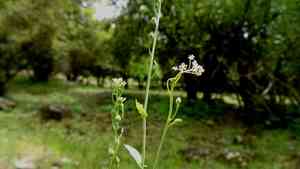
White ballmustard (Calepina irregularis)
Also known as: Smoothleaved Shepherd's-purse
White ballmustard (Calepina irregularis) originates from the Mediterranean region and is valued in some areas as an essential oilseed crop. Its seeds are housed in elongated, smooth siliques, which can be either yellow or brown. In contrast, ball mustard (Neslia paniculata) produces distinct, round, rough-textured siliques. Additionally, the fruits of ball mustard have a shorter, more pronounced point at the tip compared to the more uniformly shaped fruits of white ballmustard. These characteristics help distinguish between the two plants.
In This Article
Attributes of White ballmustard
Lifespan
Annual, Biennial
Plant Type
Herb
Plant Height
30 cm to 80 cm
Spread
30 cm to 45 cm
Leaf Color
Green
Flower Size
3 mm to 5 mm
Flower Color
White
Images of White ballmustard
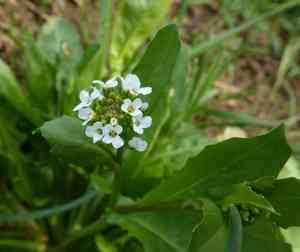
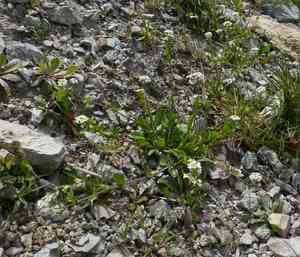
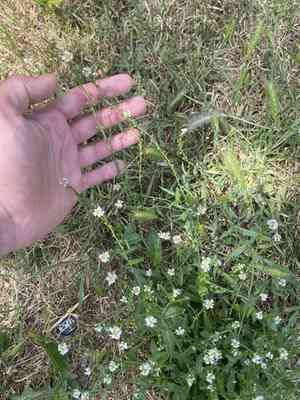
Quickly Identify White ballmustard
1
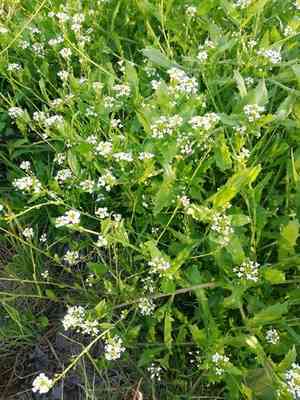
Identification of Calepina irregularis involves noting its smooth, lobed leaves, small white flowers, and slender, elongated seed pods.
Scientific Classification of White ballmustard
Phylum
Vascular plants
Class
Dicotyledons
Order
Brassicales
Family
Cruciferae
Genus
Calepina
Species
White ballmustard
Planting and Growing of White ballmustard
Care Difficulty
Easy
Watering Schedule
Every 2 days
Sunlight Requirements
Full sun
Sunshine Duration
6-8 hours
Ideal Temperature
60-75℉
Soil Type
Potting Mix, Peat Mix
Soil pH
6.5-7.5
Fertilizer Type
Balanced
Pruning Season
Spring, Summer
Pruning Area
Branches, Leaves
Pruning Frequency
2 times a year
Repotting Season
Spring
Pot Type
Plastic, Ceramic
 How to Water White ballmustard?
For Calepina irregularis, the watering amount should be sufficient to moisten the soil without causing it to become waterlogged. A good rule is to water until the top inch of soil feels damp, which usually requires about 250 ml of water per session.
What are the symptoms of an underwatered White ballmustard?
›
What should I do if my White ballmustard is not getting enough water?
›
What are the symptoms of an overwatered White ballmustard?
›
How to save an overwatered White ballmustard?
›
 What Are the Sunlight Requirements for White ballmustard?
Partial to full sunlight conditions are optimal. This range ensures proper photosynthetic activity, resulting in healthier, more vibrant foliage and overall improved plant health.
How can I achieve the ideal lighting conditions for Calepina irregularis?
›
What strategies can help Calepina irregularis attain optimal light?
›
What benefits does Calepina irregularis reap from ideal lighting?
›
 What Is the Ideal Temperature Range for White ballmustard?
Calepina irregularis thrives best when grown in temperatures ranging from 60 to 75°F. This range ensures the plant's metabolic processes run smoothly, promoting healthy growth and development. Such temperatures are usually found in temperate regions, making it crucial to maintain this range, particularly during its growing season.
 What Soil is Best for White ballmustard?
Calepina irregularis thrives in soil that is rich in organic matter. This nutrient-rich environment provides essential minerals and sustenance, promoting robust growth and lush foliage for the plant. Ensuring the soil has excellent drainage is crucial for Calepina irregularis, as it prevents root rot by reducing excess moisture around the roots. This promotes healthy root development and supports overall plant vitality. Despite needing well-draining soil, Calepina irregularis also benefits from some moisture retention. A balanced soil mix prevents dehydration during dry spells, maintaining consistent hydration for optimal plant health.
 How to Fertilize White ballmustard?
For Calepina irregularis, a balanced approach to fertilization is essential due to its moderate nutrient needs. Use a liquid fertilizer diluted to half the recommended strength every two weeks during the growing season to ensure the plant receives a steady supply of nutrients. For solid or slow-release fertilizers, apply a smaller amount than you'd typically use for more nutrient-demanding species, typically around 1 teaspoon per plant, once per quarter.
 How to Prune White ballmustard?
Begin pruning Calepina irregularis by sterilizing your tools to prevent disease spread. Target unhealthy, damaged, or dead leaves first, using sharp scissors or pruning shears for clean cuts. For overgrown plants, trim back sections to maintain shape and control spread. Aim to keep the plant looking natural by following its existing growth pattern, and avoid over-pruning as it might stress the plant.
More About Pruning Techniques→
 How to Propagate White ballmustard plant?
1
Collect mature seeds from the plant and clean them. This step ensures that the seeds are free from any debris or disease, increasing germination rates.
2
Sow the seeds in prepared seed trays filled with potting mix. Cover them lightly with soil, and ensure they are evenly spaced to prevent overcrowding.
3
After sowing, water the seeds gently to avoid displacement. Place the trays in an area with indirect sunlight, maintaining a consistent moisture level for optimal growth.
 How to Repot White ballmustard plant?
1
Calepina irregularis should be repotted when roots start circling inside the pot or poking through drainage holes. Another sign is when the growth slows despite optimal care. These indicators suggest the plant needs more space and fresh soil for healthy development.
2
Select a pot that's one size larger than the current one, typically offering 2-3 inches more in diameter. This ensures enough room for root expansion while preventing water retention issues. A pot with good drainage holes is crucial to avoid soggy soil, which can lead to root rot.
3
Opt for a well-draining soil mix rich in organic matter to support growth. A potting mix with perlite or sand is ideal, as it prevents waterlogged conditions and provides aeration. This earth-friendly soil keeps the plant's roots healthy and well-oxygenated, promoting vigorous growth.
Learn More About White ballmustard Diseases
Anthracnose
Bacterial Leaf Spot
Bacterial Soft Rot
Clubroot
Crown Gall
Cyst Nematode
Damping-off
Downy Mildew
Drought Stress
Fusarium Wilt
Gray Mold
Leaf Spot
Mosaic
Nutrient Deficiency
Nutrient Toxicity
Powdery Mildew
Root Rot
Root-knot Nematode
Rusts
Sooty Mold
Spider Mites
Temperature Stress
Thrips Damage
White Mold
Chemical Injury



