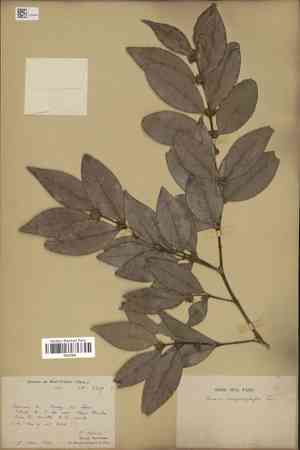
Boxwood(Buxus megistophylla)

Boxwood (Buxus megistophylla)

Also known as: Greater-Leaf Boxwood

Boxwood is a slow-growing, evergreen shrub known for its dense foliage and subtle flowers. This versatile plant can enhance a garden in several ways:

1. **Hedges**: Perfect for creating well-defined borders and garden partitions.
2. **Topiary**: Easily shaped into various decorative forms.
3. **Edging**: Suitable for outlining garden beds and pathways.
4. **Containers**: Thrives in pots, adding structure to patios and entryways.
5. **Foundation Plantings**: Offers year-round greenery around buildings.
6. **Parterres and Knot Gardens**: Ideal for intricate, geometric garden designs.

Boxwood's adaptability makes it a valuable addition to both traditional and modern garden settings.

Attributes of Boxwood

Lifespan
Perennial
Plant Type
Tree, Shrub
Plant Height
4 m
Spread
1.5 to 3 meters
Leaf Color
Dark green
Flower Size
5 mm to 9 mm
Flower Color
Yellow Green

ForwardPlant - Identify plants with a snap

Identify and diagnose plants, get toxicity alerts, and explore safety guides for all types of fungi.

Try for Free

Images of Boxwood

Boxwood(Buxus megistophylla)

Quickly Identify Boxwood

1
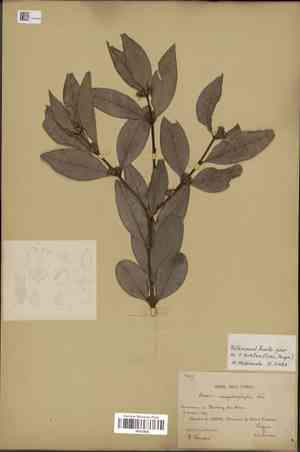
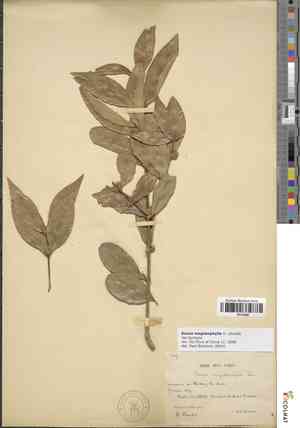
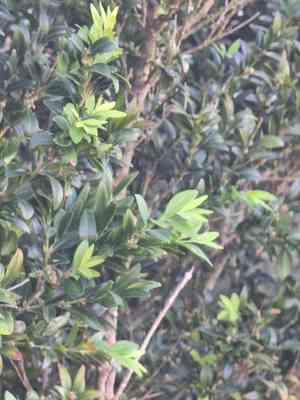
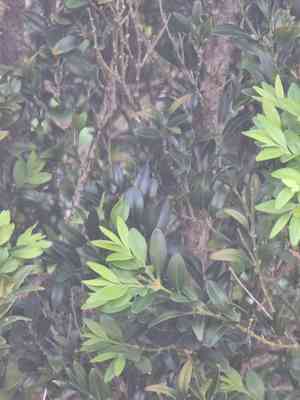
The plant can be identified by its larger, glossy, elliptic leaves and dense, compact growth habit. The leaves are dark green on the top and lighter underneath. It does not produce conspicuous flowers, making leaf structure the main identification feature.

Scientific Classification of Boxwood

Phylum
Vascular plants
Class
Dicotyledons
Order
Buxales
Family
Boxwood
Genus
Boxes
Species
Boxwood

Planting and Growing of Boxwood

Care Difficulty
Easy
Watering Schedule
Every 3 days
Sunlight Requirements
Partial sun
Sunshine Duration
4-6 hours
Ideal Temperature
60-75℉
Soil Type
Potting Mix, Peat Mix
Soil pH
6.5-7.5
Fertilizer Type
Balanced
Pruning Season
Spring, Summer
Pruning Area
Branches, Leaves
Pruning Frequency
2 times a year
Repotting Season
Spring
Pot Type
Plastic, Ceramic

water icon How to Water Boxwood?

This plant requires a moderate amount of water. It's important to water until the top 2-3 inches of the soil are moist. However, ensure that excess water drains well to prevent root rot, allowing the soil to partially dry out between waterings.
What are the symptoms of an underwatered Boxwood?
What should I do if my Boxwood is not getting enough water?
What are the symptoms of an overwatered Boxwood?
How to save an overwatered Boxwood?

sunlight icon What Are the Sunlight Requirements for Boxwood?

Sunlight Requirements: Partial sun
Duration of light: 4-6 hours
Buxus megistophylla thrives in partial sun conditions, receiving about 4 to 6 hours of light daily. This balance enhances photosynthesis and overall health, promoting dense foliage and robust growth while safeguarding against sunburn.
What kind of sunlight is best?
How can you ensure it receives the ideal light?
What benefits does ideal lighting provide?

temperature icon What Is the Ideal Temperature Range for Boxwood?

Ideal Temperature: 60 ~ 75℉
Buxus megistophylla thrives best within an ideal temperature range of 60°F to 75°F. This temperature range closely mimics its natural habitat, providing optimal conditions for growth and development. Consistent temperatures within this range contribute to healthy foliage and vigorous plant growth, ensuring the plant sustains its robustness and appearance.

soil icon What Soil is Best for Boxwood?

Soil type: Loam, Sandy loam
Soil PH: 6.5 ~ 7.5
Buxus megistophylla thrives in nutrient-rich soil that provides essential minerals and nutrients for robust growth. Rich soil contributes to the deep green foliage characteristic of healthy Buxus plants. It's critical for the soil to have excellent drainage. Poor drainage leads to waterlogged roots, a predicament Buxus can't tolerate well. A well-draining soil prevents root rot and enhances plant longevity. While drainage is vital, the soil should retain some moisture to sustain the plant between waterings. Balanced moisture retention ensures the plant's roots remain healthy and hydrated without overwhelming them.

fertilize icon How to Fertilize Boxwood?

Fertilizer type: Balanced
For Buxus megistophylla, moderate amounts of fertilizer are ideal. Over-application can lead to salt build-up, damaging the roots. A balanced 10-10-10 nitrogen-phosphorus-potassium (NPK) mix applied at half-strength for liquid fertilizers is recommended. Use approximately 1 liter per square meter for liquid applications, adjusting based on plant size and soil condition.

prune icon How to Prune Boxwood?

Pruning Time: Spring, Summer, Autumn
For pruning Buxus megistophylla, use sharp, clean pruning shears to ensure a smooth cut and minimize damage to the plant. This is critical for maintaining plant health and aesthetics. Start by removing any dead or diseased branches. This not only helps improve air circulation within the shrub but also prevents the spread of disease, keeping your plant healthy and vibrant. While pruning, focus on gently shaping the plant to the desired look. Cut back overgrown stems to maintain the preferred shape and size, encouraging a dense and lush appearance. Prune in spring or summer when the plant is in its active growing period. This ensures that the plant can recover quickly, using its growth to seal wounds and prevent pest invasions. More About Pruning Techniques

propagate icon How to Propagate Boxwood plant?

Propagate Time: Late spring, Early summer
1
Choose a healthy parent plant with no signs of disease or pest damage. This ensures that the cuttings will be more vigorous and have a higher chance of rooting successfully.
2
Cut a section of the branch about 10-15 cm long. The cut should be clean and just below a node. Remove the lower leaves and dip the cut end into rooting hormone to promote root development.
3
Insert the cut end of the cutting into a pot filled with a well-draining potting mix. Water the soil thoroughly and place the pot in a warm and bright location, but away from direct sunlight.

repot icon How to Repot Boxwood plant?

Repotting frequency: Every 2-3 years
1
The best signals for repotting Buxus megistophylla are slowed growth, roots growing out of drainage holes, or when the plant becomes root-bound. Spring and Autumn are ideal seasons as the plant is not actively growing and can establish itself well in the new pot.
2
Choose a pot slightly larger than the current one with ample drainage holes. This prevents waterlogging and allows the roots to expand comfortably, promoting healthy growth. A ceramic or terracotta pot can help regulate temperature and retain appropriate moisture levels.
3
Opt for a loamy, well-draining soil mix, which helps prevent root rot by ensuring excess water can escape easily. This kind of soil retains enough moisture to nourish the plant without drowning the roots, ensuring a balanced environment for root health.

ForwardPlant - Identify plants with a snap

Find the best spots for them to optimize their health, simply using your phone.

Try for Free

Toxicity

Ingestion and contact with sap

Identify toxic plants for your safety

Learn which plants are harmful to you and your pets, and make informed choices for a safer home!

Try for Free
WARNING
The judgment on toxicity and danger is for reference only. We DO NOT GUARANTEE any accuracy of such judgment. Therefore, you SHALL NOT rely on such judgment. It is IMPORTANT TO SEEK PROFESSIONAL ADVICE in advance when necessary.