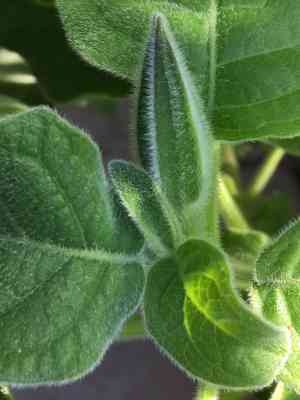
Red angel's trumpet (Brugmansia sanguinea)
Also known as: Thorn apple
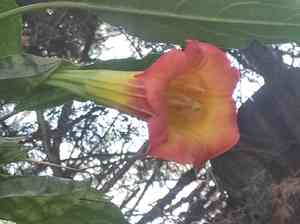
If you're in search of a small tree with striking floral displays, consider the Red Angel's Trumpet (Brugmansia sanguinea). This plant, native to South America, produces large, attention-grabbing flowers that dangle from its branches. Notably, it is the only Brugmansia species with scentless blooms.
In This Article
Attributes of Red angel's trumpet
Lifespan
Perennial
Plant Type
Shrub
Plant Height
1.8 m
Spread
1.3 m
Leaf Color
Green
Flower Size
15 to 25 centimeters
Flower Color
Yellow Red Orange
Images of Red angel's trumpet
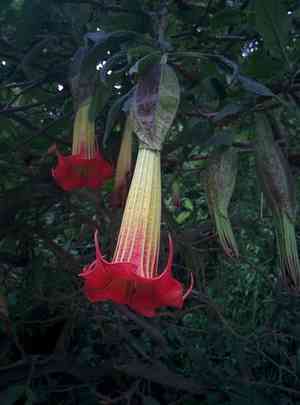
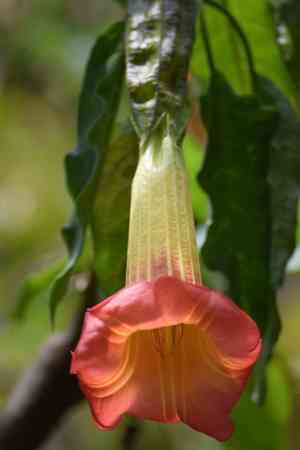
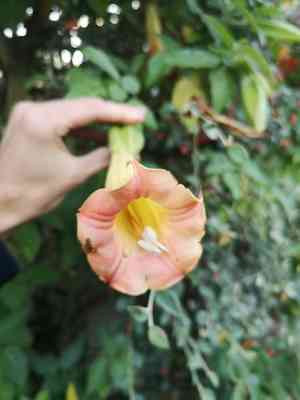
Quickly Identify Red angel's trumpet
1
Brugmansia sanguinea can be identified by its large, pendulous flowers that are brightly colored, generally red or red with yellow. The leaves are large, dark green, and slightly hairy. The plant develops a woody stem with age.
Scientific Classification of Red angel's trumpet
Phylum
Vascular plants
Class
Dicotyledons
Order
Solanales
Family
Nightshade
Genus
Angel's trumpets
Species
Red angel's trumpet
Planting and Growing of Red angel's trumpet
Care Difficulty
Hard
Watering Schedule
Every 2 days
Sunlight Requirements
Partial sun
Sunshine Duration
6-10 hours
Ideal Temperature
60-75℉
Soil Type
Potting Mix, Peat Mix
Soil pH
6.5-7.5
Fertilizer Type
Balanced
Pruning Season
Spring, Summer
Pruning Area
Branches, Leaves
Pruning Frequency
2 times a year
Repotting Season
Spring
Pot Type
Plastic, Ceramic
 How to Water Red angel's trumpet?
For Brugmansia sanguinea, water thoroughly, ensuring the soil is consistently moist but not waterlogged. The general rule is to aim for around 500 ml of water per session, making sure to water until you see moisture seeping from the drainage holes.
What are the symptoms of an underwatered Red angel's trumpet?
›
What should I do if my Red angel's trumpet is not getting enough water?
›
What are the symptoms of an overwatered Red angel's trumpet?
›
How to save an overwatered Red angel's trumpet?
›
 What Are the Sunlight Requirements for Red angel's trumpet?
The ideal light range for Brugmansia sanguinea is partial sun with 4 to 6 hours of daily sunlight. Such lighting fosters healthy foliage and enhances flowering, ensuring the plant's vigor while preventing any light-related damage.
More About Sunlight Requirements Techniques→
What are Brugmansia sanguinea's ideal lighting conditions?
›
How to provide ideal light for Brugmansia sanguinea?
›
What benefits does Brugmansia sanguinea gain from proper lighting?
›
 What Is the Ideal Temperature Range for Red angel's trumpet?
Brugmansia sanguinea thrives best in environments where temperatures range from 60°F to 75°F. This range ensures optimal growth and flowering as it mimics their natural habitat in the foothills of the Andes, providing warmth without excessive heat or chilling temperatures.
 What Soil is Best for Red angel's trumpet?
Brugmansia sanguinea requires well-drained soil to prevent root rot, a common issue in waterlogged conditions. Closely mimicking its native Andean conditions, well-drained soil allows for healthy root aeration and development, enhancing the plant's ability to uptake nutrients effectively. This plant thrives in soil rich in organic matter which provides essential nutrients for growth. Organic matter improves soil structure, retains moisture without waterlogging, and supports beneficial microorganisms that promote root health and overall plant vitality. Brugmansia sanguinea prefers soil that holds moisture but is not overly saturated. Maintaining moderate moisture levels helps sustain its lush foliage and large, vibrant blooms, simulating the humid conditions of its natural habitat.
 How to Fertilize Red angel's trumpet?
Brugmansia sanguinea thrives best with modest fertilization. Apply approximately 1/2 to 1 teaspoon of balanced liquid fertilizer diluted in a gallon of water when using liquid fertilizers. Solid, slow-release fertilizers should be used sparingly — about 1/4 cup spread evenly over the soil's surface around the plant.
 How to Prune Red angel's trumpet?
Begin by sterilizing your pruning shears to prevent the spread of disease. Focus on cutting away any dead or diseased branches first, then move onto shaping the plant. Make clean cuts at a 45-degree angle, just above a node or outward-facing bud. This encourages outward growth and prevents water from collecting on the cut surface.
More About Pruning Techniques→
 How to Propagate Red angel's trumpet plant?
1
Harvest seeds from mature Brugmansia sanguinea fruits, ensuring they are fully ripe for higher germination rates. Clean and dry the seeds before sowing.
2
Select healthy, non-flowering stems and cut 6-8 inch sections with at least two nodes. Trim the leaves and dip the cut end in rooting hormone before planting in potting mix.
3
Use a mixture of sand, peat, and perlite to create a well-draining environment. Ensure the soil is moist but not waterlogged to prevent rotting of seeds and cuttings.
 How to Repot Red angel's trumpet plant?
1
The ideal time to repot Brugmansia sanguinea is when you notice the roots are emerging from the drainage holes or the plant appears root-bound. Additionally, if you observe a decline in overall plant health, such as reduced flowering or stunted growth, it may be a signal that repotting is necessary. The best seasons for repotting are spring and summer when the plant is in its active growth phase.
2
Select a pot that is one size larger than the current pot to provide the roots with ample room to grow. Ensure it has adequate drainage holes to prevent water accumulation, which can lead to root rot. Using a pot made of breathable materials like terracotta can help regulate moisture and temperature effectively, promoting healthy root development.
3
A rich, well-draining soil mix is essential for Brugmansia sanguinea. Opt for a blend that includes ingredients like peat, bark, and perlite to ensure good aeration and drainage. This type of soil will retain necessary moisture while allowing excess water to escape, preventing root rot and encouraging robust growth.
Toxicity
Ingestion, skin contact, inhalation
WARNING
The judgment on toxicity and danger is for reference only. We DO NOT GUARANTEE any accuracy of such judgment. Therefore, you SHALL NOT rely on such judgment. It is IMPORTANT TO SEEK PROFESSIONAL ADVICE in advance when necessary.
Learn More About Red angel's trumpet Diseases
Anthracnose
Bacterial Leaf Spot
Bacterial Soft Rot
Bacterial Wilt
Chemical Injury
Damping-off
Downy Mildew
Drought Stress
Fusarium Wilt
Gray Mold
Leaf Curl
Leaf Spot
Mosaic
Nutrient Deficiency
Nutrient Toxicity
Powdery Mildew
Root Rot
Root-knot Nematode
Rusts
Sooty Mold
Spider Mites
Temperature Stress
Thrips Damage
White Mold



