Paper mulberry(Broussonetia kazinoki)

Paper mulberry (Broussonetia kazinoki)

Also known as: Japanese paper mulberry, Kazinoki paper mulberry

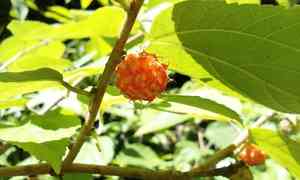
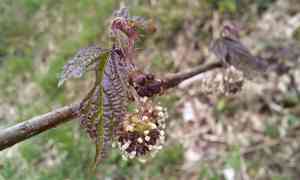
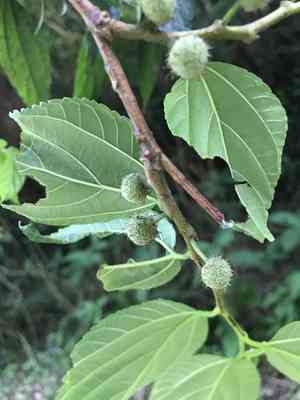
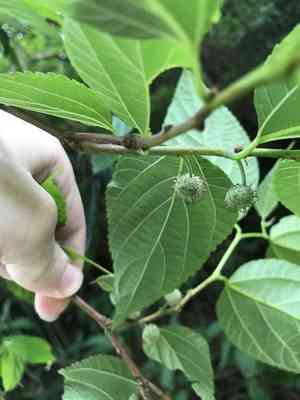
The tree stands between 2 to 5 meters tall, with branches that are somewhat vine-like but have upright stems. The leaves are arranged alternately and feature petioles that are approximately 5 to 10 mm long, covered in soft hair. They are generally oval to broadly oval, sometimes deeply lobed into 2-3 segments, resembling mulberry leaves. The leaves measure 4 to 10 cm in length and 2 to 5 cm in width, with bases that are either rounded or pointed and tips that are long and tapering. The leaf edges are serrated with blunt teeth, and the surface has short hairs while the veins on the underside have coarser hairs. In spring, the tree produces hermaphroditic flowers, with male inflorescences appearing in the lower leaf buds and female inflorescences in the upper buds. Male flowers form spherical clusters about 1 cm in diameter, while female clusters are roughly 4 mm in diameter. By summer, the tree bears red, spherical fruits about 1.5 cm in diameter.

Attributes of Paper mulberry

Lifespan
Perennial
Plant Type
Shrub
Plant Height
2 m to 4 m
Spread
Up to 5 meters
Leaf Color
Green
Flower Size
8 mm to 1 cm
Flower Color
White Pink

ForwardPlant - Identify plants with a snap

Identify and diagnose plants, get toxicity alerts, and explore safety guides for all types of fungi.

Try for Free

Images of Paper mulberry

Paper mulberry(Broussonetia kazinoki)

Quickly Identify Paper mulberry

1
Look for a small tree or shrub with bark that peels in strips. Leaves are alternate, simple, and can vary greatly in shape. The fruits are small, multiple, and aggregate, resembling small red or orange balls.

Scientific Classification of Paper mulberry

Phylum
Vascular plants
Class
Dicotyledons
Order
Rosales
Family
Mulberry
Genus
Broussonetia
Species
Paper mulberry

Planting and Growing of Paper mulberry

Care Difficulty
Easy
Watering Schedule
Every 2 days
Sunlight Requirements
Full sun
Sunshine Duration
4-8 hours
Ideal Temperature
68-77℉
Soil Type
Potting Mix, Peat Mix
Soil pH
6.5-7.5
Fertilizer Type
Balanced
Pruning Season
Spring, Summer
Pruning Area
Branches, Leaves
Pruning Frequency
2 times a year
Repotting Season
Spring
Pot Type
Terracotta, Plastic

water icon How to Water Paper mulberry?

For Broussonetia kazinoki, a watering strategy that ensures the soil is consistently moist but not waterlogged is key. Typically, you should aim for about 500 ml of water per session, ensuring it seeps through the soil properly without creating any standing water. The idea is to reach the roots effectively, keeping the plant hydrated but allowing for aeration.
What are the symptoms of an underwatered Paper mulberry?
What should I do if my Paper mulberry is not getting enough water?
What are the symptoms of an overwatered Paper mulberry?
How to save an overwatered Paper mulberry?

sunlight icon What Are the Sunlight Requirements for Paper mulberry?

Sunlight Requirements: Full sun, Partial sun
Duration of light: 5 to 6 hours
Partial sun to full sun exposure is ideal, enhancing photosynthesis and foliage health, while ensuring the plant withstands environmental stresses robustly.
What is the best sunlight condition for Broussonetia kazinoki?
How can I achieve the ideal lighting for my Broussonetia kazinoki?
What are the benefits of providing ideal lighting conditions?
More About Sunlight Requirements Techniques

temperature icon What Is the Ideal Temperature Range for Paper mulberry?

Ideal Temperature: 68 ~ 77℉
The ideal temperature range for Broussonetia kazinoki is between 68°F and 77°F. This range provides optimal conditions for growth and development, as it supports physiological processes including photosynthesis and nutrient absorption. Maintaining this temperature range helps ensure healthy leaf development and overall plant vigor.

soil icon What Soil is Best for Paper mulberry?

Soil type: Loam, Sandy loam
Soil PH: 6.5 ~ 7.5
Broussonetia kazinoki thrives in soil that retains moisture well. Loam and sandy loam provide an ideal balance between water drainage and retention, ensuring the roots have consistent access to moisture without becoming waterlogged. This balance prevents root rot while nourishing the plant. This plant requires soil rich in organic matter for optimal growth. The presence of decayed plant material in loam and sandy loam ensures a steady supply of essential nutrients, fostering strong growth and vibrant foliage. Proper aeration is crucial for Broussonetia kazinoki to allow roots to breathe and function effectively. Loam and sandy loam soils offer this by maintaining loose soil structure, promoting healthy root development and preventing diseases.

fertilize icon How to Fertilize Paper mulberry?

Fertilizer type: Balanced
For Broussonetia kazinoki, the amount of fertilizer should be carefully controlled. Use half the recommended general-purpose fertilizer amount to avoid nutrient burn, which means around 50g per mature plant. This helps ensure the plant gets enough nutrients without the risk of damage.

prune icon How to Prune Paper mulberry?

Pruning Time: Spring, Summer, Autumn, Winter
Begin by removing any dead or diseased branches. Follow by cutting back overgrown shoots to maintain your desired shape. Aim to form a balanced structure by cutting above a healthy bud facing outward. Always cut at a slight angle to allow water runoff, reducing the risk of rot. To encourage new, healthy growth, make cuts to open up the canopy for better air circulation and sunlight penetration. Trim back about a third of old wood yearly to stimulate growth of new shoots. This approach helps in creating a fuller and healthier plant. More About Pruning Techniques

propagate icon How to Propagate Paper mulberry plant?

Propagate Time: Spring, Early Spring
1
Collect seeds from ripe fruits and clean them thoroughly. Allow the seeds to dry in a cool, dark place before planting. Scarification or stratification methods can be used for better germination rates.
2
Cut healthy, non-flowering shoots about 6 inches long. Remove the leaves from the lower half and dip the cut end in rooting hormone. Plant in a well-draining medium and cover with plastic to maintain humidity.
3
Choose a healthy low branch and gently wound it. Bury the wounded part in soil while it's still attached to the parent plant. Ensure continuous moisture until roots develop before severing.
More About Propagating Techniques

repot icon How to Repot Paper mulberry plant?

Repotting frequency: Every 2-3 years
1
Repot Broussonetia kazinoki when you notice roots growing out of drainage holes or when the plant appears root-bound. Other signals include slowed growth or a deteriorating soil condition. The best time is early spring or autumn, when the plant experiences minimal active growth, allowing it to adjust to the new potting conditions smoothly.
2
Select a pot that is one size larger than the current one, with adequate drainage holes to prevent waterlogging. A material such as terracotta is excellent, as it allows the soil to breathe, promoting healthier root systems by reducing the risk of root rot—ultimately contributing to the overall well-being of your Broussonetia kazinoki.
3
Opt for a well-draining potting mix enriched with organic matter. Such mixes maintain the optimal balance of moisture and air around the roots, facilitating healthy growth. The rich organic content ensures the soil retains essential nutrients, crucial for the plant's robust development after repotting.

ForwardPlant - Identify plants with a snap

Find the best spots for them to optimize their health, simply using your phone.

Try for Free