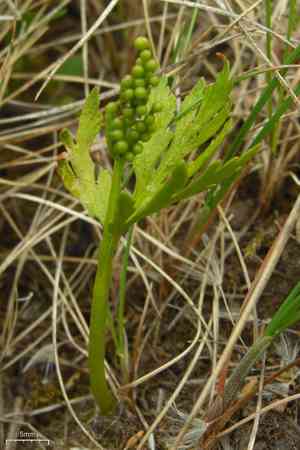
Lanceleaf grapefern (Botrychium lanceolatum)
Also known as: Lanceolate moonwort
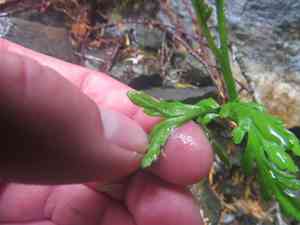
The Lanceleaf grapefern thrives in the moist, shaded understory of forests, favoring rich, well-drained soils. It features a unique, lance-shaped frond that emerges from a single stalk, creating a sleek and streamlined look. The frond is split into two segments: a broad, sterile part and a fertile part that rises above, carrying spore clusters. This delicate fern exudes a quiet elegance, perfectly adapting to the cool, mossy forest floor it inhabits.
In This Article
Attributes of Lanceleaf grapefern
Lifespan
Perennial
Plant Type
Fern
Plant Height
10-30 cm
Spread
N/A
Leaf Color
Green
Flower Size
N/A
Flower Color
N/A
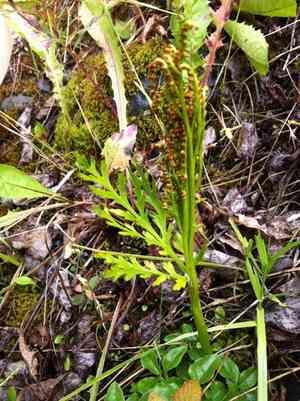
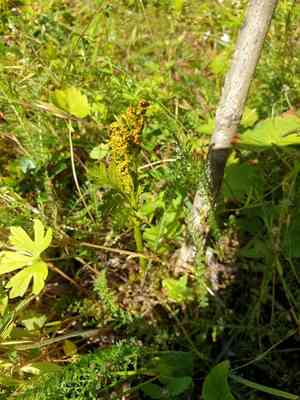
Images of Lanceleaf grapefern
Quickly Identify Lanceleaf grapefern
1
Identification of Botrychium lanceolatum involves looking for its distinctive bi-pinnate, lance-shaped fronds and a singular fertile spike that rises above the fronds bearing clusters of spores.
Scientific Classification of Lanceleaf grapefern
Phylum
Vascular plants
Class
Psilotopsida
Order
Ophioglossales
Family
Adder's-tongue
Genus
Moonworts
Species
Lanceleaf grapefern
Planting and Growing of Lanceleaf grapefern
Care Difficulty
Hard
Watering Schedule
Every 3 days
Sunlight Requirements
Partial sun
Sunshine Duration
6-10 hours
Ideal Temperature
60-75℉
Soil Type
Potting Mix, Peat Mix
Soil pH
5.5-7.5
Fertilizer Type
Balanced
Pruning Season
Spring, Summer
Pruning Area
Branches, Leaves
Pruning Frequency
2 times a year
Repotting Season
Spring
Pot Type
Plastic, Ceramic
 How to Water Lanceleaf grapefern?
For Botrychium lanceolatum, the watering amount should be sufficient to ensure that the soil is moist but not waterlogged. Approximately 150 milliliters per watering session is ideal, as this amount reaches the root zone without causing standing water, which can lead to root rot. It's crucial to pay attention to the plant's top inch of soil; it should feel damp to the touch but never soggy.
What are the symptoms of an underwatered Lanceleaf grapefern?
›
What should I do if my Lanceleaf grapefern is not getting enough water?
›
What are the symptoms of an overwatered Lanceleaf grapefern?
›
How to save an overwatered Lanceleaf grapefern?
›
 What Are the Sunlight Requirements for Lanceleaf grapefern?
The ideal light range includes partial sunlight, mimicking its forest floor habitat. Proper light exposure ensures enhanced photosynthesis, resulting in vigorous growth and deeper foliage coloration for Botrychium lanceolatum.
What is the best location for Botrychium lanceolatum?
›
How can I mimic its natural lighting environment indoors?
›
What advantages does it gain from proper lighting?
›
 What Is the Ideal Temperature Range for Lanceleaf grapefern?
For optimal growth, Botrychium lanceolatum thrives best in an environment where the temperatures range between 60°F and 75°F. This range ensures that enzymatic processes vital for growth and photosynthesis work efficiently, providing the necessary conditions for vigorous growth.
 What Soil is Best for Lanceleaf grapefern?
Botrychium lanceolatum thrives best in well-drained soils that prevent waterlogging, which can lead to root rot. This condition ensures the ferns receive adequate moisture while maintaining necessary aeration, promoting healthy, robust growth. Consistent moisture levels are crucial for Botrychium lanceolatum, which naturally inhabits moderate to high humidity environments. Soils that can retain humidity while allowing excess water to drain are ideal. Ensuring consistent moisture supports sustained growth cycles and prevents drought stress. A nutrient-rich soil facilitates the vigorous growth of Botrychium lanceolatum, enabling it to develop its lush foliage and intricate leaf patterns. Amending the soil with organic matter like compost can provide these essential nutrients, boosting plant vitality and resilience.
 How to Fertilize Lanceleaf grapefern?
Botrychium lanceolatum thrives best with minimal fertilization. During its growing season, apply a balanced liquid fertilizer diluted to 1/4 strength every two weeks. Avoid over-fertilizing as this plant is adapted to low-nutrient environments and can suffer from excessive nutrients.
 How to Prune Lanceleaf grapefern?
Begin by carefully examining the plant for any dead or damaged fronds which are brown or wilting. Remove these to improve air circulation and light penetration. Use sharp scissors or pruning shears to cut the affected fronds at the base, close to the soil to prevent new growth blockages. Make clean cuts to ensure rapid healing.
More About Pruning Techniques→
 How to Propagate Lanceleaf grapefern plant?
1
First, identify mature Botrychium lanceolatum plants and collect the spores. Check the undersides of the fronds for mature sporangia during the appropriate season and gently tap them onto a piece of paper.
2
Prepare a sterile, well-drained growing medium in seed trays, using a mix of peat moss and sand. This mimics the natural conditions and provides a welcoming environment for fern spores to germinate.
3
Evenly distribute the spores over the moist growing medium, then cover lightly with a clear lid or plastic wrap. Maintain high humidity and indirect light, regularly misting the spores to keep them moist.
 How to Repot Lanceleaf grapefern plant?
1
Botrychium lanceolatum signals the need for repotting when its roots begin to outgrow their current container, often curling or poking through drainage holes. This can also manifest as slowed growth despite optimal conditions. Repotting is best conducted in spring or autumn when the plant is naturally in a state of moderate growth, ensuring the least amount of stress.
2
Select a pot that is 1-2 inches larger in diameter than the current one, with ample drainage holes. This size allows for root expansion without excessive moisture retention, which prevents root rot. Additionally, opting for a breathable material like terracotta can help regulate moisture and temperature, promoting healthier root development.
3
A moist, well-draining soil mix is crucial for Botrychium lanceolatum, allowing for adequate hydration without waterlogging. Incorporate peat or sphagnum moss to enhance moisture retention and perlite or sand to improve drainage. This tailored mix mimics the plant's natural woodland habitat, fostering optimal growth conditions.



