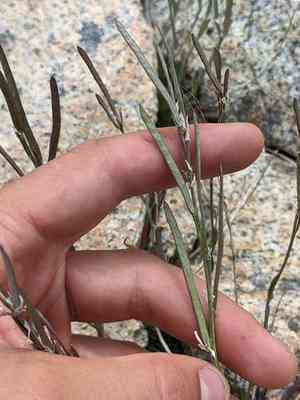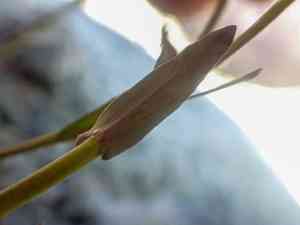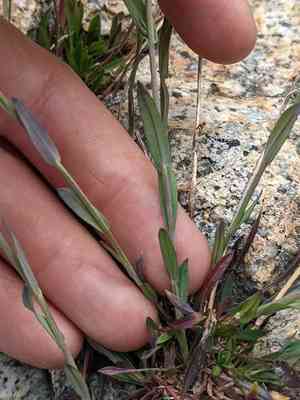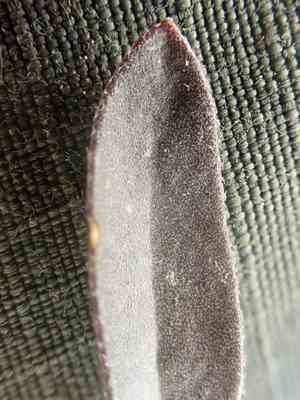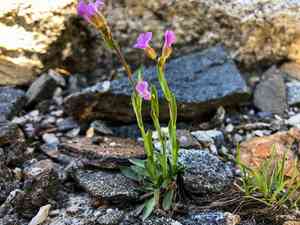
Lyall's rockcress(Boechera lyallii)

Lyall's rockcress (Boechera lyallii)

Also known as: Lyall's rockcress, Lyall's draba

Lyall's rockcress, a hardy perennial herb, is characterized by its small clusters of pale purple to white flowers. The plant features spoon-shaped basal leaves that become narrower and slightly hairy along the stems. It prospers in rocky alpine terrains due to several key adaptations:

1. **Compact Growth Habit**: This form reduces exposure to harsh alpine winds and conserves warmth.
2. **Spoon-Shaped Leaves**: These leaves at the base help in moisture retention and reducing water loss.
3. **Narrow, Hairy Stems**: The hairiness helps protect against cold and desiccation.
4. **Flower Clusters**: Small, tightly packed flowers require less energy for growth and reproduction.

These features collectively enable Lyall's rockcress to survive and flourish in the extreme conditions of alpine environments.

Attributes of Lyall's rockcress

Lifespan
Perennial
Plant Type
Herb
Plant Height
10 cm to 25 cm
Spread
Not applicable
Leaf Color
Green, often with hairy texture
Flower Size
Approximately 0.5 cm
Flower Color
White to pale pink

ForwardPlant - Identify plants with a snap

Identify and diagnose plants, get toxicity alerts, and explore safety guides for all types of fungi.

Try for Free

Images of Lyall's rockcress

Lyall's rockcress(Boechera lyallii)

Quickly Identify Lyall's rockcress

1
Identification of Boechera lyallii involves observing its basal rosette of leaves, which are hairy and often toothed, and its tall flowering stems which can bear numerous small white or pale pinkish flowers.

Scientific Classification of Lyall's rockcress

Phylum
Vascular plants
Class
Dicotyledons
Order
Brassicales
Family
Cruciferae
Genus
rockcress
Species
Lyall's rockcress

Planting and Growing of Lyall's rockcress

Care Difficulty
Hard
Watering Schedule
Every 2 days
Sunlight Requirements
Full sun
Sunshine Duration
4-8 hours
Ideal Temperature
60-70℉
Soil Type
Potting Mix, Peat Mix
Soil pH
6.5-7.5
Fertilizer Type
Balanced
Pruning Season
Spring, Summer
Pruning Area
Branches, Leaves
Pruning Frequency
2 times a year
Repotting Season
Spring
Pot Type
Plastic, Ceramic

water icon How to Water Lyall's rockcress?

For Boechera lyallii, each watering session should provide approximately 250 milliliters of water. The goal is to ensure that the soil is evenly moist but not soaked. Water your plant until you see a slight seepage from the drainage holes, indicating that the roots have received adequate moisture without being drowned.
What are the symptoms of an underwatered Lyall's rockcress?
What should I do if my Lyall's rockcress is not getting enough water?
What are the symptoms of an overwatered Lyall's rockcress?
How to save an overwatered Lyall's rockcress?

sunlight icon What Are the Sunlight Requirements for Lyall's rockcress?

Sunlight Requirements: Full sun, Partial sun
Duration of light: 6-8 hours daily
Partial to full sun exposure ensures robust growth for Boechera lyallii. Sufficient sunlight promotes healthy leaf development and strong resistance to environmental stressors.
Best Time for Sunlight Exposure
Solution for Ideal Light
Benefits of Ideal Light

temperature icon What Is the Ideal Temperature Range for Lyall's rockcress?

Ideal Temperature: 60 ~ 70℉
Boechera lyallii thrives best within an ideal temperature range of 60°F to 70°F. This range allows for optimal photosynthesis and growth, ensuring the plant maintains healthy vitality and robust development.

soil icon What Soil is Best for Lyall's rockcress?

Soil type: Loam, Sandy loam, Sandy soil
Soil PH: 6.5 ~ 7.5
Boechera lyallii thrives in well-drained soil, which prevents waterlogging around the roots. Ensuring good drainage helps maintain the oxygen levels in the soil, promoting root health and preventing root diseases. A nutrient-rich soil base is vital for healthy growth and flowering. It provides the necessary minerals and nutrients Boechera lyallii needs to develop robust foliage and ensure vigorous blooming. The soil should have moderate moisture retention to keep the roots hydrated without becoming waterlogged. This balance supports sustained growth and resiliency during dry spells.

fertilize icon How to Fertilize Lyall's rockcress?

Fertilizer type: Balanced
For Boechera lyallii, applying a balanced 10-10-10 liquid fertilizer at half strength every two weeks during the growing season suffices. Remember, less is more with this plant, as too much fertilizer can be harmful.

prune icon How to Prune Lyall's rockcress?

Pruning Time: Spring, Summer
Begin by cutting back any branches that appear thin or spindly. Always make your cuts at a 45-degree angle to encourage quick healing. Make sure to cut just above a leaf node or bud to stimulate new growth. Prune Boechera lyallii primarily in spring and continue lightly through summer. Avoid pruning in autumn and winter as it can stress the plant during these non-growing seasons. More About Pruning Techniques

propagate icon How to Propagate Lyall's rockcress plant?

Propagate Time: Spring, Early spring
1
Fill your seed tray with a sterile seed-starting mix. Ensure the medium is slightly moist before sowing seeds. This helps promote healthy and rapid germination by providing essential air and moisture balance.
2
Gently scatter Boechera lyallii seeds over the surface of the prepared medium. Lightly press them into the soil without burying them. Ensuring good contact with the soil helps absorption of moisture.
3
Place the seed tray in a location with indirect sunlight and maintain a temperature between 65-75°F (18-24°C). Regularly check moisture levels, keeping the medium consistently damp but not saturated.
More About Propagating Techniques

repot icon How to Repot Lyall's rockcress plant?

Repotting frequency: Every 2-3 years
1
You should consider repotting Boechera lyallii when you notice that the roots are emerging from the pot's drainage holes or when the growth has slowed down significantly. The ideal time is during spring or early summer, as this is when the plant is actively growing and will recover quickly from the repotting process.
2
Select a pot that is only slightly larger than the current one. The new pot should have excellent drainage capacity to prevent root rot. A narrow, deep pot works well, as it promotes good root development upward and downward.
3
Opt for a well-draining sandy soil mix, as Boechera lyallii prefers conditions similar to its native habitat. This kind of soil allows excess water to drain easily, preventing waterlogging and encouraging healthy root growth. Mixing in some perlite or coarse sand will improve aeration and soil structure.

ForwardPlant - Identify plants with a snap

Find the best spots for them to optimize their health, simply using your phone.

Try for Free