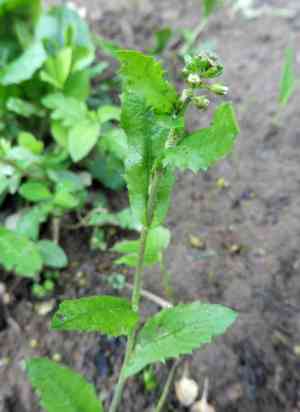
Short's rockcress (Boechera dentata)
Also known as: Toothed Rockcress
Boechera dentata is a short-lived biennial herb that can be identified by several distinct features:
1. **Fruit Length and Pedicels**: It has relatively short fruits, up to 4 cm in length, and short pedicels, about 3.5 mm long. These fruits spread out at maturity.
2. **Stem Leaves**: The stem leaves are notably wider, exceeding 8 mm, and have a pubescent (hairy) upper surface.
3. **Flowers**: In the spring, B. dentata produces cream-colored flowers.
These characteristics set Boechera dentata apart from other Boechera species in its region.
In This Article
Attributes of Short's rockcress
Lifespan
Biennial, Perennial
Plant Type
Herb
Plant Height
20 cm to 51 cm
Spread
10-20 cm (4-8 inches)
Leaf Color
Green
Flower Size
0.5-1 cm (0.2-0.4 inches)
Flower Color
White to light greenish-yellow
Images of Short's rockcress
Quickly Identify Short's rockcress
1
Identification of Boechera dentata can be made by its finely toothed basal leaves and its generally erect flowering stems that bear small, white to light greenish-yellow flowers. It typically grows in rocky or sandy soils often in open woods or forest margins.
Scientific Classification of Short's rockcress
Phylum
Vascular plants
Class
Dicotyledons
Order
Brassicales
Family
Cruciferae
Genus
rockcress
Species
Short's rockcress
Planting and Growing of Short's rockcress
Care Difficulty
Easy
Watering Schedule
Every 4 days
Sunlight Requirements
Partial sun
Sunshine Duration
4-8 hours
Ideal Temperature
60-75℉
Soil Type
Potting Mix, Peat Mix
Soil pH
6.5-7.5
Fertilizer Type
Balanced
Pruning Season
Spring, Summer
Pruning Area
Branches, Leaves
Pruning Frequency
2 times a year
Repotting Season
Spring
Pot Type
Plastic, Ceramic
 How to Water Short's rockcress?
For Boechera dentata, ensure that the soil is kept consistently moist, but not waterlogged. Pour approximately 200 ml of water each time, allowing the water to be absorbed gradually. Water until you notice slight drainage from the bottom of the pot.
What are the symptoms of an underwatered Short's rockcress?
›
What should I do if my Short's rockcress is not getting enough water?
›
What are the symptoms of an overwatered Short's rockcress?
›
How to save an overwatered Short's rockcress?
›
 What Are the Sunlight Requirements for Short's rockcress?
The plant thrives in partial sun, rewarding such conditions with vibrant foliage and improved flowering. Ideal light maintains energy levels for growth and helps synthesizing vital nutrients effectively.
What are the ideal sunlight hours?
›
How to achieve optimal light conditions?
›
What are the benefits of ideal light conditions?
›
 What Is the Ideal Temperature Range for Short's rockcress?
Boechera dentata thrives in temperatures ranging from approximately 60 to 75°F. This range ensures optimal photosynthesis and growth. When the temperature is kept within this range, the plant maintains its vitality and resists diseases better, leading to lush foliage and frequent blooming.
 What Soil is Best for Short's rockcress?
Boechera dentata thrives in well-drained soil. Excess water logging can suffocate the roots, leading to root rot. Ensuring proper drainage promotes healthy root growth and prevents diseases. This plant benefits from a soil rich in organic matter. Nutrient-rich soil supports vigorous growth and enhances the plant’s resilience against pests and diseases. Maintaining consistent soil moisture is crucial. While the plant is drought-tolerant, keeping the soil slightly moist aids in optimal growth and flowering.
 How to Fertilize Short's rockcress?
For Boechera dentata, apply a balanced liquid fertilizer at a rate of 1 teaspoon per gallon of water. It’s important to adhere to this amount as over-fertilizing can lead to nutrient burn while under-fertilizing might result in stunted growth.
 How to Prune Short's rockcress?
Inspect the plant carefully and remove any parts that show signs of disease or have died throughout the winter. This promotes healthy growth. Check for branches that are crossing or rubbing against each other. Removing these will reduce competition for resources and improve airflow. Shape the plant according to your desired aesthetic. Trim back overgrown areas to create a balanced and visually pleasing appearance.
More About Pruning Techniques→
 How to Propagate Short's rockcress plant?
1
Collect seeds from mature Boechera dentata plants during late summer to autumn when seed pods are fully developed but not yet open. Ensure seeds are dry and store them in a cool, dark place until you're ready to plant them.
2
Fill a seed tray with sterile potting mix, and lightly scatter the Boechera dentata seeds on the surface. Gently press them into the soil without fully covering them as they need light to germinate.
3
After sowing, mist the soil lightly with water to provide moisture without disturbing the seeds' placement. Keep the soil consistently moist but not soaked. Position the tray in a location with indirect sunlight.
 How to Repot Short's rockcress plant?
1
Repotting Boechera dentata is best undertaken when you notice the plant's roots beginning to outgrow the current pot, often visible through drainage holes. Also, if growth slows significantly, it might be time for a larger home. Ideally, aim to repot during spring or autumn when the plant is most resilient to change.
2
Opt for a pot that is one size up from the current one, with ample drainage holes to prevent root rot. A pot made of breathable material like terracotta can be beneficial, as it helps regulate moisture levels and allows the roots to 'breathe'. The right size and type of pot help avoid overwatering, promoting healthier growth.
3
Select a well-draining potting mix that mimics the plant’s natural environment. This should include components like peat moss, perlite, or sand. Such soil ensures that water flows freely, preventing root rot while maintaining adequate moisture for healthy root and plant development.



