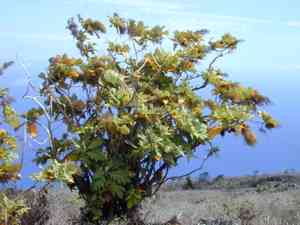
Parrot-weed (Bocconia frutescens)
Also known as: John crow bush
Bocconia frutescens is commonly known as parrot-weed. This flowering plant is native to regions including Mexico, Central and South America, and the West Indies. In the United States, it is often grown as an ornamental plant.
In This Article
Attributes of Parrot-weed
Lifespan
Perennial
Plant Type
Tree, Shrub
Plant Height
3.5 m to 5 m
Spread
2.5 m to 3.5 m
Leaf Color
Gray-green with white undersides
Flower Size
60 cm
Flower Color
Yellow Green Brown
Images of Parrot-weed
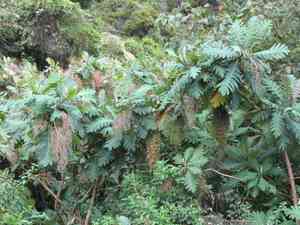
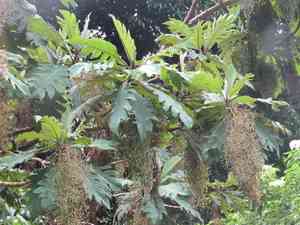
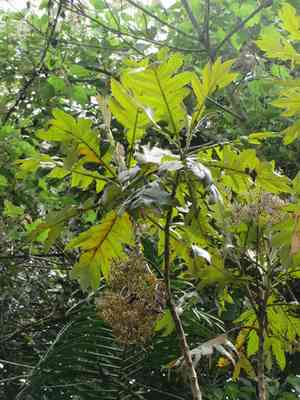
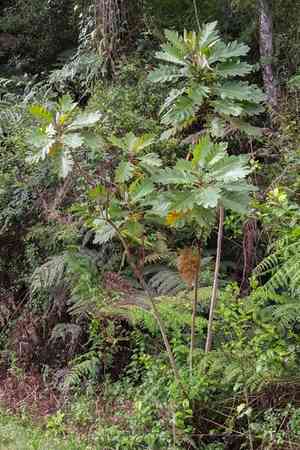
Quickly Identify Parrot-weed
1
Large shrub or small tree, 12-18 feet (3.6-5.5 meters) tall
2
Smooth, wand-like stems with hairy, oblong gray-green leaves
3
Distinct clusters of petal-less greenish-purple flowers in 8-24 inch (20-60 cm) panicles
4
Foliage clustered towards branch ends for visual interest
5
Grayish fruits adding to decorative appearance
Scientific Classification of Parrot-weed
Phylum
Vascular plants
Class
Dicotyledons
Order
Ranunculales
Family
Poppy
Genus
Bocconia
Species
Parrot-weed
Planting and Growing of Parrot-weed
Care Difficulty
Easy
Watering Schedule
Every 3 days
Sunlight Requirements
Full sun
Sunshine Duration
6-8 hours
Ideal Temperature
65-75℉
Soil Type
Potting Mix, Peat Mix
Soil pH
6.5-7.5
Fertilizer Type
Balanced
Pruning Season
Spring, Summer
Pruning Area
Branches, Leaves
Pruning Frequency
2 times a year
Repotting Season
Spring
Pot Type
Plastic, Ceramic
 How to Water Parrot-weed?
The watering amount for Bocconia frutescens should be sufficient to ensure the soil is moist but not waterlogged. It's important to follow the principle of deep watering to encourage root growth. Ensure that water reaches a depth of about 10-15 cm by checking the soil moisture level each time you water.
What are the symptoms of an underwatered Parrot-weed?
›
What should I do if my Parrot-weed is not getting enough water?
›
What are the symptoms of an overwatered Parrot-weed?
›
How to save an overwatered Parrot-weed?
›
 What Are the Sunlight Requirements for Parrot-weed?
Bocconia frutescens performs best under full sun to partial sun. Adequate light enhances photosynthesis, improving growth rates and boosting flowering potential significantly.
More About Sunlight Requirements Techniques→
How much sunlight does Bocconia frutescens need?
›
What are the ideal solutions for optimal lighting for Bocconia frutescens?
›
What benefits does ideal sunlight provide to Bocconia frutescens?
›
 What Is the Ideal Temperature Range for Parrot-weed?
Bocconia frutescens thrives best in temperatures between 65 and 75°F as this range mimics its natural subtropical habitat. In these conditions, the plant shows optimal growth and blooming patterns, reflecting the mild conditions that support its metabolic and physiological processes efficiently.
 What Soil is Best for Parrot-weed?
Bocconia frutescens thrives best in well-draining soil that prevents water stagnation, which can lead to root rot. A well-draining soil ensures healthy root systems by allowing excess water to flow away, thereby preventing suffocation and promoting robust growth. This plant appreciates soil with moderate fertility levels. While it doesn’t require overly rich soils, a moderate fertility level ensures the plant receives adequate nutrients for sustained growth, allowing it to produce lush foliage and vibrant blooms. Incorporating organic matter into the soil significantly benefits Bocconia frutescens. Organic matter improves soil aeration and water retention capabilities and provides essential nutrients, thus enhancing the plant's overall vitality and resilience against diseases.
 How to Fertilize Parrot-weed?
For Bocconia frutescens, it is crucial to provide balanced nutrition. Use about 200 ml of liquid fertilizer per application, ensuring not to oversaturate the soil, thus supporting healthy growth without causing stress to the plant.
 How to Prune Parrot-weed?
Before you begin pruning, ensure you have sharp, clean pruning shears. This makes clean cuts and reduces the risk of transferring diseases. For thicker branches, a pair of loppers might be necessary. Always sanitize your tools before and after use to maintain plant health. Examine your Bocconia frutescens and identify any dead or damaged branches. Also, look for any branches that are overgrown or crossing each other, as removing these can improve the plant's air circulation and overall aesthetic. When you identify a branch to prune, make a clean cut at a 45-degree angle just above a leaf node or a healthy bud. Avoid cutting too close or too far from the node to promote healthy regrowth. To maintain a neat appearance, shape the plant as desired by trimming off any excess growth that is spoiling the plant's structure. Aim for a balanced look, allowing sunlight to reach inner branches. After pruning, water the Bocconia frutescens well and consider applying a balanced fertilizer to support new growth. Monitor the plant for any signs of stress or disease following your pruning efforts.
More About Pruning Techniques→
 How to Propagate Parrot-weed plant?
1
Harvest mature seeds from healthy plants. These should be thoroughly cleaned and dried before being stored in a cool, dry place until sowing in early spring.
2
Select healthy roots from a mature plant, and cut them into segments of about 2-3 inches. Ensure the cuttings are stored in a moist environment before planting to prevent drying out.
3
Plant the seeds in containers filled with potting soil. Cover them lightly with soil and mist with water. Ideal germination conditions include a warm environment with indirect sunlight.
 How to Repot Parrot-weed plant?
1
Bocconia frutescens shows clear signs when it needs repotting. If you notice roots emerging from the drainage holes or the plant showing stunted growth, these are indicators that repotting is due. Additionally, if the soil seems to dry out quickly or if you observe a build-up of minerals and salts on the soil surface, it might be time to give your plant a new home.
2
Selecting the right pot for Bocconia frutescens is crucial for its healthy growth. Choose a pot that is about 2 inches larger in diameter than the current one to allow room for growth. Ensure the pot has drainage holes, which help prevent waterlogging that could otherwise lead to root rot. Opting for terracotta pots can be beneficial as they are porous and help regulate moisture levels.
3
The ideal soil for repotting Bocconia frutescens is a well-draining loamy mix. This type of soil maintains an optimal balance between moisture retention and aeration, allowing roots to breathe and preventing water stagnation. A mix containing peat, bark, and perlite can be perfect for this plant as it ensures suitable drainage while providing necessary nutrients.
Toxicity
Ingestion, Skin contact
WARNING
The judgment on toxicity and danger is for reference only. We DO NOT GUARANTEE any accuracy of such judgment. Therefore, you SHALL NOT rely on such judgment. It is IMPORTANT TO SEEK PROFESSIONAL ADVICE in advance when necessary.
Learn More About Parrot-weed Diseases
Anthracnose
Bacterial Leaf Spot
Bacterial Soft Rot
Bacterial Wilt
Chemical Injury
Crown Gall
Cyst Nematode
Damping-off
Downy Mildew
Drought Stress
Fusarium Wilt
Gray Mold
Leaf Curl
Leaf Spot
Mosaic
Nutrient Deficiency
Nutrient Toxicity
Powdery Mildew
Root Rot
Root-knot Nematode
Rusts
Sooty Mold
Spider Mites
Temperature Stress
Thrips Damage
White Mold



