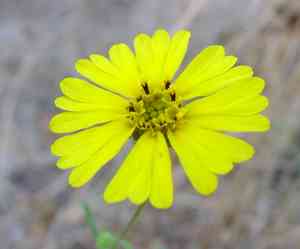
Blepharizonia (Blepharizonia laxa)
Also known as: Glandular big tarweed
Blepharizonia laxa shares similarities with its relative, B. plumosa, but there are distinct differences:
- **Coloration**: B. laxa typically exhibits a yellow-green hue, contrasting with the gray-green shade of B. plumosa.
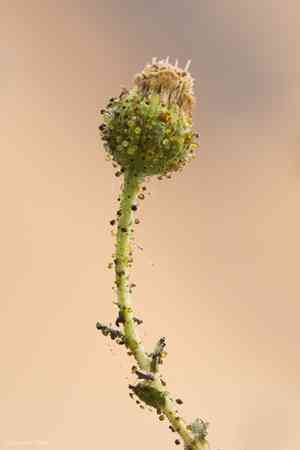
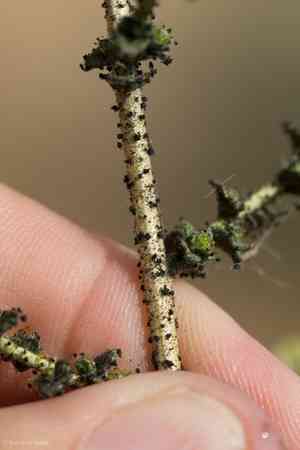
- **Surface Texture**: B. laxa is characterized by a greater abundance of stalked glands compared to B. plumosa.
These key traits assist in distinguishing between the two species.
In This Article
Attributes of Blepharizonia
Lifespan
Annual
Plant Type
Herb
Plant Height
30 to 100 cm
Spread
N/A
Leaf Color
Green
Flower Size
2-3 cm
Flower Color
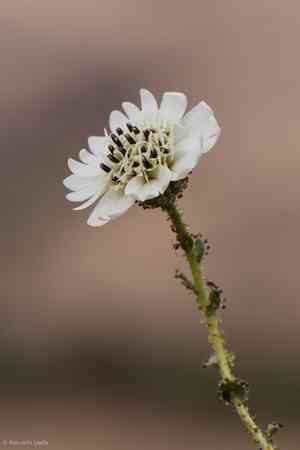
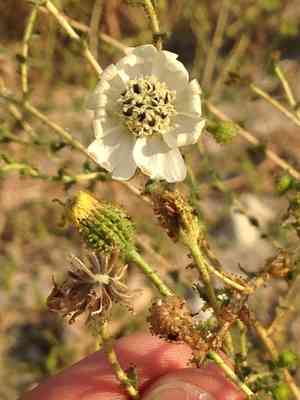
White petals with yellow centers and reddish tinge
Images of Blepharizonia
Quickly Identify Blepharizonia
1
The plant can be identified by its sticky stems and leaves covered with glandular hairs that exude a resinous substance. The daisy-like flowers have yellow centers and white petals with a reddish tinge.
Scientific Classification of Blepharizonia
Phylum
Vascular plants
Class
Dicotyledons
Order
Asterales
Family
Daisy
Genus
Blepharizonia
Species
Blepharizonia
Planting and Growing of Blepharizonia
Care Difficulty
Hard
Watering Schedule
Every 2 days
Sunlight Requirements
Full sun
Sunshine Duration
4-6 hours
Ideal Temperature
60-75℉
Soil Type
Potting Mix, Peat Mix
Soil pH
6.5-7.5
Fertilizer Type
Balanced
Pruning Season
Spring, Summer
Pruning Area
Branches, Leaves
Pruning Frequency
2 times a year
Repotting Season
Spring
Pot Type
Plastic, Ceramic
 How to Water Blepharizonia?
The watering amount for Blepharizonia laxa should be enough to moisten the soil without making it waterlogged. Think of it as providing a deep soak that reaches the root system. Use about 500 ml of water each time, ensuring the soil is damp but not soggy.
What are the symptoms of an underwatered Blepharizonia?
›
What should I do if my Blepharizonia is not getting enough water?
›
What are the symptoms of an overwatered Blepharizonia?
›
How to save an overwatered Blepharizonia?
›
 What Are the Sunlight Requirements for Blepharizonia?
Being a sun-loving plant, Blepharizonia laxa ideally requires full sun exposure, such as 6 to 8 hours of sunlight per day. This promotes optimal growth, enhances flowering potential, and sustains overall plant vitality.
What is the best location for Blepharizonia laxa?
›
How can I ensure consistent sunlight for Blepharizonia laxa?
›
What are the benefits of ideal sunlight for Blepharizonia laxa?
›
 What Is the Ideal Temperature Range for Blepharizonia?
Blepharizonia laxa thrives best when maintained in temperatures ranging between 60°F and 75°F. These conditions closely mimic its natural habitat, encouraging optimal growth and plant health. Deviations from this range can result in stunted growth or increased susceptibility to disease.
 What Soil is Best for Blepharizonia?
Blepharizonia laxa thrives in soil that does not retain excessive water as its roots are prone to rot. Well-drained conditions allow the roots to access oxygen efficiently, promoting health and growth. This plant prefers soils with moderate nutrient availability. Too much or too little can lead to poor growth, so a balanced nutrient profile maintains its vibrant foliage and flowering capacity. Blepharizonia laxa is naturally adapted to sandy soils, which provide loose structure for root expansion and prevent waterlogging, critical for its survival in natural habitats.
 How to Fertilize Blepharizonia?
Blepharizonia laxa requires a modest amount of fertilizer. Use approximately 1/4 teaspoon of liquid fertilizer per gallon of water when applying. For slow-release, a couple of teaspoons per plant typically suffice.
 How to Prune Blepharizonia?
Start by locating and removing any parts of the plant that appear dead, diseased, or damaged. This process helps prevent the spread of any plant ailments. Trim branches and stems to maintain the natural shape of Blepharizonia laxa, ensuring that each cut is made just above a node to encourage growth. Remove any overcrowded branches that might impede airflow. This step is crucial in preventing fungal infections and promoting a healthy plant environment.
More About Pruning Techniques→
 How to Propagate Blepharizonia plant?
1
Begin by filling the seed tray with moistened potting soil. Ensure the soil is evenly spread and level to give all seeds an equal chance of germinating. Avoid compacting the soil to ensure good aeration.
2
Scatter the seeds evenly across the surface of the soil. Lightly press them down or cover with a thin layer of soil, as some seeds need light for germination. Space them adequately to prevent overcrowding.
3
Use a fine mist spray to water the seeds lightly after sowing. Ensure the soil remains consistently damp but not waterlogged. Water from the bottom if possible to encourage strong root growth.
 How to Repot Blepharizonia plant?
1
Look for signs such as roots growing out of drainage holes or a slowdown in growth. These indicators suggest the plant needs more space to thrive. Spring is the perfect season to do this, as the plant is entering its active growth phase.
2
Select a pot slightly larger than the current one, ensuring it has adequate drainage holes. The larger pot facilitates root expansion and helps prevent waterlogging, which is crucial for the plant’s health and proper development.
3
Opt for a well-draining sandy mix to prevent root rot and ensure the plant retains just the right amount of moisture. This soil type provides support while allowing excess water to flow out freely, keeping the roots healthy.



