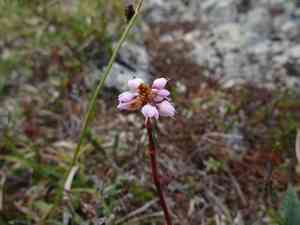
Meadow bistort (Bistorta plumosa)
Also known as: Plumosum Bistort, Feather Bistort
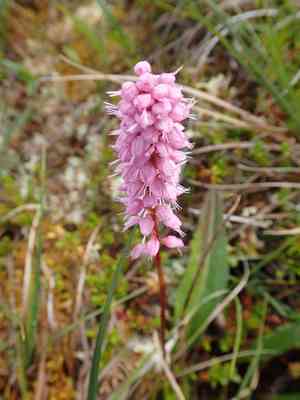
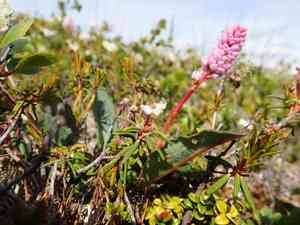
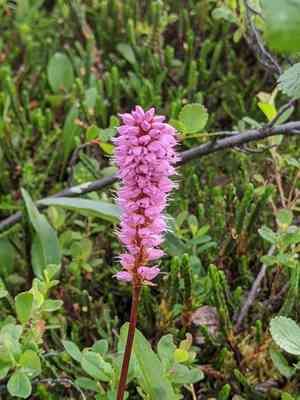
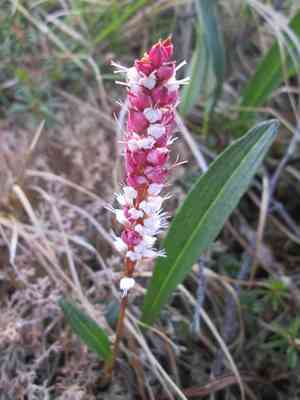
Meadow bistort displays feathery pink to purple flower spikes that gently sway with the wind. Its lance-shaped, lush green leaves typically grow in dense clusters, indicating its preference for growing alongside other plants. This perennial flourishes in moist, well-drained soils and thrives in cooler climates, showcasing its plumelike blossoms throughout the summer. These soft flowers offer a delicate contrast to the sturdier plants commonly found in the wild.
In This Article
Attributes of Meadow bistort
Lifespan
Perennial
Plant Type
Herb
Plant Height
0.3-0.6 meters
Spread
0.3 meters
Leaf Color
Green
Flower Size
0.5-1 cm
Flower Color
Pink, white
Images of Meadow bistort
Quickly Identify Meadow bistort
1
Feather Bistort can be identified by its feathery, plume-like flower spikes, lance-shaped leaves, and thick, twisted rootstock. The plant often grows in moist, partly shaded environments.
Scientific Classification of Meadow bistort
Phylum
Vascular plants
Class
Dicotyledons
Order
Caryophyllales
Family
Buckwheat
Genus
Bistorta
Species
Meadow bistort
Planting and Growing of Meadow bistort
Care Difficulty
Moderate
Watering Schedule
Every 4 days
Sunlight Requirements
Partial sun
Sunshine Duration
6-10 hours
Ideal Temperature
60-75℉
Soil Type
Potting Mix, Peat Mix
Soil pH
6.5-7.5
Fertilizer Type
Balanced
Pruning Season
Spring, Summer
Pruning Area
Branches, Leaves
Pruning Frequency
2 times a year
Repotting Season
Spring
Pot Type
Plastic, Ceramic
 How to Water Meadow bistort?
When watering Bistorta plumosa, aim to thoroughly moisten the soil with approximately 500 ml of water. Ensure the soil is damp down to about two inches deep, which encourages deep root growth and maintains consistent moisture levels. Always monitor the soil moisture before watering again.
What are the symptoms of an underwatered Meadow bistort?
›
What should I do if my Meadow bistort is not getting enough water?
›
What are the symptoms of an overwatered Meadow bistort?
›
How to save an overwatered Meadow bistort?
›
 What Are the Sunlight Requirements for Meadow bistort?
Partial sun for 3 to 6 hours is ideal for Bistorta plumosa. This balance allows the plant to photosynthesize efficiently without risking leaf scorch, promoting optimal health, robust growth, and vibrant foliage.
What is the best location for Bistorta plumosa?
›
How can I adjust lighting if Bistorta plumosa isn't thriving?
›
Why is proper lighting essential for Bistorta plumosa?
›
 What Is the Ideal Temperature Range for Meadow bistort?
The ideal temperature range for Bistorta plumosa is between 60°F and 75°F. Within this range, the plant can efficiently undergo photosynthesis, ensuring optimal growth and flowering. This allows for healthy metabolic processes, reducing stress and susceptibility to diseases.
 What Soil is Best for Meadow bistort?
The plant thrives in well-drained soil, which prevents waterlogging and root rot. This characteristic ensures that the plant's roots have access to oxygen and nutrients, promoting healthy growth and making it less susceptible to fungal diseases. Bistorta plumosa flourishes in nutrient-rich soil that supplies essential minerals and organic content, supporting robust foliage and an abundance of distinctive blooms. Such soil often requires the addition of compost or organic matter to meet this need fully. The soil should retain sufficient moisture without becoming soggy, which means the plant won't quickly dry out yet avoids the risks of over-saturation. This balance is crucial for maintaining continuous and stable growth.
 How to Fertilize Meadow bistort?
For Bistorta plumosa, it is recommended to apply a balanced liquid fertilizer diluted to half strength to avoid over-fertilization. A mature plant should receive approximately 200 ml of this diluted mixture per application, ensuring the soil is evenly moist without being waterlogged.
 How to Prune Meadow bistort?
Identify sections of Bistorta plumosa that appear overcrowded or show signs of disease. Focus on thinning out sections to allow light and air circulation through the plant, which reduces the risk of fungal infections and encourages robust growth. Make your cuts at a 45-degree angle, which ensures that water flows off the cut surface rather than sitting on it, potentially leading to decay. Begin cutting from the top of the plant and work your way down to maintain a tidy and symmetrical shape.
More About Pruning Techniques→
 How to Propagate Meadow bistort plant?
1
Begin by watering the Bistorta plumosa thoroughly a day before propagation. This ensures that the roots are hydrated, making them less susceptible to damage during division.
2
Carefully dig around the plant using a garden trowel to uncover the root system. Gently lift the plant from the ground, ensuring that you keep as much of the root structure intact as possible.
3
Use a sharp knife to separate the root mass into several sections. Make sure each section has at least a few healthy shoots and a significant portion of roots to encourage successful establishment.
 How to Repot Meadow bistort plant?
1
Keep an eye on the roots of Bistorta plumosa; if they begin to grow out of the drainage holes or form a dense mass against the pot edges, it is time to repot. Additionally, if the plant shows slowed growth or becomes top-heavy, these are signals indicating a need for a larger pot.
2
Select a pot that is 2-3 inches larger in diameter than the current one. Ensure it has drainage holes to prevent waterlogging, which can cause root rot. A slightly heavier clay pot can also provide stability and avoid toppling when the plant grows larger.
3
Opt for a well-draining loamy soil to give Bistorta plumosa the nutrient-rich environment it thrives in. This type of soil supports healthy root development and allows excess water to escape, minimizing the risk of root diseases.
Learn More About Meadow bistort Diseases
Anthracnose
Bacterial Leaf Spot
Bacterial Soft Rot
Bacterial Wilt
Crown Gall
Cyst Nematode
Damping-off
Downy Mildew
Drought Stress
Fusarium Wilt
Gray Mold
Leaf Curl
Leaf Spot
Mosaic
Nutrient Deficiency
Nutrient Toxicity
Powdery Mildew
Root Rot
Root-knot Nematode
Rusts
Sooty Mold
Spider Mites
Temperature Stress
Thrips Damage
White Mold



