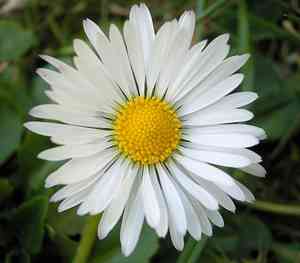
Nuttall's rayless goldenrod (Bigelowia nuttallii)
Also known as: Nuttall's Rayless Goldenrod
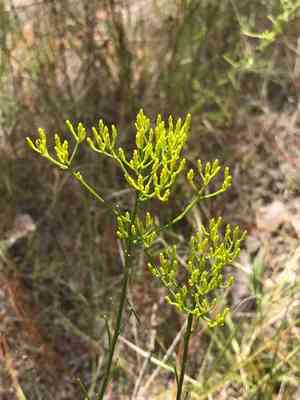
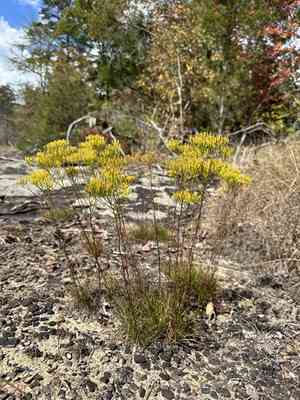
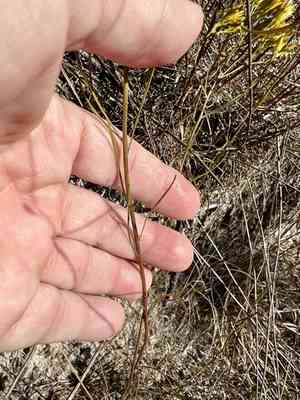
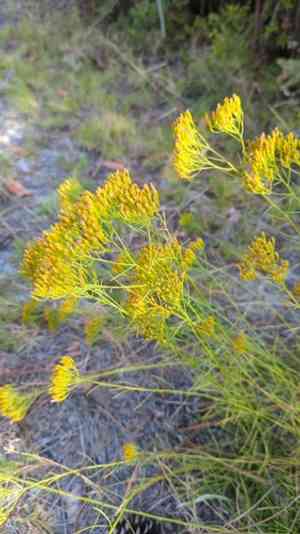
Nuttall's rayless goldenrod (Bigelowia nuttallii) is a perennial plant distinguished by its slender, erect stems and linear, grass-like leaves. Unlike typical goldenrods, it features clusters of small, yellow disc florets without ray florets. This species is adapted to well-drained, sandy or rocky soils, commonly found in open woodlands, prairies, and coastal plains in the southeastern United States. Its deep root system aids in surviving arid conditions. Flowering from summer to fall, it attracts various pollinators with its vibrant yellow blooms.
In This Article
Attributes of Nuttall's rayless goldenrod
Lifespan
Perennial
Plant Type
Herb, Shrub
Plant Height
30-60 cm
Spread
Not applicable as it is a herbaceous plant
Leaf Color
Green
Flower Size
2-4 mm
Flower Color
Yellow
Images of Nuttall's rayless goldenrod
Quickly Identify Nuttall's rayless goldenrod
1
This plant can be identified by its small, yellow, rayless flowers and its slender, erect stems.
Scientific Classification of Nuttall's rayless goldenrod
Phylum
Vascular plants
Class
Dicotyledons
Order
Asterales
Family
Daisy
Genus
Rayless goldenrod
Species
Nuttall's rayless goldenrod
Planting and Growing of Nuttall's rayless goldenrod
Care Difficulty
Moderate
Watering Schedule
Every 2 days
Sunlight Requirements
Full sun
Sunshine Duration
4-8 hours
Ideal Temperature
68-77℉
Soil Type
Potting Mix, Peat Mix
Soil pH
6.5-7.5
Fertilizer Type
Balanced
Pruning Season
Spring, Summer
Pruning Area
Branches, Leaves
Pruning Frequency
2 times a year
Repotting Season
Spring
Pot Type
Plastic, Ceramic
 How to Water Nuttall's rayless goldenrod?
Bigelowia nuttallii thrives on a carefully controlled watering regimen. It needs around 200 ml of water each time. You should water deeply but infrequently, ensuring the soil is completely moistened but not water-logged. It's crucial to mimic its natural sandy habitat where water drains rapidly, preventing root rot.
What are the symptoms of an underwatered Nuttall's rayless goldenrod?
›
What should I do if my Nuttall's rayless goldenrod is not getting enough water?
›
What are the symptoms of an overwatered Nuttall's rayless goldenrod?
›
How to save an overwatered Nuttall's rayless goldenrod?
›
 What Are the Sunlight Requirements for Nuttall's rayless goldenrod?
Bigelowia nuttallii flourishes best under full sun, where it receives 6-8 hours of direct sunlight daily. This ideal condition supports health and blooms, earning the plant resilience against pests and diseases.
What is the ideal lighting condition?
›
How do you achieve ideal lighting conditions?
›
What are the benefits of ideal lighting?
›
 What Is the Ideal Temperature Range for Nuttall's rayless goldenrod?
The ideal temperature range for cultivating Bigelowia nuttallii is between 68°F and 77°F. This range provides optimal conditions for photosynthesis and nutrient uptake, ensuring that the plant can efficiently manage its physiological processes. Maintaining temperatures within this range helps prevent stress that could lead to slow growth or reduced flowering.
 What Soil is Best for Nuttall's rayless goldenrod?
Bigelowia nuttallii thrives in well-drained soils, which prevent waterlogging and root rot. This plant is adapted to sandy conditions that facilitate quick drainage, increasing its resilience against root diseases and promoting healthy growth. This plant prefers soils with low fertility, which mimics its natural habitat where nutrients are limited. This reduces competition from more aggressive plants and ensures Bigelowia nuttallii can establish and flourish without excessive nutrient intervention. The plant requires soils that allow for adequate aeration, crucial for root respiration and nutrient absorption. Sandy loam, with its large particle size, ensures that roots get the oxygen they need to maintain healthy growth and development.
 How to Fertilize Nuttall's rayless goldenrod?
For Bigelowia nuttallii, it is important to use a balanced approach to fertilization. Generally, a light application is advisable. For liquid fertilizers, a dilution of 1/4 to 1/2 the recommended strength is often sufficient. This ensures the plant receives the essential nutrients without overwhelming it.
 How to Prune Nuttall's rayless goldenrod?
Begin by inspecting the plant for any dead or diseased branches. Use clean, sharp pruning shears to remove these branches, cutting back to healthy wood. Next, thin out the plant to allow light and air to penetrate, which reduces the risk of disease. Shape the plant so that it maintains its natural form, but avoid over-pruning. Each cut should be made just above a node or where the stem branches.
More About Pruning Techniques→
 How to Propagate Nuttall's rayless goldenrod plant?
1
Begin by collecting seeds from mature Bigelowia nuttallii plants. Dry the seeds thoroughly to prevent mold. Before planting, some gardeners recommend lightly scarifying the seeds to enhance the absorption of moisture, which can promote quicker germination.
2
Choose healthy, semi-mature stems from the parent plant for cutting propagation. Avoid any stems that show signs of disease or damage as they have a higher chance of failure. Cut the stem just below a node to increase the likelihood of rooting.
3
Plant the seeds or cuttings in a well-draining potting mix. For seeds, lightly cover them with soil. For cuttings, ensure a node is below the soil. Maintain a humid environment using a plastic cover for humidity control, but ensure the plant still gets adequate air circulation.
 How to Repot Nuttall's rayless goldenrod plant?
1
Bigelowia nuttallii shows it needs repotting when root growth protrudes through drainage holes or the plant appears restricted and top-heavy. Spring and early summer are optimal times, promoting root recovery and growth.
2
Choose a pot one size larger than the current one, with excellent drainage. This prevents waterlogging and supports healthy root development, thus facilitating robust plant growth.
3
A well-draining sandy soil mix is essential to mimic its natural habitat, reducing the risk of root rot and ensuring adequate nutrient uptake and aeration.
Learn More About Nuttall's rayless goldenrod Diseases
Anthracnose
Bacterial Leaf Spot
Bacterial Soft Rot
Bacterial Wilt
Black Spot
Chemical Injury
Crown Gall
Cyst Nematode
Damping-off
Downy Mildew
Drought Stress
Fusarium Wilt
Gray Mold
Leaf Curl
Leaf Spot
Mosaic
Nutrient Deficiency
Nutrient Toxicity
Powdery Mildew
Root Rot
Root-knot Nematode
Rusts
Sooty Mold
Spider Mites
Temperature Stress
Thrips Damage
White Mold



