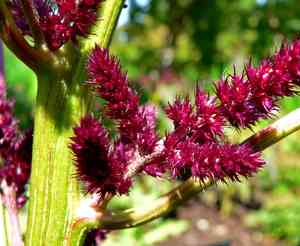
Prostrate summercypress (Bassia prostrata)
Also known as: Not available
Forage kochia, scientifically known as Bassia prostrata (formerly Kochia prostrata), is a plant from Eurasia that belongs to the subfamily Camphorosmoideae within the family Amaranthaceae. It was introduced to the United States to serve as rangeland forage and to aid in fire control efforts.
In This Article
Attributes of Prostrate summercypress
Lifespan
Perennial
Plant Type
Shrub
Plant Height
Up to 60 cm
Spread
Up to 60 cm
Leaf Color
Green to reddish-green
Flower Size
Less than 1 cm
Flower Color
Greenish or yellowish
Images of Prostrate summercypress
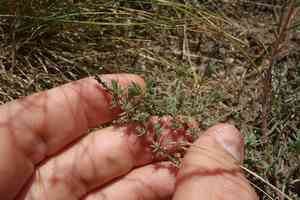
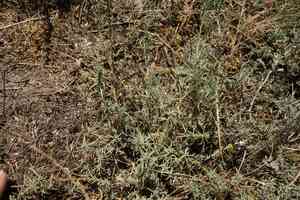
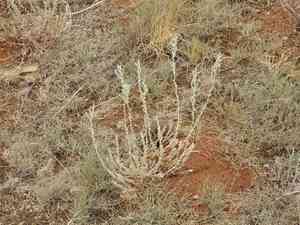
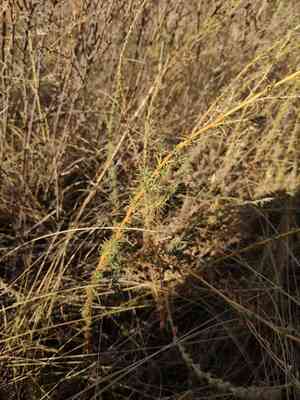
Quickly Identify Prostrate summercypress
1
The plant can be identified by its prostrate to semi-erect growth habit, small and narrow leaves, and dense branched structure. It often has a reddish tinge to the stems and leaves.
Scientific Classification of Prostrate summercypress
Phylum
Vascular plants
Class
Dicotyledons
Order
Caryophyllales
Family
Amaranth
Genus
Smotherweeds
Species
Prostrate summercypress
Planting and Growing of Prostrate summercypress
Care Difficulty
Easy
Watering Schedule
Every 2 days
Sunlight Requirements
Full sun
Sunshine Duration
4-8 hours
Ideal Temperature
60-75℉
Soil Type
Potting Mix, Peat Mix
Soil pH
6.5-7.5
Fertilizer Type
Balanced
Pruning Season
Spring, Summer
Pruning Area
Branches, Leaves
Pruning Frequency
2 times a year
Repotting Season
Spring
Pot Type
Plastic, Ceramic
 How to Water Prostrate summercypress?
Bassia prostrata thrives on moderate watering, adhering to a principle of 'less is more.' Ensure the soil is moist but not soggy, allowing the top inch to dry out between watering sessions to mimic its natural habitat.
What are the symptoms of an underwatered Prostrate summercypress?
›
What should I do if my Prostrate summercypress is not getting enough water?
›
What are the symptoms of an overwatered Prostrate summercypress?
›
How to save an overwatered Prostrate summercypress?
›
 What Are the Sunlight Requirements for Prostrate summercypress?
Bassia prostrata thrives best under full to partial sun, with ideal growth observed under consistent exposure of approximately 5 to 6 hours of sunlight. This optimal light condition facilitates robust growth and vibrant leaf coloration.
Optimal Sunlight for Growth
›
Enhancing Leaf Coloration
›
Preventing Legginess
›
 What Is the Ideal Temperature Range for Prostrate summercypress?
The ideal temperature range for growing Bassia prostrata is between 60°F to 75°F. These temperatures promote optimal metabolic processes, enabling the plant to grow robustly and maintain healthy foliage. Within this range, the plant can efficiently photosynthesize and uptake nutrients.
 What Soil is Best for Prostrate summercypress?
Bassia prostrata thrives in well-drained soils, which prevent root rot by ensuring water doesn't accumulate around the roots. This trait is beneficial in arid and semi-arid regions, providing optimal growth conditions by avoiding waterlogging. Although hardy, Bassia prostrata benefits from nutrient-rich soils that supply it with essential minerals for healthy development. Regular additions of organic matter or light fertilization ensure robust growth and vibrant foliage. While it can tolerate drought, Bassia prostrata prefers soils that can retain moderate moisture, helping sustain the plant during dry spells and promoting steady growth without overwhelming its roots with excess water.
 How to Fertilize Prostrate summercypress?
When fertilizing Bassia prostrata, it's important to use a balanced approach. For liquid fertilizers, apply a diluted solution at half the recommended strength to avoid overfeeding. For slow-release fertilizers, use approximately 20 grams per plant, ensuring that it is evenly distributed around the root zone and mixed into the topsoil.
 How to Prune Prostrate summercypress?
Before you begin pruning, take a moment to observe the natural shape of your Bassia prostrata. This will guide your pruning cuts to enhance its inherent structure, rather than forcing an unnatural shape. When making cuts, aim to prune above a leaf node. This encourages new growth from that point, helping the plant fill out and maintain a full, lush appearance. To promote air circulation and prevent pest infestations, occasionally thin the interior of the plant. This involves selectively removing some interior branches without disturbing the overall shape.
 How to Propagate Prostrate summercypress plant?
1
Collect mature seeds from Bassia prostrata in late summer or early autumn when the seed pods are dry, ensuring high germination rates for new plants.
2
Select healthy stems approximately 10 cm long, making clean cuts just below a node. Remove lower leaves to reduce moisture loss.
3
Sow seeds in a seed tray filled with well-draining soil. Lightly cover with a thin layer of soil and keep in a warm place.
 How to Repot Prostrate summercypress plant?
1
Bassia prostrata generally signals the need for repotting when its roots begin to circle the pot, indicating that it's becoming root-bound. This often appears as roots growing out of drainage holes or visible on the soil's surface. Ideally, repot this plant during its dormant seasons of spring or autumn, when the plant's growth is not at its peak.
2
Selecting an appropriate pot for Bassia prostrata is crucial. Opt for a pot that is slightly larger than the current one, with proper drainage holes to prevent waterlogging—a condition this plant despises. The new pot should be sturdy enough to support the plant but not excessively large, which can retain excess moisture and lead to root rot, allowing for stable growth and healthy root development.
3
Choose a well-draining sandy soil mix for Bassia prostrata. Such a soil should have a blend of sand, perlite, and a touch of organic matter like peat. This composition facilitates excellent drainage, replicating the plant's natural environment and preventing waterlogged conditions that can harm its roots.
Toxicity
ingestion
WARNING
The judgment on toxicity and danger is for reference only. We DO NOT GUARANTEE any accuracy of such judgment. Therefore, you SHALL NOT rely on such judgment. It is IMPORTANT TO SEEK PROFESSIONAL ADVICE in advance when necessary.
Learn More About Prostrate summercypress Diseases
Anthracnose
Bacterial Leaf Spot
Bacterial Soft Rot
Bacterial Wilt
Chemical Injury
Crown Gall
Cyst Nematode
Damping-off
Downy Mildew
Drought Stress
Fusarium Wilt
Gray Mold
Leaf Spot
Mosaic
Nutrient Deficiency
Nutrient Toxicity
Powdery Mildew
Root Rot
Root-knot Nematode
Rusts
Sooty Mold
Spider Mites
Temperature Stress
Thrips Damage
White Mold



