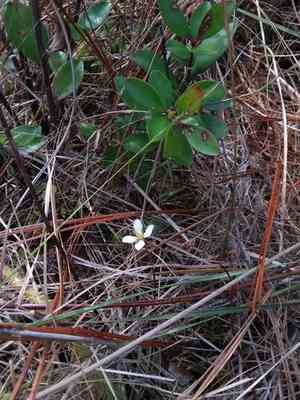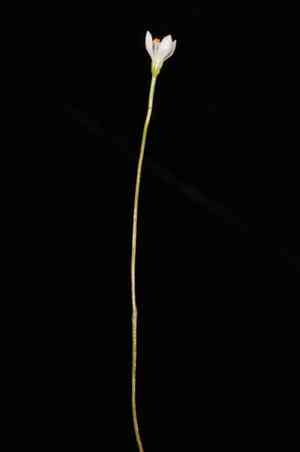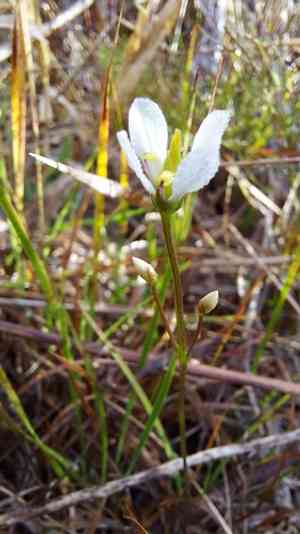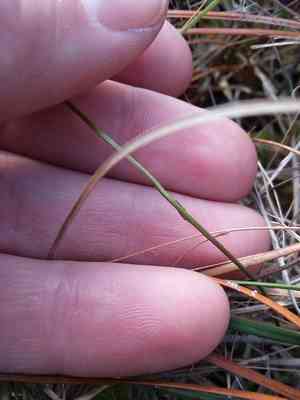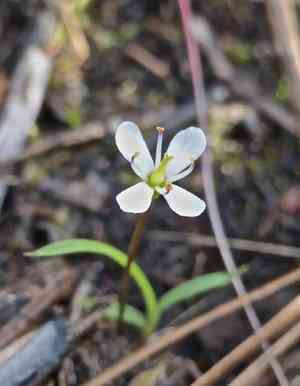
White screwstem(Bartonia verna)

White screwstem (Bartonia verna)

Also known as: None

The white screwstem (Bartonia virginica) is a diminutive, herbaceous plant that thrives in wet, acidic conditions like bogs, swamps, and wet meadows across North America. Notable characteristics include:

- **Structure**: It features slender, upright stems that can grow up to 30 cm tall, often unbranched and displaying a green or reddish hue. The leaves are tiny and scale-like.
- **Flowers**: Blooming from late summer to early fall, its small, white to pale yellow, star-shaped flowers are a defining trait.
- **Root System**: The plant has a minimal root system and heavily depends on a symbiotic relationship with mycorrhizal fungi for nutrient uptake.

**Ecological Role**:
- **Indicator of Ecosystem Health**: The presence of white screwstem signifies a healthy, undisturbed wetland ecosystem.
- **Biodiversity Contribution**: It supports a range of pollinators, contributing to the biodiversity of its habitat.
- **Symbiotic Relationships**: Its dependence on mycorrhizal fungi underscores the complex ecological interactions in nutrient-poor environments.

In essence, the white screwstem is crucial for maintaining the health and diversity of wetland ecosystems, serving both as an indicator species and a contributor to ecological balance.

Attributes of White screwstem

Lifespan
Annual
Plant Type
Herb
Plant Height
0 mm to 30 cm
Spread
Not applicable
Leaf Color
Green
Flower Size
0.5-1 cm
Flower Color
White to pale pink

ForwardPlant - Identify plants with a snap

Identify and diagnose plants, get toxicity alerts, and explore safety guides for all types of fungi.

Try for Free

Images of White screwstem

White screwstem(Bartonia verna)

Quickly Identify White screwstem

1
Bartonia verna can be identified by its small, slender, and upright stem, typically growing up to 15-30 cm in height. The flowers are minute and white to pale pink, often appearing in clusters.

Scientific Classification of White screwstem

Phylum
Vascular plants
Class
Dicotyledons
Order
Gentianales
Family
Gentian
Genus
Screwstem
Species
White screwstem

Planting and Growing of White screwstem

Care Difficulty
Hard
Watering Schedule
Every day
Sunlight Requirements
Partial sun
Sunshine Duration
6-10 hours
Ideal Temperature
60-75℉
Soil Type
Potting Mix, Peat Mix
Soil pH
5.5-7
Fertilizer Type
Balanced
Pruning Season
Spring, Summer
Pruning Area
Branches, Leaves
Pruning Frequency
2 times a year
Repotting Season
Spring
Pot Type
Ceramic, Plastic

water icon How to Water White screwstem?

When it comes to Bartonia verna, watering should be done thoughtfully to mimic its natural habitat. Ensure the soil is thoroughly moist but not waterlogged. Aim for a balance by allowing water to drain completely, leaving the soil moist yet aerated.
What are the symptoms of an underwatered White screwstem?
What should I do if my White screwstem is not getting enough water?
What are the symptoms of an overwatered White screwstem?
How to save an overwatered White screwstem?

sunlight icon What Are the Sunlight Requirements for White screwstem?

Sunlight Requirements: Partial sun, Full sun
Duration of light: 4-6 hours per day
Bartonia verna benefits from partial to full sun, ideally receiving morning sunlight. Appropriate light levels promote photosynthesis, ensuring vigorous growth and healthy blooms.
What is the ideal light level for Bartonia verna?
How to achieve ideal lighting conditions?
What are the benefits of ideal light conditions?

temperature icon What Is the Ideal Temperature Range for White screwstem?

Ideal Temperature: 60 ~ 75℉
Bartonia verna thrives in an environment where the temperature is consistently between 60°F and 75°F. This range supports robust growth and flowering as it closely mimics the plant's natural habitat conditions.

soil icon What Soil is Best for White screwstem?

Soil type: Sandy loam, Loam
Soil PH: 5.5 ~ 7
Bartonia verna thrives best in well-drained soils, which prevent waterlogging, reducing root rot risk. Such soil supports optimal root oxygenation, crucial for nutrient uptake and plant health. While not overly demanding, Bartonia verna benefits from moderately fertile soils. Balanced nutrient levels ensure healthy growth, vibrant foliage, and robust flowering. Incorporating organic matter into the soil supports microbial activity, enhancing nutrient cycling and soil structure. It boosts the plant's resilience and growth rate in natural habitats.

fertilize icon How to Fertilize White screwstem?

Fertilizer type: Balanced
When fertilizing Bartonia verna, it is important to use a balanced fertilizer at half the strength recommended for general houseplants. You should apply approximately 1/4 tsp per quart of water if using liquid fertilizer. This ensures the plant receives adequate nutrients without overwhelming its delicate root system.

prune icon How to Prune White screwstem?

Pruning Time: Spring, Summer
Towards the end of the growing season, it's beneficial to perform a light pruning to shape the plant and encourage a compact growth habit. Focus on cutting back any excessively long stems which may have grown unruly. This helps in maintaining the plant’s appearance and prepares it for the next growing season. Ensure good air circulation by thinning out dense areas. This reduces the likelihood of fungal diseases and ensures sunlight reaches all parts of the plant. By pruning to improve air circulation, you're also helping the plant dry more quickly after watering or rain. More About Pruning Techniques

propagate icon How to Propagate White screwstem plant?

Propagate Time: Spring, Early spring
1
Fill a seed tray with sterile seed starting mix. Lightly moisten the mix before sowing the seeds to ensure it is not overly dry or waterlogged.
2
Carefully sow Bartonia verna seeds on the surface of the moistened mix. Lightly press them in, but avoid covering them as they need light to germinate.
3
Place the seed tray in a location that receives good light or under a grow light. Ensure a consistent temperature around 20°C for optimal germination.
More About Propagating Techniques

repot icon How to Repot White screwstem plant?

Repotting frequency: Every two to three years
1
Bartonia verna signals its time for repotting when the roots start protruding from the drainage holes. Another indicator is the slowing down of growth despite optimal conditions. Ideally, repot during its growing season to help the plant adjust faster.
2
Select a pot that is at least 2 inches larger in diameter than the current one. This provides enough space for root expansion and prevents the plant from becoming root-bound. A pot with sufficient drainage holes ensures excess water doesn't pool at the bottom, promoting root health.
3
Opt for well-draining sandy soil to echo its natural habitat. This type of soil prevents waterlogging, which can lead to root rot—a common issue when growing Bartonia verna. The right soil mix ensures adequate aeration, promoting root health and overall vigor.

ForwardPlant - Identify plants with a snap

Find the best spots for them to optimize their health, simply using your phone.

Try for Free